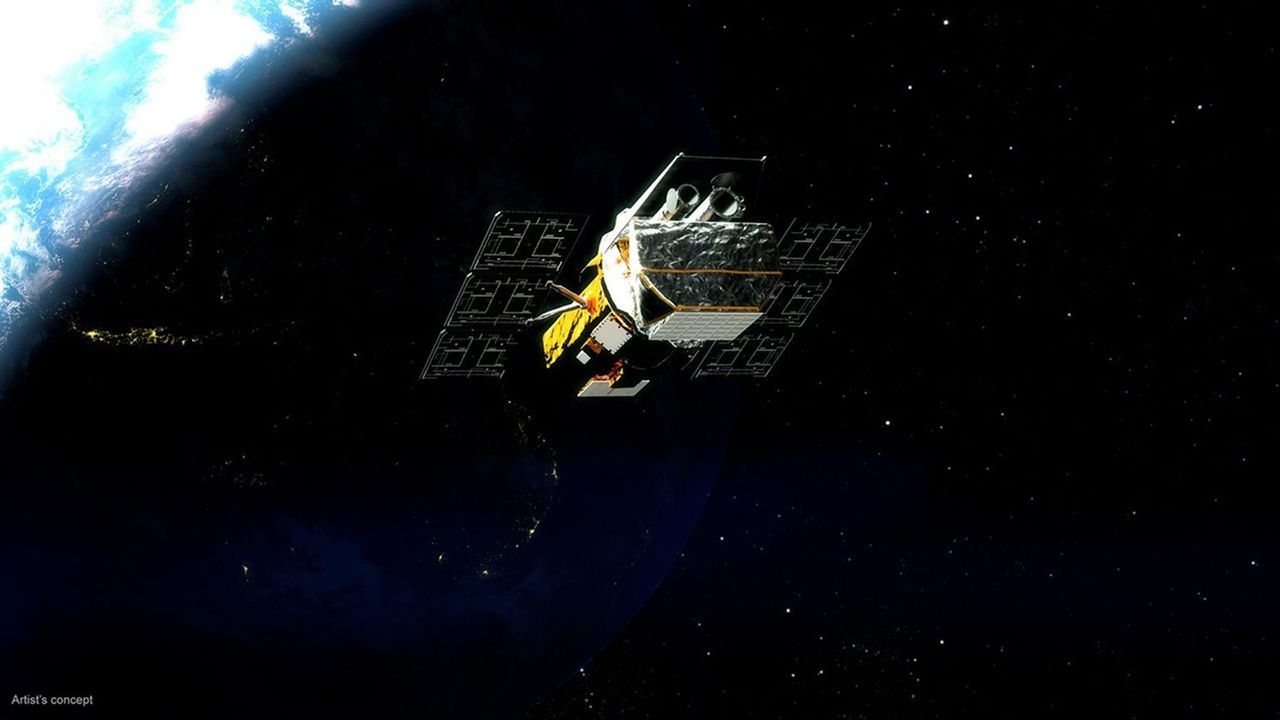
NASA has launched a bold mission to rescue one of its most important space telescopes, the Swift Observatory, which is slowly falling toward Earth and risks burning up in the atmosphere if its orbit is not corrected. The telescope, which has been scanning the cosmos for gamma-ray bursts since 2004, is losing altitude due to atmospheric drag and could re-enter the planet's atmosphere within a few years without intervention. To prevent this, a private rocket mission will attempt to boost Swift back to a higher, more stable orbit, extending its operational life and allowing it to continue its groundbreaking work.
Swift is a space-based observatory designed to detect and study gamma-ray bursts, the most powerful explosions in the universe, which occur when massive stars collapse or when neutron stars merge. These bursts release more energy in a few seconds than the Sun will produce in its entire lifetime, and Swift's rapid-response capabilities have made it a cornerstone of modern astrophysics. Since its launch, the telescope has detected over 1,500 gamma-ray bursts, providing scientists with crucial data about the early universe, the formation of black holes, and the nature of dark matter.
The rescue mission, which is being carried out by a private company under contract with NASA, will involve a robotic spacecraft rendezvousing with Swift in orbit and using its own propulsion system to push the telescope to a higher altitude. This maneuver is necessary because Swift's orbit has been decaying over the years due to atmospheric drag, a phenomenon that affects all satellites in low Earth orbit. Without a boost, the telescope would eventually fall low enough to burn up in the atmosphere, ending its mission prematurely.
The mission represents a significant milestone in space operations, as it marks one of the first times a private company has been tasked with rescuing a government-owned scientific satellite. The company, which has not been named in the initial reports, will use a spacecraft equipped with advanced navigation and docking systems to approach Swift and perform the boost. The operation is expected to be complex, requiring precise timing and coordination to ensure the telescope is not damaged during the process.
Swift's importance to the scientific community cannot be overstated. The telescope has been instrumental in studying gamma-ray bursts, which are thought to be associated with the formation of black holes and the death of massive stars. By observing these bursts in multiple wavelengths, including X-rays and ultraviolet light, Swift has helped astronomers understand the mechanisms behind these violent events and their role in the evolution of the universe. The telescope has also been used to study other phenomena, such as supernovae, active galactic nuclei, and even comets within our own solar system.
The decision to rescue Swift rather than let it burn up reflects NASA's commitment to maximizing the return on its investments in space science. Building and launching a replacement telescope would cost hundreds of millions of dollars and take years to complete, whereas the rescue mission is expected to be relatively inexpensive and can be carried out within a shorter timeframe. Moreover, Swift's instruments are still functioning well, and the telescope continues to produce valuable data, making it a worthwhile candidate for an orbital boost.
The mission also highlights the growing role of private companies in space operations. In recent years, companies like SpaceX and Northrop Grumman have been contracted by NASA to perform a variety of tasks, including cargo resupply missions to the International Space Station and satellite servicing. The Swift rescue mission is another example of this trend, demonstrating that private industry can play a key role in maintaining and extending the life of scientific assets in space.
If successful, the mission will extend Swift's operational life by several years, allowing it to continue its hunt for gamma-ray bursts and other cosmic phenomena. The telescope is expected to remain in its new orbit for at least a decade, providing scientists with a steady stream of data that will help answer some of the most fundamental questions about the universe. For now, the team behind the mission is focused on the technical challenges ahead, but they are optimistic that Swift will be saved and will continue to contribute to our understanding of the cosmos.
The rescue mission is scheduled to take place in the coming months, with the exact timeline depending on the readiness of the private spacecraft and the orbital conditions. NASA and its partners are working closely to ensure that all systems are go, and they are confident that the operation will be a success. As Swift continues to fall toward Earth, the clock is ticking, but the scientific community is hopeful that this innovative mission will keep the telescope alive and productive for years to come.
121