The European Space Agency's Rosetta mission, launched 25 years ago, fundamentally changed how scientists and the public understand comets, marking a pivotal moment in space exploration. The spacecraft embarked on its journey in March 2004, traveling for a decade before finally rendezvousing with comet 67P/Churyumov-Gerasimenko in August 2014. This ambitious project not only delivered unprecedented scientific data but also captured the imagination of people worldwide, demonstrating the power of long-term space missions.
Rosetta's primary objective was to study a comet up close, providing insights into the early solar system. Comets are considered time capsules, preserving material from the formation of the planets 4.6 billion years ago. By analyzing the comet's nucleus, dust, and gas, scientists hoped to unlock clues about the origins of water and organic molecules on Earth. The mission's success exceeded expectations, with the Philae lander making the first-ever soft landing on a comet's surface in November 2014, despite a bumpy touchdown that left it in a shadowed location.
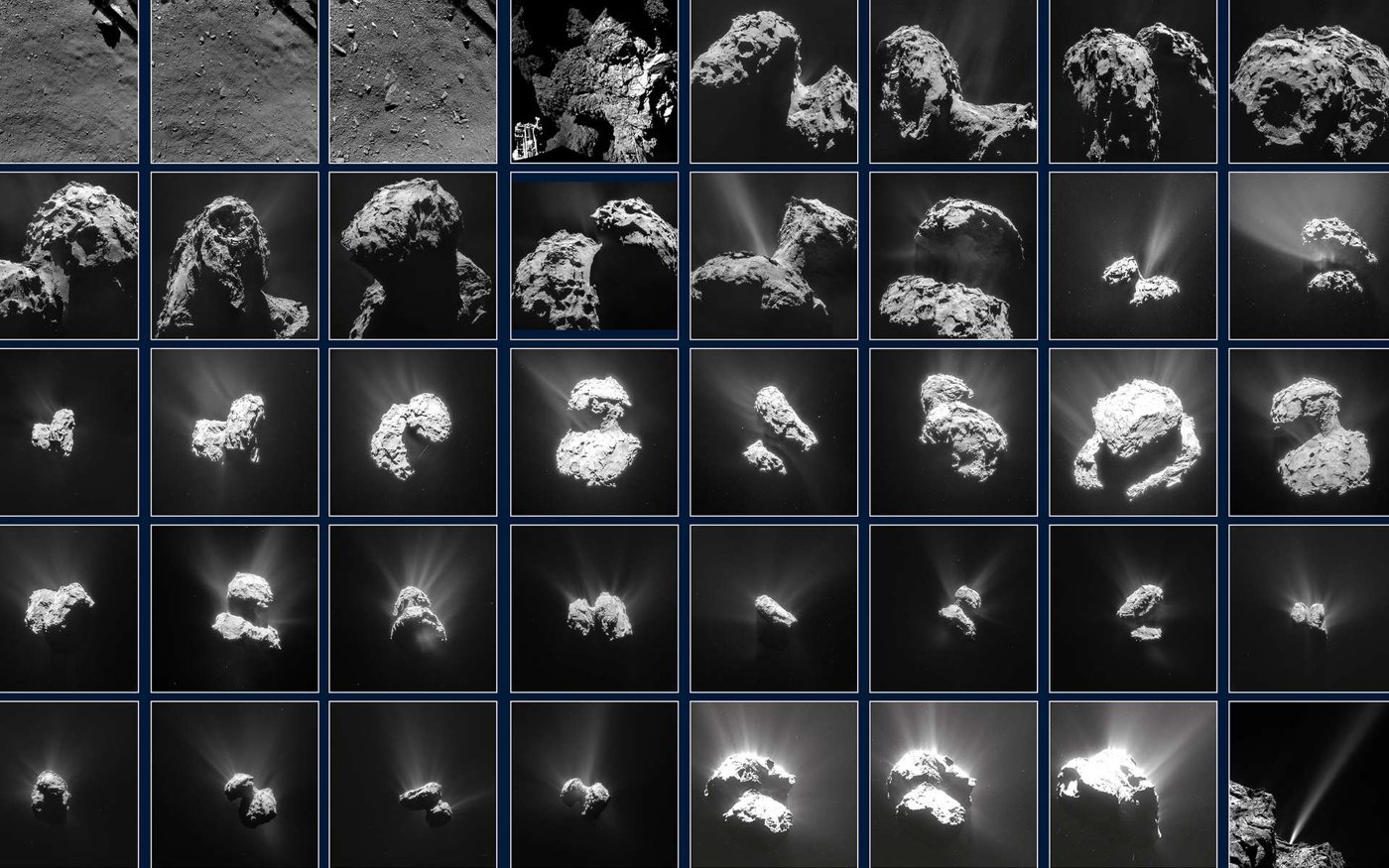
The mission's timeline was a testament to patience and precision in spaceflight. After launch, Rosetta performed four gravity-assist flybys of Earth and Mars to gain enough speed to reach its target. It also flew past asteroids Steins in 2008 and Lutetia in 2010, providing valuable bonus science. The spacecraft entered hibernation in June 2011 to conserve power during the most distant part of its journey, waking up successfully in January 2014. The final approach to comet 67P revealed a bizarre, rubber-duck-shaped world with cliffs, pits, and smooth plains, challenging existing models of comet structure.
Scientific discoveries from Rosetta were numerous and profound. The mission detected molecular oxygen on the comet, a surprising find that raised questions about solar system chemistry. It also found that the comet's water had a different isotopic signature than Earth's water, suggesting that comets of this type may not have been the primary source of our planet's oceans. Additionally, Rosetta identified organic compounds, including amino acids, supporting the theory that comets could have delivered the building blocks of life to early Earth. The spacecraft also observed the comet's activity as it approached the Sun, recording jets of gas and dust that sculpted its surface.
The mission's end was as dramatic as its journey. On September 30, 2016, Rosetta was deliberately crashed into the comet's surface, capturing high-resolution images during its final descent. This controlled impact allowed scientists to study the comet's interior structure and composition up close. The data collected during the mission continues to be analyzed, with new findings published regularly. Rosetta's legacy extends beyond science; it demonstrated the feasibility of complex multi-year missions and inspired a new generation of astronomers and engineers.
For many space enthusiasts, Rosetta was a defining moment. The mission's long duration meant that children who followed its launch were adults by the time it reached its target, creating a unique connection between the public and a robotic explorer. The stunning images of the comet's surface, with its alien landscapes, brought the distant world into living rooms and classrooms. The mission also highlighted international collaboration, with contributions from ESA member states, NASA, and other partners, showing what can be achieved when nations work together in pursuit of knowledge.
Rosetta's impact on planetary science cannot be overstated. It provided the most detailed study of a comet ever conducted, from its nucleus to its coma and tail. The mission confirmed that comets are not just dirty snowballs but complex geological bodies with diverse terrains. It also helped refine models of how comets evolve as they orbit the Sun, shedding light on the processes that shaped the early solar system. The data from Rosetta will remain a cornerstone of comet research for decades, informing future missions such as ESA's Comet Interceptor, set to launch later this decade.
As we mark 25 years since Rosetta's launch, the mission stands as a reminder of the rewards of ambitious space exploration. It showed that with careful planning, international cooperation, and a willingness to take risks, humanity can achieve remarkable things. The little spacecraft that traveled billions of kilometers to meet a tiny world in the vastness of space continues to teach us about our origins and our place in the universe. For those who followed its journey, Rosetta was more than a mission; it was a voyage of discovery that changed how we see the cosmos.
104