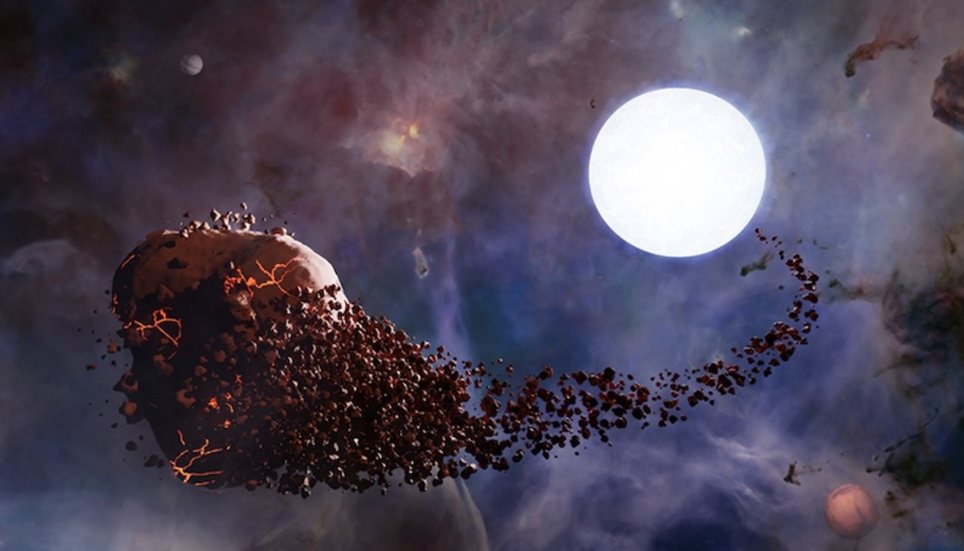
Astronomers have found evidence of gemstone-forming minerals in the atmosphere of an extraordinarily low-density exoplanet, a world so puffy that it has been nicknamed a «marshmallow» planet. The detection offers a rare window into the atmospheric chemistry of one of the least dense planets ever observed, where scorching temperatures and unusual conditions appear to allow minerals normally found in rocks to exist as gases and clouds.
The planet belongs to a class of worlds with densities so low that they are often compared to cotton candy or marshmallows. Such planets are thought to have deep, extended atmospheres that make them vulnerable to stripping by their host stars, raising questions about how they form and how long they survive. The new findings add to a growing body of research aimed at understanding these fragile worlds before they are lost.
According to the research, the atmosphere of the planet contains signatures consistent with gemstone minerals, including materials such as corundum, the mineral that forms rubies and sapphires. Under the extreme heat of the planet's atmosphere, these compounds can vaporize and condense into clouds, potentially producing exotic weather unlike anything seen in the solar system. The detection was made through analysis of the planet's atmosphere as it passed in front of or orbited its star, a technique that allows scientists to probe the chemical composition of distant worlds.
The planet is described as scorching hot, with temperatures high enough to melt or vaporize materials that would be solid rock on Earth. This combination of extreme heat and extremely low density makes it a natural laboratory for studying how minerals behave under conditions that cannot be reproduced in terrestrial laboratories. Researchers say the presence of gemstone-forming minerals in the atmosphere could help explain the planet's unusual properties and provide clues about the diversity of planetary systems.
The discovery adds to the broader effort to characterize exoplanet atmospheres, a field that has advanced rapidly as telescopes have become more sensitive. By identifying specific minerals in the atmospheres of distant worlds, scientists can begin to understand the full range of planetary compositions and the processes that shape them. The findings also highlight how little is known about the most extreme planets and how much remains to be learned about their formation, evolution, and eventual fate.
For now, the «marshmallow» planet stands as a striking example of the variety of worlds that exist beyond the solar system. Its gemstone-laden atmosphere suggests that the chemistry of distant planets can be far stranger than expected, with minerals familiar from jewelry and geology taking on entirely different forms under alien conditions. Further observations are expected to refine the picture of the planet's atmosphere and to test whether similar signatures appear in other low-density worlds.
19