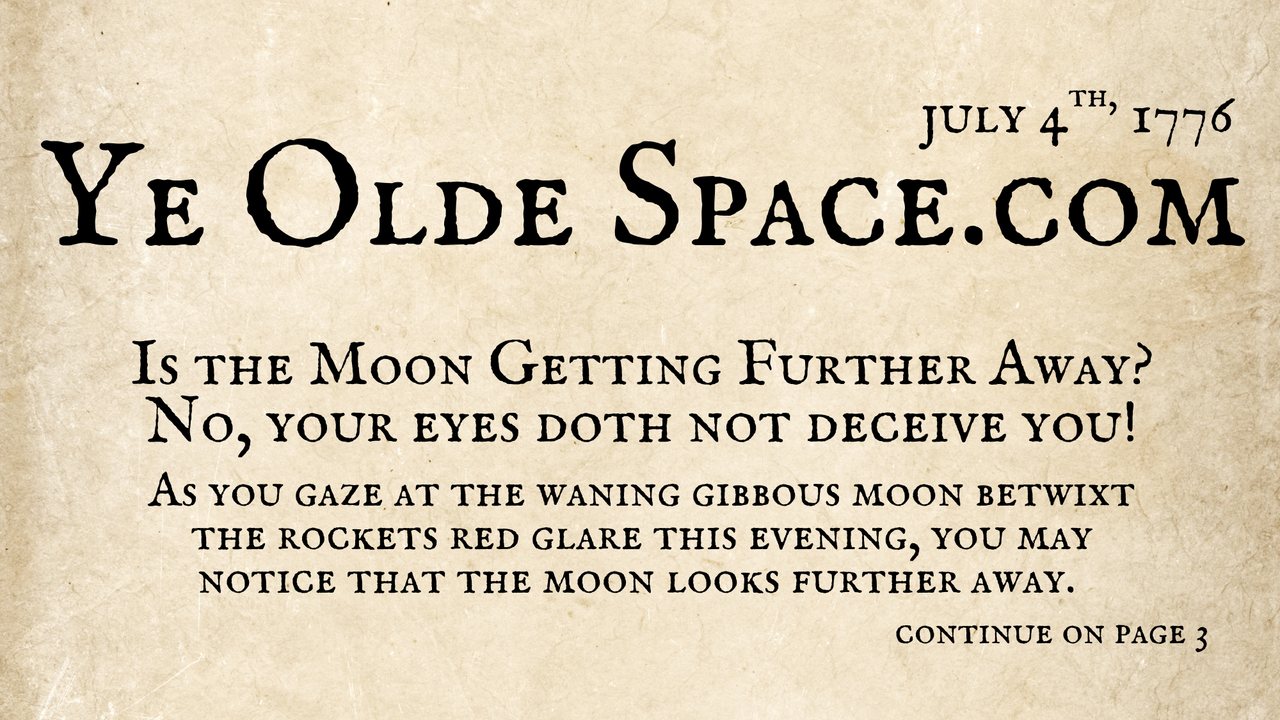
has launched a new editorial series titled «America 250: From 1776 to the moon and beyond,» a multi-part exploration of the United States' space achievements as the nation approaches its 250th anniversary. The series, helmed by Editor-in-Chief Tariq Malik, aims to connect the country's founding principles with its decades-long pursuit of space exploration, from the Apollo moon landings to current missions and future ambitions.
The series arrives at a moment when the U.S. space program is experiencing a renaissance, with NASA's Artemis program preparing to return astronauts to the lunar surface, private companies like SpaceX and Blue Origin advancing commercial spaceflight, and international collaborations expanding the reach of science beyond Earth orbit. «America 250» seeks to place these developments within a broader historical framework, examining how the nation's scientific and exploratory drive has evolved since 1776.
Malik, who has led since 2019, brings extensive experience in space journalism to the project. He joined the publication as an intern in 2001 and later became a full-time reporter covering spaceflight in 2004, with his first launch assignment being NASA's STS-114 Return to Flight mission in July 2005. Over the years, he has covered human spaceflight, exploration, space science, skywatching, and entertainment, earning recognition for his work. In October 2022, he received the Harry Kolcum Award for excellence in space reporting from the National Space Club Florida Committee, and in June 2025, the National Space Society awarded him the Space Pioneer Award for Excellence in Mass Media at the International Space Development Conference in Orlando, Florida.
The series draws on Malik's deep knowledge of the space industry and his personal background. A native of Stockton, California, he attended the same high school as NASA astronaut Jose Hernandez. He studied print journalism and astronomy at the University of Southern California, earning a bachelor's degree in journalism in 1999 with a minor in astronomy. After working as a staff reporter for The Los Angeles Times covering education and city beats in Orange County, he left in 2001 to study science journalism at New York University, where he earned a master's degree in 2002 from NYU's Science and Environmental Reporting Program under the direction of space reporter William Burrows.
Malik's early career also included freelance writing for The Scientist and Laboratory Equipment Magazine, as well as research assistance for nutrition writer Gary Taubes. He became 's Managing Editor in 2009 and Editor-in-Chief in 2019. In addition to his editorial role, he co-hosts the «This Week In Space» podcast with space historian Rod Pyle on the TWiT network.
The «America 250» series is expected to cover a wide range of topics, including the Apollo program, the Space Shuttle era, the International Space Station, robotic exploration of the solar system, and the emerging commercial space sector. It will also examine the role of space science in addressing challenges on Earth, such as climate monitoring and technological innovation. By linking the nation's founding ideals to its spacefaring achievements, the series aims to offer readers a comprehensive view of how exploration has shaped American identity and global leadership.
Malik's personal connection to space exploration runs deep. He is an Eagle Scout who earned the Space Exploration merit badge and attended Space Camp four times as a child and a fifth time as an adult. His enthusiasm for the subject is evident in his work, which combines rigorous reporting with a clear passion for discovery. The series reflects his belief that space exploration is not just a scientific endeavor but a reflection of the human spirit of inquiry and ambition.
As the United States prepares to mark 250 years since its founding, «America 250» offers a timely reminder of the nation's contributions to space exploration and the challenges that lie ahead. With the Artemis program aiming to establish a sustainable human presence on the Moon and plans for crewed missions to Mars taking shape, the series provides context for understanding how past achievements inform future goals. It also highlights the collaborative nature of modern spaceflight, involving government agencies, private companies, and international partners.
Readers can follow the series on and through Malik's social media channels, including his Twitter account @tariqjmalik. The series is expected to run throughout the year, with new installments exploring different facets of America's space legacy.
151