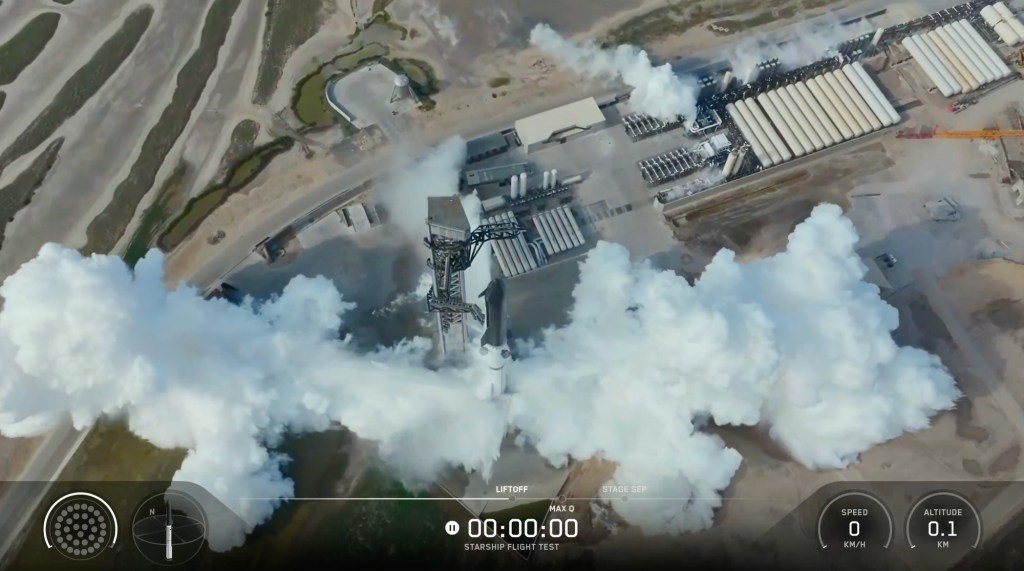
SpaceX aborted the launch of its latest Starship test flight, designated Flight 13, on July 16 after several of the vehicle's engines failed to ignite during the countdown sequence. The abort occurred at the last possible moment, halting what would have been the most ambitious test yet of the world's largest rocket system.
The launch attempt took place at SpaceX's Starbase facility in Boca Chica, Texas. The company had been preparing for a full-duration static fire test and subsequent launch, but the ignition failure forced a scrub. SpaceX has not yet announced a new target date for the flight, stating that teams are reviewing data to determine the root cause of the engine issue.
Starship Flight 13 was expected to include several major milestones, including an attempt to catch the Super Heavy booster with the launch tower's mechanical arms — a maneuver known as a «chopstick» catch — and a controlled splashdown of the upper stage in the Indian Ocean. The mission was also set to test new heat shield tiles and upgraded avionics systems.
The vehicle consists of two fully reusable stages: the Super Heavy booster, powered by 33 Raptor engines, and the Starship upper stage, which has six engines. During the abort, some of the booster's engines failed to reach the required ignition state, triggering an automatic shutdown of the countdown. SpaceX CEO Elon Musk has previously emphasized the complexity of starting all 33 engines simultaneously, noting that even minor anomalies can cause delays.
This abort follows a series of increasingly successful test flights for the Starship program. The previous flight, Flight 12, achieved a controlled descent and splashdown of the upper stage for the first time, though the booster was lost during landing. Each test has provided critical data that SpaceX uses to refine the vehicle's design and operations.
The Starship system is central to NASA's Artemis program, which aims to return astronauts to the Moon. SpaceX won a contract to develop a human-rated version of Starship as the lunar lander for Artemis missions. The vehicle is also intended for future crewed missions to Mars, making its reliability and performance a key focus for the company and its partners.
Industry observers note that the abort, while disappointing, is a routine part of rocket development. SpaceX has adopted a rapid iterative testing approach, launching prototypes even when failures are likely, in order to gather flight data quickly. The company has previously stated that it expects to conduct dozens of Starship launches per year once the system matures.
The Federal Aviation Administration, which licenses commercial launches, will need to approve any changes to the vehicle or flight plan before the next attempt. SpaceX must also complete its own investigation into the engine failure and implement corrective actions. The timeline for Flight 13 remains uncertain, but the company typically aims to resume testing within weeks of a scrub.
SpaceX's Starbase facility has seen a surge in activity in recent months, with multiple vehicles under construction and testing infrastructure being expanded. The company is also building a second launch tower at the site, which will allow for more frequent launch attempts. Meanwhile, work continues on a Starship production facility in Florida, indicating long-term plans for high launch cadence.
The Starship program represents a significant shift in spaceflight economics, with the goal of making access to space dramatically cheaper through full reusability. Each test flight brings SpaceX closer to that goal, even when the outcome is not a perfect launch. The abort on July 16 is a reminder of the technical challenges involved, but also of the company's commitment to pushing the boundaries of what is possible in rocketry.
97