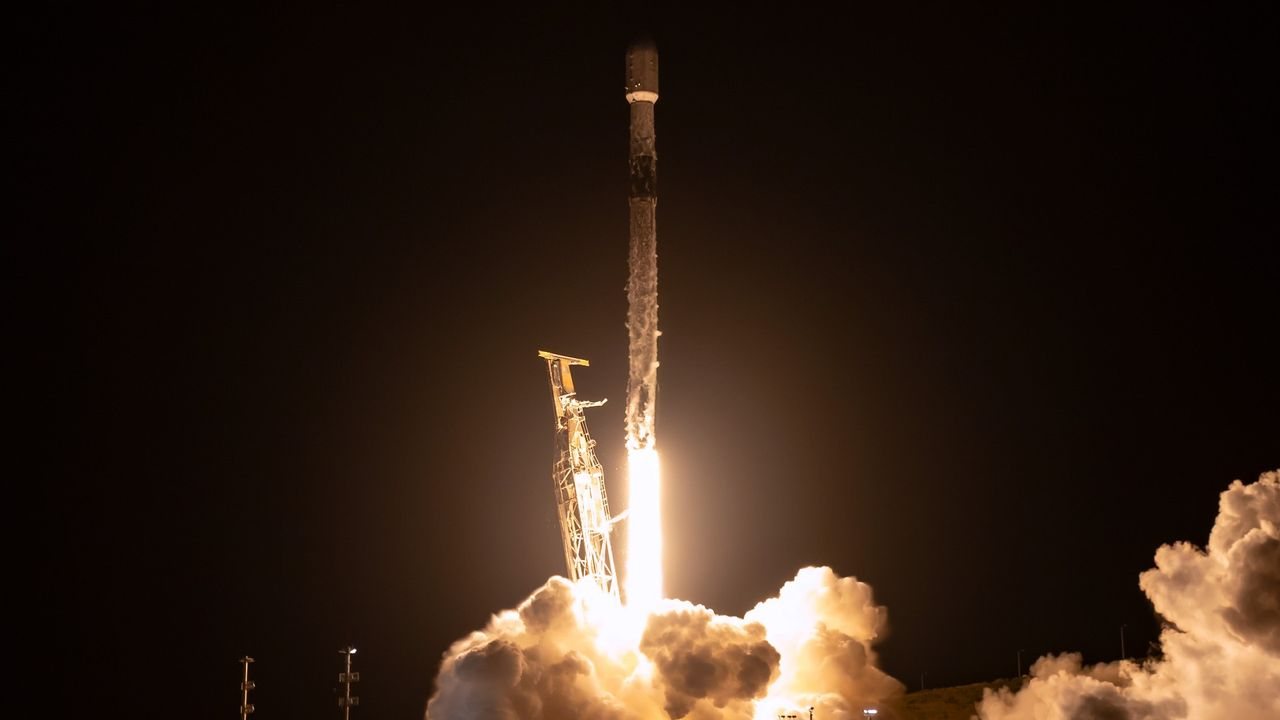
SpaceX launched 81 satellites into orbit early on July 7, 2025, from Vandenberg Space Force Base in California, continuing its series of dedicated rideshare missions designed to provide affordable access to space for a wide range of customers. The Falcon 9 rocket lifted off at 2:43 a.m. Eastern time from Space Launch Complex 4 East, carrying a diverse payload of small satellites from commercial companies, government agencies, and research institutions.
The mission, designated Transporter-17, is the latest in SpaceX's rideshare program, which has become a key enabler for small satellite operators who previously faced limited launch options or had to wait for primary payloads to fill unused capacity. By aggregating multiple satellites on a single rocket, SpaceX offers standardized pricing starting at $1.1 million for a 200-kilogram payload to sun-synchronous orbit, a model that has dramatically lowered the barrier to entry for space-based ventures.
Among the payloads on Transporter-17 were Earth observation satellites, communications demonstrators, technology validation platforms, and scientific instruments. The satellites ranged in size from CubeSats weighing just a few kilograms to microsatellites of several hundred kilograms. While SpaceX did not release a detailed manifest, industry sources indicated that customers included Planet Labs, which operates a large constellation of Earth-imaging satellites, and several European and Asian space agencies testing new technologies.
The Falcon 9 first stage used for this mission, designated B1078, completed its 12th flight. Following stage separation, the booster successfully landed on the droneship «Of Course I Still Love You» stationed in the Pacific Ocean. The landing marked another milestone in SpaceX's reusable rocket program, which has now achieved over 300 successful booster landings across the Falcon 9 and Falcon Heavy fleets. Reusability has been a cornerstone of SpaceX's cost reduction strategy, allowing the company to refurbish and refly boosters multiple times, thereby lowering launch costs and increasing launch cadence.
The Transporter-17 mission also deployed satellites for the U.S. Space Force and other defense-related customers, though details of those payloads remain classified. The rideshare program has attracted increasing interest from national security agencies seeking to leverage commercial launch services for rapid deployment of small satellites. This trend reflects a broader shift in the space industry toward smaller, more distributed satellite architectures that can be quickly replaced or upgraded, as opposed to traditional large, monolithic spacecraft that take years to develop and launch.
SpaceX has now launched 17 dedicated Transporter missions since the program began in 2021, placing hundreds of small satellites into orbit. The company also offers dedicated rideshare launches to other orbits, including geostationary transfer orbit and low Earth orbit at different inclinations, through its Smallsat Rideshare Program. The program has faced some criticism from competitors who argue that SpaceX's pricing undercuts traditional small launch providers, but it has been widely praised by the small satellite community for democratizing access to space.
The launch occurred during a busy period for SpaceX, which also conducted a Starlink mission earlier in the week and is preparing for the next crewed flight to the International Space Station later this month. The company's launch cadence has accelerated significantly in 2025, with Falcon 9 rockets launching on average every two to three days. This high tempo has been made possible by the company's extensive fleet of reusable boosters and its ability to rapidly refurbish and relaunch them.
Transporter-17's success underscores the growing importance of rideshare missions in the global launch market. As satellite technology continues to miniaturize and the demand for space-based services expands, the ability to launch multiple payloads on a single rocket has become a critical capability. SpaceX's rideshare program has not only provided cost-effective access but has also enabled new business models, such as satellite constellation operators that deploy dozens or hundreds of small satellites to provide global connectivity, Earth observation, and other services.
The Falcon 9's upper stage completed its second burn to deploy the satellites into their target orbits, with deployment occurring approximately one hour after liftoff. The entire mission was broadcast live on SpaceX's website and social media channels, drawing a global audience of space enthusiasts and industry professionals. The webcast included commentary from SpaceX engineers who provided real-time updates on the rocket's performance and the deployment sequence.
Looking ahead, SpaceX has several more Transporter missions planned for 2025, including Transporter-18 later this year. The company is also developing its next-generation Starship vehicle, which promises to further reduce launch costs and enable even larger rideshare opportunities. While Starship's development has faced delays, its potential to carry hundreds of small satellites in a single launch could revolutionize the industry once operational.
128