SpaceX is preparing to launch a groundbreaking mission today that will send a satellite repair drone equipped with robotic arms into Earth orbit, marking a significant step forward in orbital maintenance and sustainability. The mission, operated by Northrop Grumman, aims to demonstrate the ability to service and extend the operational life of satellites in geostationary orbit, a region crowded with valuable communications and weather satellites.
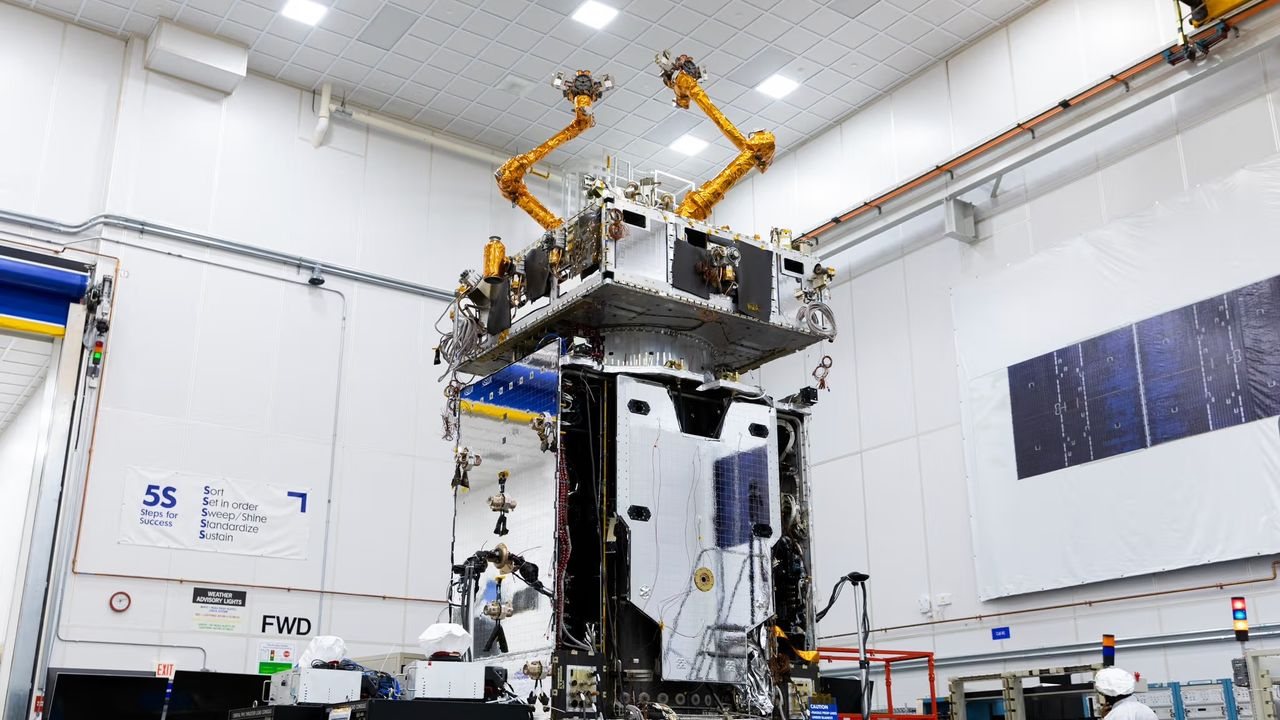
The launch is scheduled to take place from Cape Canaveral Space Force Station in Florida, using a Falcon 9 rocket. The payload includes the Mission Robotic Vehicle (MRV) and the Mission Extension Pod (MEP), which together form a versatile satellite servicing platform. The MRV is a spacecraft designed to dock with satellites and perform repairs, refueling, or repositioning, while the MEP is a propulsion module that can be attached to a satellite to provide additional maneuvering capability.
This mission represents a collaboration between SpaceX and Northrop Grumman, two leaders in the aerospace industry. The MRV is equipped with advanced robotic arms that can grasp and manipulate satellite components, allowing it to perform tasks such as replacing batteries, adjusting solar panels, or correcting orbital positions. This capability could revolutionize the way satellites are managed, reducing the need for costly replacements and mitigating space debris.
The launch window opens at 10:00 a.m. EST, with live coverage available through SpaceX's webcast. Viewers can watch the event online, with commentary from mission experts. The Falcon 9 rocket will carry the MRV and MEP to a transfer orbit, from which they will maneuver to their target altitude in geostationary orbit, approximately 22,000 miles above Earth.
Northrop Grumman has been a pioneer in satellite servicing, having previously launched the Mission Extension Vehicle (MEV) in 2019, which successfully docked with a communications satellite and extended its life. The MRV builds on that technology, adding robotic arms for more complex tasks. The MEP, meanwhile, can be attached to a satellite to provide propulsion for station-keeping or end-of-life disposal, helping to prevent the accumulation of defunct spacecraft in valuable orbital slots.
The mission is part of a broader trend toward in-orbit servicing and space sustainability. As the number of satellites in orbit grows, driven by constellations for internet and Earth observation, the ability to repair and refuel spacecraft becomes increasingly important. The U.S. Space Force and other agencies have expressed interest in such capabilities for both commercial and national security applications.
Weather conditions at Cape Canaveral are expected to be favorable, with a 70% chance of acceptable conditions for launch. The Falcon 9 first stage is planned to land on a droneship in the Atlantic Ocean, continuing SpaceX's practice of reusing rocket boosters to reduce costs.
The successful deployment of the MRV and MEP could open new markets for satellite servicing, potentially saving operators millions of dollars by extending the life of their assets. It also aligns with international efforts to reduce space debris, as serviced satellites can be deorbited more safely at the end of their extended lives.
SpaceX and Northrop Grumman have not disclosed the exact cost of the mission, but such servicing contracts are typically valued in the hundreds of millions of dollars. The mission is expected to last several years, with the MRV performing multiple servicing operations on different satellites.
This launch underscores the rapid evolution of space technology, where robots are increasingly taking on roles once reserved for astronauts. While human spaceflight remains a priority for NASA and other agencies, robotic servicing offers a cost-effective and safe alternative for maintaining the growing infrastructure in orbit.
148