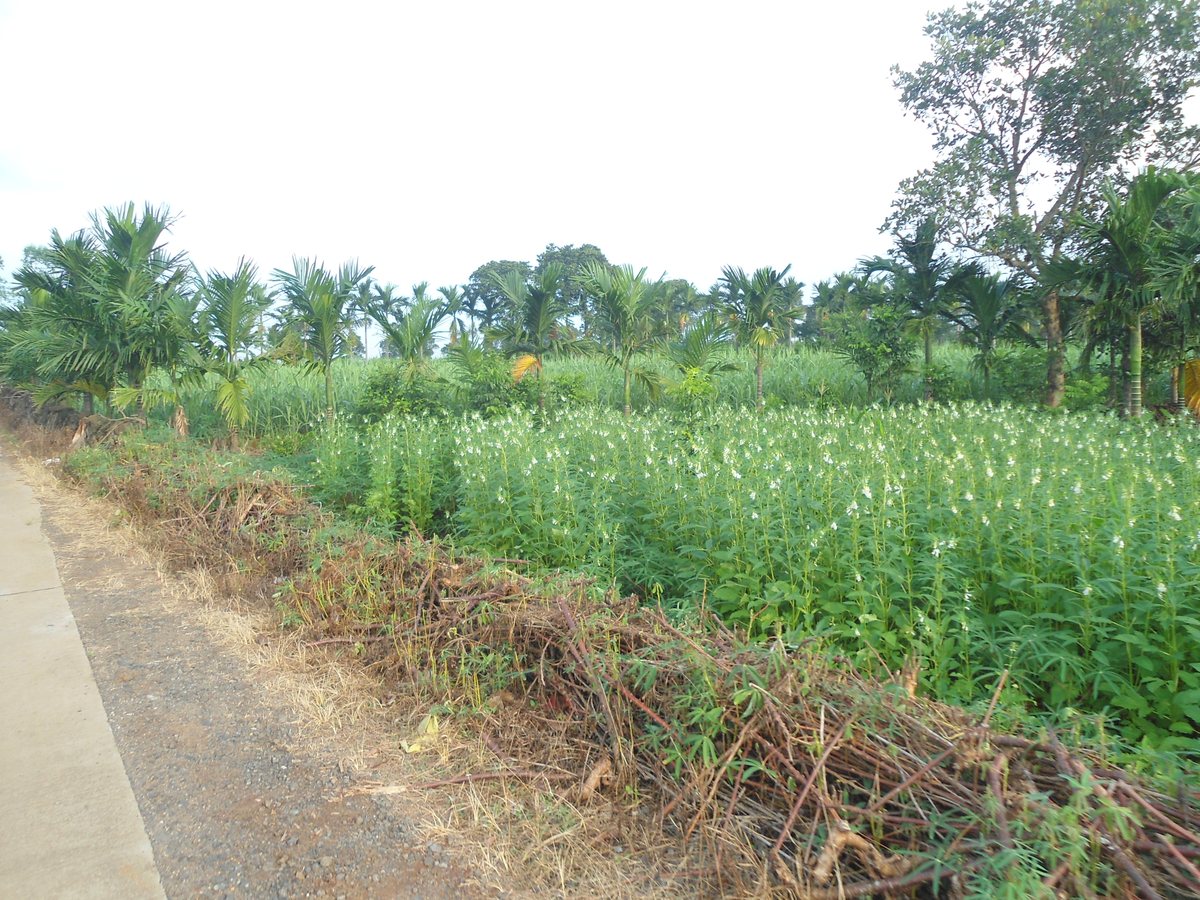
A crop failure in eastern China has provided a concrete example of a problem agricultural AI researchers have been trying to solve: a language model can generate technically plausible pesticide advice without reliably enforcing crop-specific safety constraints.
According to CTWANT reporting relayed by Tom’s Hardware and The Economic Times, a 67-year-old farmer surnamed Wu in Chuzhou had used an unnamed AI application for about a year. He consulted it on weather, fertilizer and pests and gradually became confident in its recommendations.
When he later asked how to control weeds and pests in a sesame field, the system produced a chemical treatment plan. Wu applied it over 150 mu, approximately 10 hectares or 24.7 acres, without asking an agricultural technician to verify the recipe. By the next morning, the reports said, both weeds and sesame seedlings were dying en masse.
One herbicide identified in the coverage was fomesafen. The compound is used for broadleaf weed control. China’s pesticide-registration database lists specific crop uses for fomesafen formulations, including soybean fields, and includes warnings about sensitive non-target crops. Specialists cited in the original account linked the sesame injury to that ingredient.
The case illustrates why pesticide recommendations are not simply a retrieval problem. A model must connect the active ingredient to a registered crop, growth stage, dose, formulation, application method and local label restrictions. Each condition can change the safety profile.
A 2024 study published in Henan Agricultural Sciences explored post-emergence broadleaf weed control in sesame by screening herbicide treatments for both weed efficacy and crop safety. The results showed clear differences in phytotoxicity among options. That kind of evidence is structurally different from generic web text saying a chemical “kills broadleaf weeds.” An agronomic decision depends on the interaction between the herbicide and the crop itself.
China’s research community has already responded to this limitation with domain-specific model design. On May 26, Xinhua reported the launch of Green Shield, described as the country’s first open-source large language model for crop protection. Developed by Nanjing Agricultural University, the National Key Laboratory of Agricultural Biosafety and partner institutions, the system is intended to cross-reference China’s pesticide-registration database and reject noncompliant recommendations.
Its developers explicitly identified a weakness in general-purpose LLMs: they can give inaccurate plant-protection answers and poorly standardized, potentially risky pesticide guidance. The Green Shield approach adds external regulatory and technical constraints rather than relying only on the language model’s internal statistical knowledge.
Wu’s case also contains a human-factors lesson. The chat page reportedly included a generic warning that AI output might be wrong, but about a year of useful advice had already increased the farmer’s confidence. A safety system therefore cannot assume users will independently verify every answer forever.
The AI application involved has not been named in the accessible reports, and the exact financial loss has not been documented publicly. What is clear is the physical scale of the reported damage. For agricultural AI, the path forward is likely to involve a combination of specialized databases, explicit uncertainty, crop-specific validation and human agronomists at the point where digital advice becomes a chemical action in a field.
140