The U.S. Space Force has awarded Slingshot Aerospace a $69 million contract to develop artificial intelligence-powered training technology designed to simulate satellite-defense scenarios. The 4½-year award underscores the military branch's growing emphasis on preparing personnel for potential threats in the increasingly contested space domain.
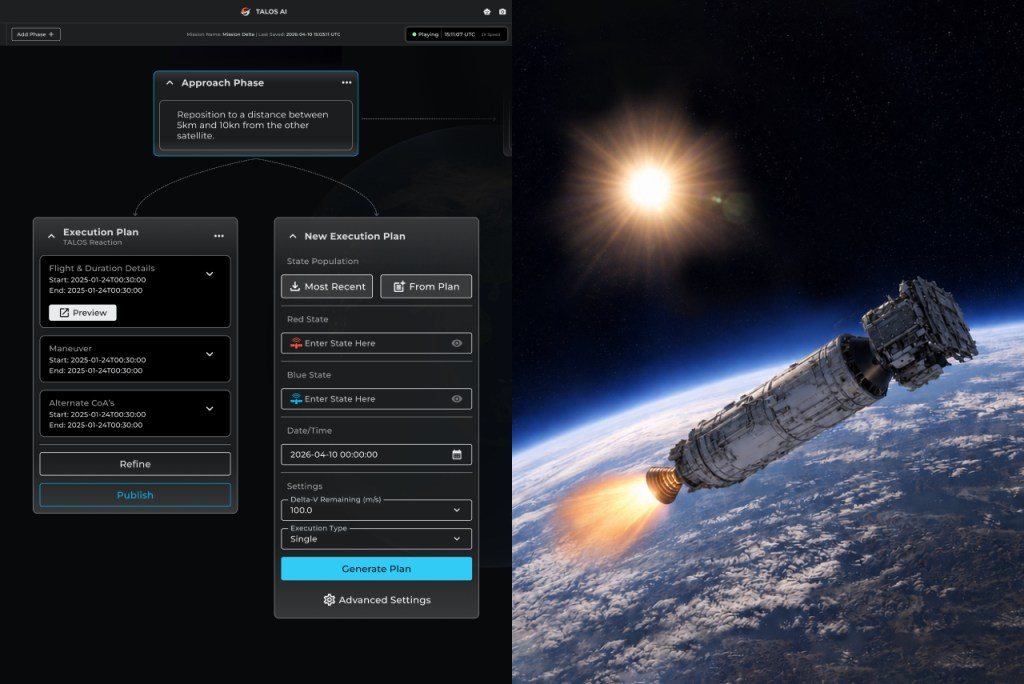
Under the terms of the contract, Slingshot will build and deliver a training system that leverages AI to create realistic, dynamic simulations of space-based conflicts. These simulations are intended to help Space Force operators practice defending satellites and other critical assets against a range of potential adversarial actions, including jamming, cyberattacks, and physical threats. The technology aims to move beyond static, scripted training exercises by incorporating machine learning algorithms that can adapt scenarios in real time based on trainee decisions.
The award comes as the Space Force continues to expand its focus on space warfare readiness. The branch, established in December 2019, has identified the protection of U.S. and allied satellites as a core mission. Satellites provide essential services for military communications, navigation, intelligence gathering, and civilian applications such as weather forecasting and global internet connectivity. Any disruption to these systems could have cascading effects on national security and the global economy.
Slingshot Aerospace, based in El Segundo, California, specializes in space situational awareness and data analytics. The company has previously worked with the Space Force and other defense agencies on projects aimed at improving the tracking of objects in orbit and enhancing the resilience of space architectures. This latest contract builds on that expertise by applying AI to the training domain, a move that reflects broader trends in military technology development.
The use of AI in military training is not new, but its application to space operations represents a significant evolution. Traditional training for space operators has often relied on tabletop exercises or simulations that follow predetermined paths. AI-enabled systems, by contrast, can generate unpredictable and complex scenarios that better mirror the fast-paced and ambiguous nature of real-world space conflicts. This approach is intended to sharpen decision-making skills and improve reaction times among operators who may face novel threats in orbit.
The contract also highlights the Space Force's strategy of partnering with commercial technology firms to accelerate innovation. Rather than developing all capabilities in-house, the branch has increasingly turned to private companies like Slingshot to provide specialized tools and expertise. This model allows the military to tap into cutting-edge advancements in AI, machine learning, and data analytics without the lengthy timelines often associated with traditional defense procurement.
Industry analysts have noted that the space domain is becoming more congested and contested as nations and private companies deploy increasing numbers of satellites. The U.S. Space Force has warned that potential adversaries, including China and Russia, are developing anti-satellite weapons and electronic warfare capabilities that could threaten American space assets. In response, the branch has prioritized training and technology investments to ensure its personnel can operate effectively under duress.
The Slingshot contract is part of a broader push by the Space Force to modernize its training infrastructure. Other initiatives have included the development of virtual reality simulators and the establishment of a dedicated space training center at Peterson Space Force Base in Colorado. The AI-enabled system from Slingshot is expected to complement these efforts by providing a software-based platform that can be updated and scaled as threats evolve.
Financial details of the award were not fully disclosed beyond the $69 million ceiling, but the contract is structured as a firm-fixed-price agreement with performance incentives. Slingshot will be responsible for delivering the system within the 4½-year period, including initial testing and integration with existing Space Force training networks. The company has not yet announced specific milestones or a deployment timeline.
The award was announced by the Space Force's Space Systems Command, which oversees the acquisition of space-related technologies. In a statement, officials emphasized the importance of realistic training for maintaining space superiority. The contract represents one of the larger investments by the Space Force in AI-driven training tools to date, signaling a commitment to embedding advanced technology into the core of its operational readiness programs.
114