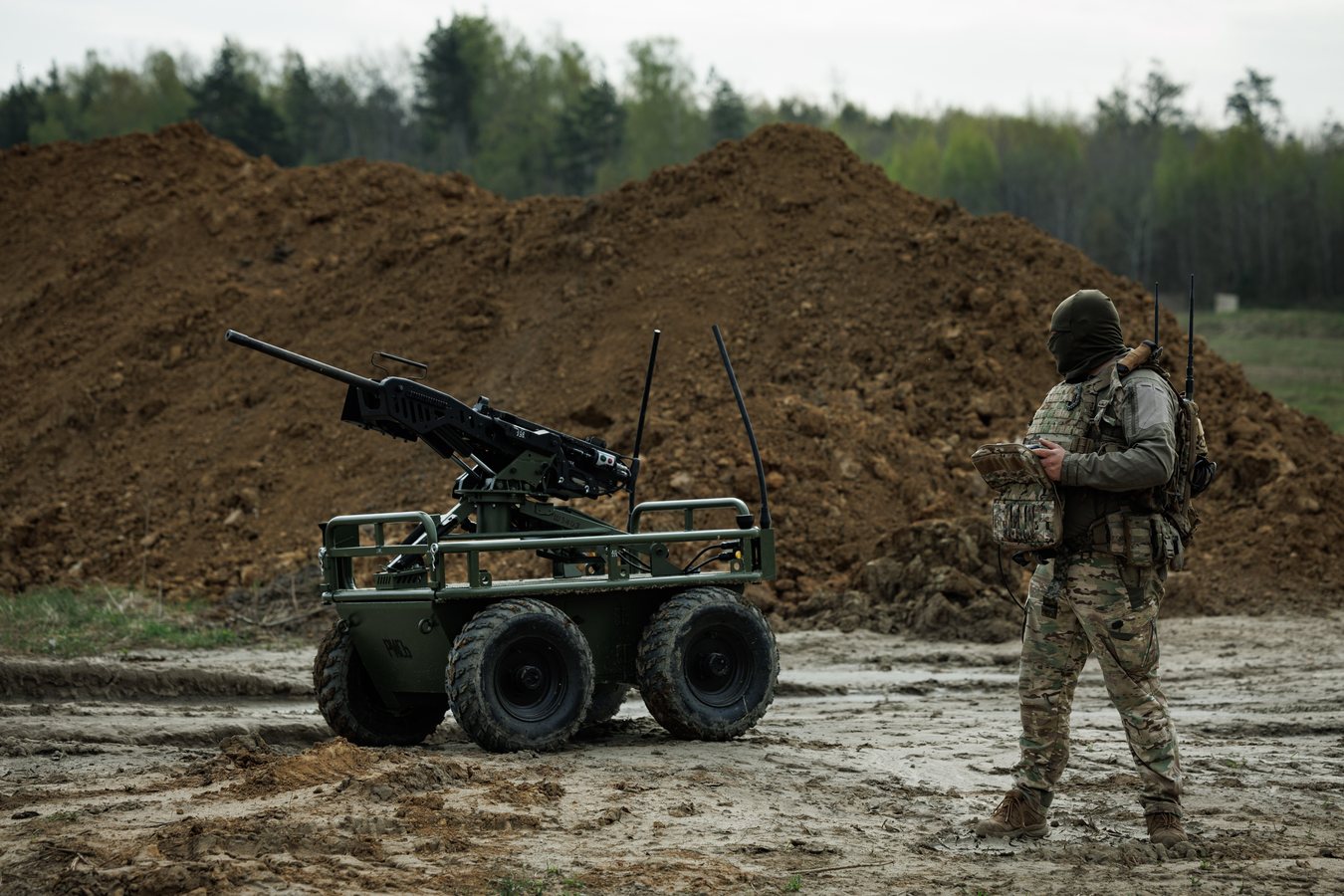
A dawn column of unmanned ground vehicles in Kyiv offered a visible snapshot of a technology that is already being used at scale. According to Arhiv, several dozen wheeled and tracked systems moved through Khreshchatyk on Ukraine’s Independence Day, including the Rys PRO and TerMIT platforms.
Ground robotics in Ukraine is notable for the diversity of tasks rather than a single autonomous weapon concept. Depending on configuration, these platforms can carry supplies, evacuate casualties, support engineering work, conduct reconnaissance or host remotely controlled weapon stations.
The scale is unusually high for a technology still often treated elsewhere as experimental. Ukrainian defense units have reported more than 100,000 logistics and evacuation missions using unmanned ground systems since the start of 2026.
That operational volume provides manufacturers with a large stream of real-world data. Mobility failures, communication problems, battery performance, payload limits and resistance to electronic warfare can be identified through repeated use rather than limited trials.
Procurement is growing alongside mission count. More than 22,000 systems have been contracted in 2026, while military users have ordered nearly 1.9 billion hryvnias worth of platforms through Brave1 Market.
The Rys Pro also illustrates how technology transfer can work in both directions. Ukrainian developer Roboneers and German company ARX Robotics created ARX Industries to manufacture the platform in Ukraine and Germany. The arrangement combines battlefield-derived design requirements with additional European production capacity.
The wider Independence Day demonstration included maritime drones and aerial unmanned systems, plus piloted combat aircraft. It was therefore not literally an all-robot parade, and not every ground platform should be described as a combat robot.
From a technology perspective, the more important development is iterative engineering under sustained operational pressure. Ukraine’s ground robotics sector is effectively running a large field experiment in which hardware is deployed, evaluated, modified and returned to service quickly. That process could influence how military robotics is designed and procured well beyond Ukraine.
160