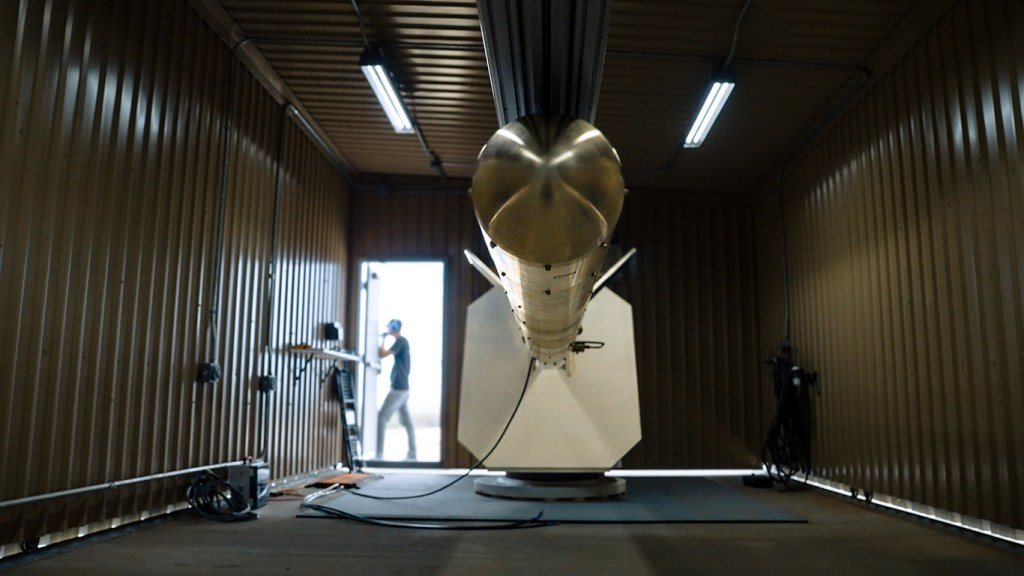
Venus Aerospace, a company developing advanced propulsion systems, has raised $91 million in a funding round to scale up its rotating detonation rocket engine (RDRE) technology. The investment will support the development and production of the engine, which is designed to enable hypersonic flight and more efficient space access.
The funding round was led by new and existing investors, including funds managed by ARK Invest and others. Venus Aerospace plans to use the capital to expand its engineering team, accelerate engine testing, and prepare for commercial production. The company’s RDRE technology uses a detonation wave rather than traditional deflagration to generate thrust, potentially offering higher efficiency and lower costs compared to conventional rocket engines.
Rotating detonation engines work by creating a continuous detonation wave that travels around a circular channel, burning fuel and oxidizer more completely and at higher pressures. This design could significantly improve specific impulse, a key measure of rocket engine efficiency, while also reducing engine weight and complexity. Venus Aerospace has been testing its engine at facilities in Texas and aims to demonstrate a full-scale prototype in the coming years.
The company’s technology is being developed for both hypersonic aircraft and small satellite launch vehicles. Hypersonic flight, defined as speeds above Mach 5, has attracted growing interest from defense and commercial sectors for applications such as rapid global transportation and reconnaissance. Venus Aerospace’s engine could also power reusable rockets, potentially lowering the cost of launching payloads into orbit.
Venus Aerospace was founded in 2020 by Andrew Duggleby and Sarah Duggleby, who previously worked at other aerospace firms. The company has raised a total of over $100 million to date, including earlier seed rounds. Its RDRE technology has been tested in ground-based experiments, and the company has partnered with the U.S. Department of Defense on research programs related to hypersonic propulsion.
The latest funding round reflects investor confidence in the potential of detonation-based propulsion to disrupt the aerospace industry. Traditional rocket engines rely on subsonic combustion, which limits their efficiency and thrust-to-weight ratio. In contrast, rotating detonation engines can operate at higher pressures and temperatures, extracting more energy from the same amount of propellant. This could lead to lighter, more powerful engines that are cheaper to manufacture and operate.
Venus Aerospace is not alone in pursuing this technology. Other companies and research institutions, including NASA and the U.S. Air Force, have also explored rotating detonation engines for various applications. However, Venus Aerospace claims to have made significant progress in scaling the technology to practical sizes and power levels. The company’s engine is designed to run on commonly available fuels such as methane and liquid oxygen, which could simplify logistics and reduce costs.
The $91 million funding round is one of the largest private investments in detonation engine technology to date. It signals that investors see a viable path to commercialization for RDREs, despite the technical challenges involved. These challenges include managing extreme heat and pressure within the engine, ensuring stable detonation over a wide range of operating conditions, and integrating the engine into aircraft or rocket systems.
Venus Aerospace has not disclosed a specific timeline for commercial deployment, but the company has stated that it aims to begin flight testing within the next few years. The funding will also support the construction of a new test facility and the hiring of additional engineers and technicians. The company’s long-term vision includes powering hypersonic passenger aircraft that could cross the Atlantic in under an hour, as well as reusable launch vehicles that could reduce the cost of space access by an order of magnitude.
The aerospace industry has seen a surge of interest in hypersonic and advanced propulsion technologies in recent years, driven by both commercial opportunities and national security concerns. Venus Aerospace’s RDRE technology could play a key role in this emerging market, offering a step-change in performance over existing engines. The company’s ability to secure significant funding suggests that it is well-positioned to compete with larger players in the field.
135