Stone-tipped weapons unearthed at an ancient site in Saudi Arabia may have been treated with plant poisons, according to researchers who studied organic residues preserved on the points. The find, dating to roughly 125,000 years ago, offers a rare glimpse into how early humans in the Arabian Peninsula hunted and built their tools.
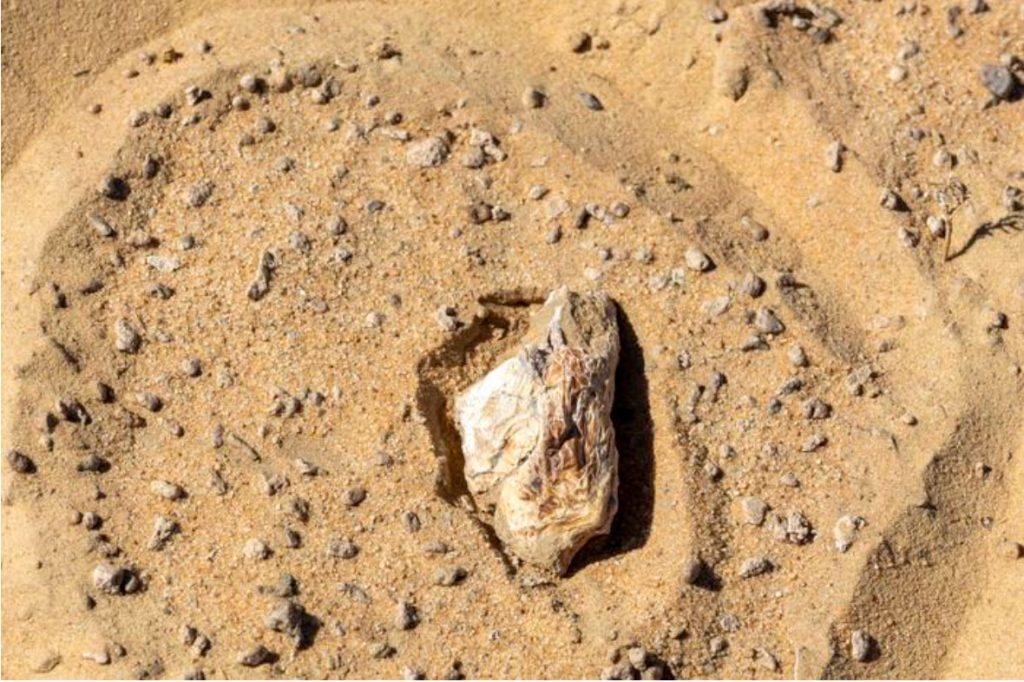
The site, known as Uruq Aljelibah, was excavated by a team led by Chris Clarkson of Griffith University in Australia, working with collaborators at KAUST and the Saudi Heritage Commission. Today the location lies in a very dry region, but at the time it sat on the shore of a large freshwater lake. The team recovered more than 5,000 artifacts and fossils, including the remains of hippos, buffalo, camels, gazelles and oryx, showing that the lakeside environment supported a wide range of animals.
Among the most intriguing finds are the stone-tipped weapons, which still carry traces of organic material. Those residues point to the use of adhesives and plant-fiber technology to attach points to shafts. The researchers also suggest that certain plant substances may have been applied to the points to make wounds more dangerous, though that possibility has not been confirmed. If so, the methods would have made hunting considerably more effective.
The findings also bear on a long-running question about human migration. Early groups that left Africa may have settled in what is sometimes called "Green Arabia" during wetter periods, while others likely moved on into Asia. The reporting on the discovery, first covered by Gizmodo, notes that the results have not yet been fully verified, so further analysis will be needed before the poison hypothesis can be settled.
Credit. Based on reporting by Jessica Esther Saraceni for Archaeology Magazine. Is this your work? Write to us.
28