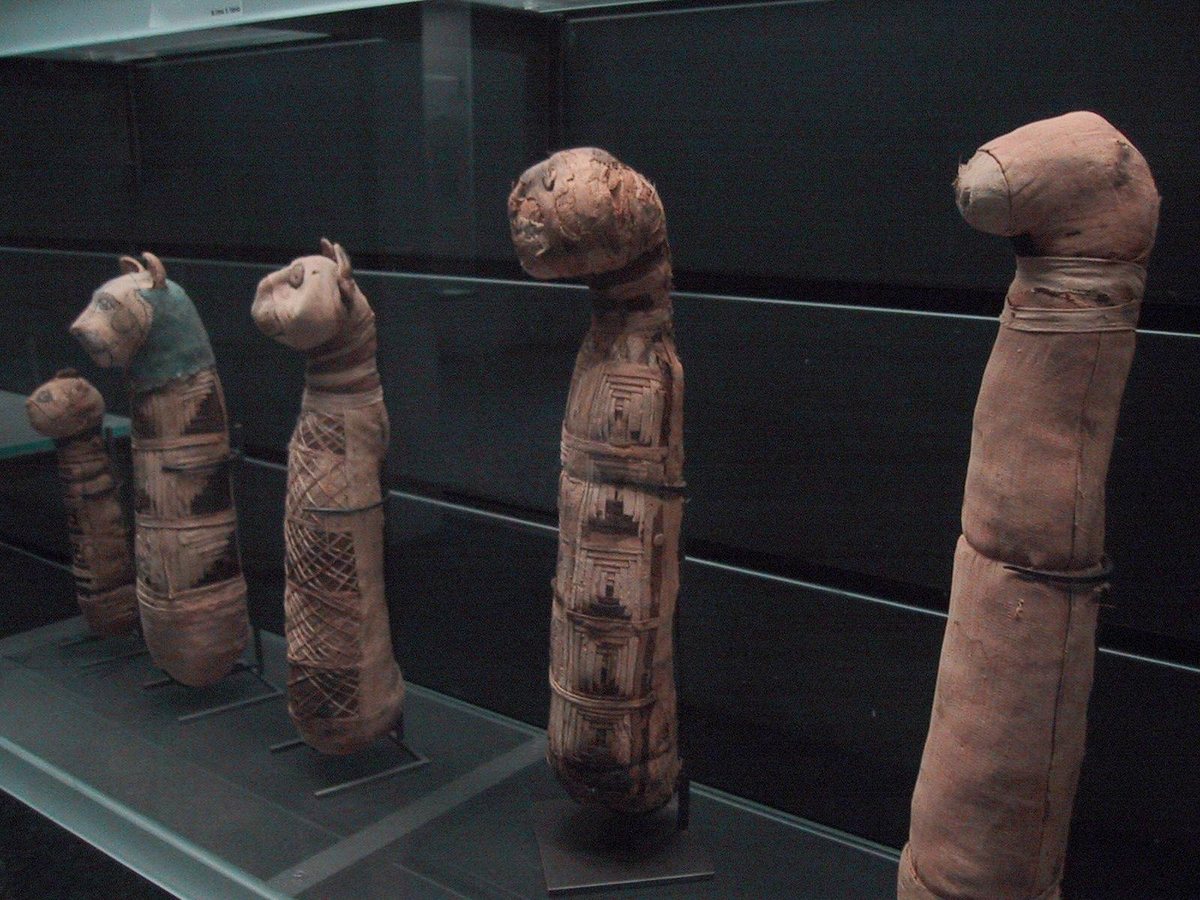
Zooarchaeologist Wim Van Neer and colleagues at the Royal Belgian Institute of Natural Sciences have examined the health of mummified cats from ancient Egypt, finding evidence of disease and injury across a large sample. The team studied 131 cat skulls held at the Natural History Museum in Vienna. The animals had been removed from burial sites at Beni Hassan, in central Egypt, during the 1800s.
The skulls show a high rate of dental and jaw problems. Twenty-six cats had periodontitis, a serious gum infection, and 24 had lost teeth. Pitting was visible on 35 skulls, and 19 had perforations in the eye sockets. Those openings may point to infection or nutritional stress, though the researchers could not confirm either cause.
Injuries were also common. Fourteen skulls bore fractures or puncture wounds. Some of the wounds may have been inflicted by a metal tool or by blunt force, and some punctures may have come from other cats. Several healed injuries might reflect punishment or fights between animals.
The researchers caution that their conclusions are inferences rather than established facts. Some fatal wounds may have occurred before mummification, and the team has suggested that crowded conditions could have contributed to the animals' suffering. Still, the findings add detail to what is known about how cats lived and died in ancient Egyptian society.
Credit. Based on reporting by Jessica Esther Saraceni for Archaeology Magazine. Is this your work? Write to us.
50