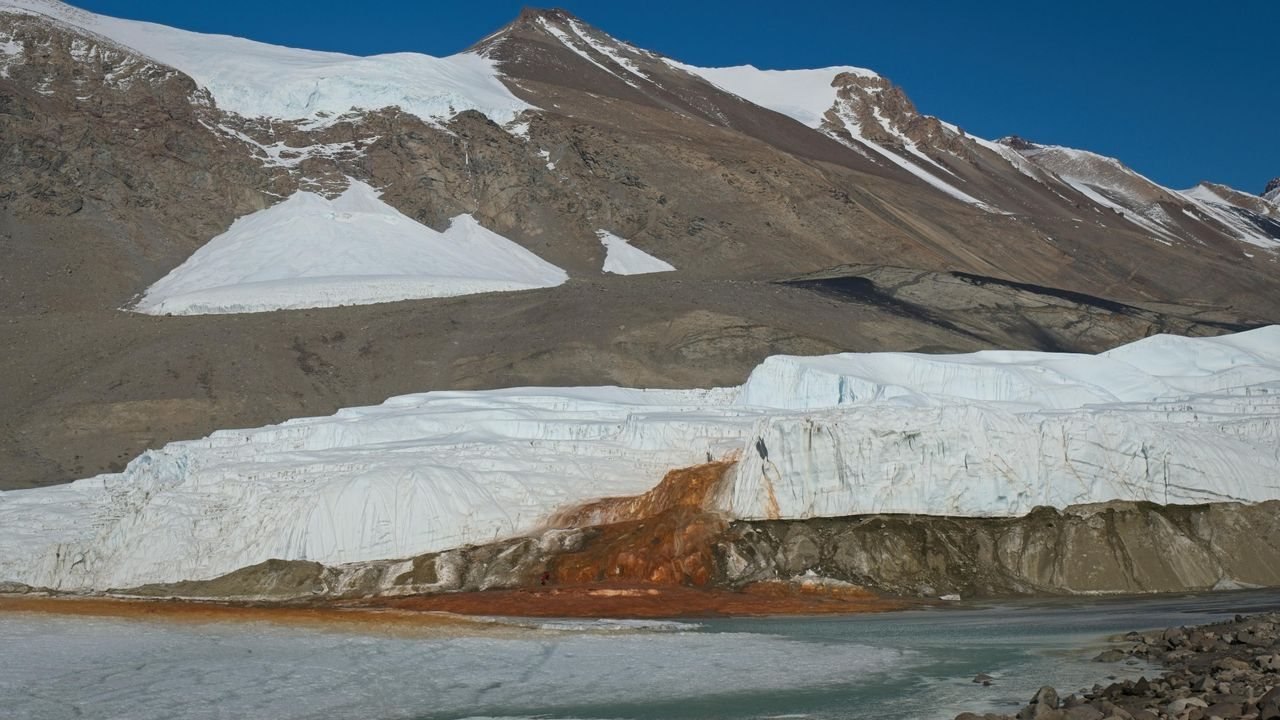
Scientists have identified a new clue to the origin of Blood Falls, the eerie red waterfall that seeps from the front of Taylor Glacier in Antarctica and has puzzled explorers for more than a century. The vivid color, according to a new analysis, is carried not only by dissolved iron but also by tiny iron-rich nanospheres suspended in the ancient brine that feeds the falls.
Blood Falls is one of the most unusual sights in the McMurdo Dry Valleys, a polar desert where bitterly cold temperatures and near-zero humidity keep the landscape mostly bare. The site was discovered in 1911 by Griffith Taylor, a geologist on Robert Falcon Scott's Terra Nova expedition, who noticed a dark red stain spreading across the glacier face. For years, explorers assumed the color came from red-tinged algae or mineral dust. Scientists later learned that the falls draw water from a deeply buried reservoir of extremely salty liquid beneath the glacier, water that may have remained trapped below the ice for up to a million years or more. When this brine seeps through cracks and reaches the surface, the oxygen-rich atmosphere triggers the iron within it to oxidize, giving the flow its dramatic blood-red appearance.
The new study adds an important layer to that explanation. By examining brine samples from the falls, researchers identified large numbers of nanospheres — minuscule iron-rich particles, only tens of nanometers across — distributed throughout the reddish liquid. Unlike large crystals or flakes, these nanoparticles can stay suspended in water for long periods, making them an effective carrier of the color that visitors see as it pours out.
The nanospheres contain more than iron. Silica and traces of other elements are also present, and their shapes and surface textures seem to record the chemistry of the enclosed aquifer where they formed. That makes them a valuable archive of what is happening beneath the glacier, a place that is impossible to reach directly. Scientists believe the particles precipitated from iron-rich water as it interacted with rock and sediment under the ice, possibly with the help of microbial activity.
The finding fills in a missing piece of the Blood Falls puzzle. The hidden aquifer is one of the harshest habitats on Earth: cold, black, oxygen-poor, and so salty that it remains liquid despite the overlying glacier. Yet microorganisms survive there. The new research may help explain how these communities obtain nutrients and how iron is cycled through their ecosystem, even though no sunlight ever reaches them. The nanospheres could also reveal how the water became so rich in minerals in the first place.
There are implications beyond this single glacier. Iron-rich brines and small mineral particles of this type might exist in other ice-covered settings, including the polar regions of Mars, where seasonal liquid water flows have been detected. If similar nanospheres are found in Martian sediment or in ancient glacial deposits on Earth, they could act as markers for briny water and potential habitats, not just for cold Antarctic ice fields but for other planetary bodies.
For now, the discovery deepens understanding of one of nature's most striking optical illusions in ice. Blood Falls continues to draw scientific interest because it promises a direct glimpse of a hidden hydrological system and the life that may occupy it. The nanospheres, visible only under powerful microscopes, are a reminder that even the most famous natural wonders can still yield unexpected secrets when seen up close.