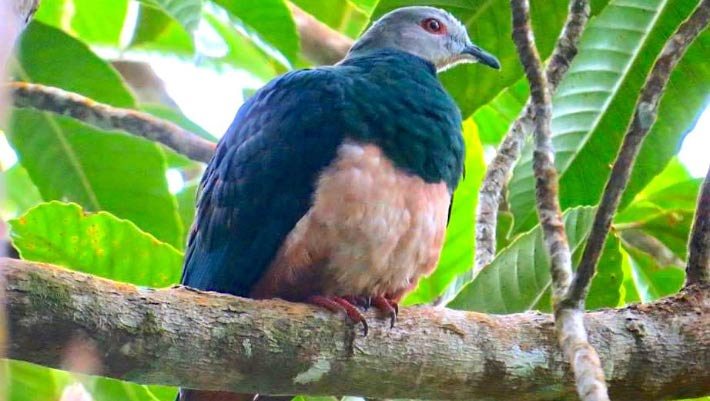
A previously unrecognized species of fruit-eating pigeon has been identified on the remote island of Tawi-Tawi in the Philippines' Sulu Archipelago, according to research led by Dr. Matthew Halley of the Delaware Museum of Nature & Science.
The bird belongs to the genus Ducula, a widespread group of large, fruit-eating pigeons commonly known as imperial pigeons. These birds are found across tropical forests from Southeast Asia to the Pacific islands, where they play an important ecological role by dispersing the seeds of the fruits they consume.
The finding adds a new member to a genus that already includes dozens of species, many of them restricted to small islands or isolated forest patches. Island-dwelling imperial pigeons are particularly vulnerable to habitat loss and hunting, and several Ducula species are considered threatened or near threatened by conservation organizations.
Tawi-Tawi sits at the southwestern edge of the Philippines, in the Sulu Archipelago between Borneo and the Philippine island of Mindanao. The island chain is known for its high levels of endemic wildlife, meaning species that live nowhere else on Earth. Its forests, however, have been under pressure from logging, agricultural expansion, and human settlement for decades.
The identification of a new bird species in this region suggests that the archipelago's biodiversity remains incompletely documented, even as its habitats face mounting threats. Scientists who study island ecosystems often note that birds and other vertebrates can persist in remote or rugged terrain long after surveys elsewhere have been completed.
Imperial pigeons are among the largest arboreal fruit-eaters in many tropical forests. Because they can swallow sizable fruits and travel considerable distances, they function as important seed dispersers, helping to regenerate the forests they inhabit. The loss of such species can ripple through an ecosystem, reducing the ability of trees to colonize new areas.
The research was carried out by Dr. Halley, whose work focuses on the taxonomy and distribution of birds in the Philippines and neighboring regions. The Delaware Museum of Nature & Science, based in the United States, maintains collections and research programs that support the study of global biodiversity.
Formal recognition of a new species typically requires careful comparison with museum specimens, analysis of physical characteristics, and, increasingly, genetic data. Such work can take years, particularly when the birds live on remote islands that are difficult to reach and survey.
The announcement places the new Ducula pigeon alongside a small but steady stream of newly described bird species from Southeast Asia. Many of these discoveries come from islands or mountain ranges where limited access has left the fauna poorly known. Each addition to the taxonomic record can inform conservation planning, because species that have not been formally named are rarely included in protected-area assessments or threat evaluations.
For Tawi-Tawi, the discovery highlights the value of continued field research in the Sulu Archipelago. The region's forests support a distinctive mix of species found in the Philippines and on Borneo, making it a priority area for biologists studying how island populations evolve and persist.
Further study will be needed to determine the new pigeon's population size, its preferred habitat within Tawi-Tawi, and the pressures it faces. Those details will shape any future conservation recommendations for a bird that, until now, had gone unrecognized by science.