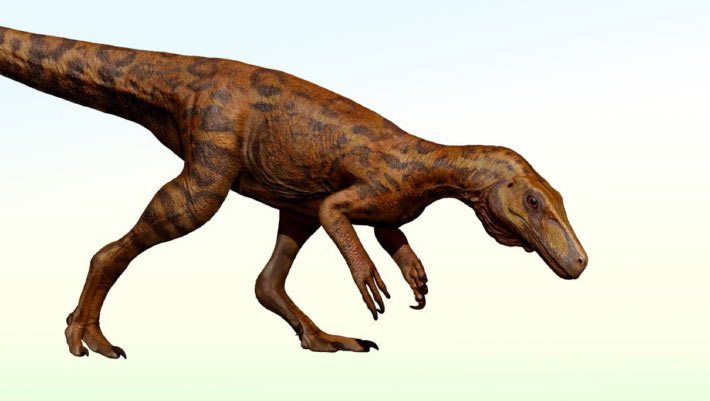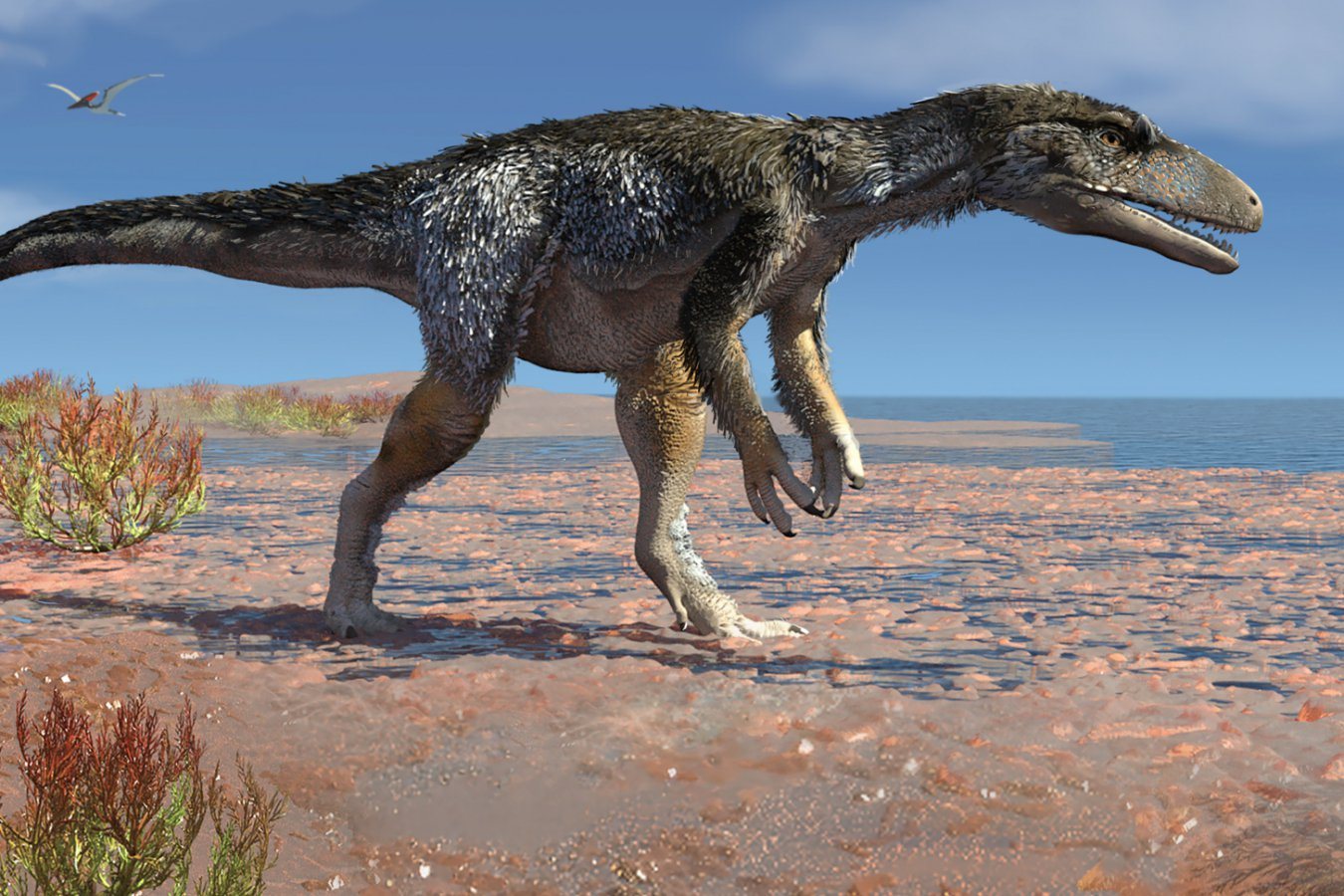
Researchers led by Kliti Grice at Curtin University in Perth, Australia, say they have recovered what may be the oldest red blood cells ever found in a dinosaur. The cells were preserved in a hind-limb bone fragment from a theropod called Aratasaurus museunacionali, which lived in what is now north-eastern Brazil about 115 million years ago. The findings were published in the Proceedings of the National Academy of Sciences.
Red blood cells have been found in dinosaur remains before, including bone fragments from Canada dating to 75 million years ago, collected in 2015, and the femur of a Tyrannosaurus rex that died 68 million years ago, found in Montana in 2005. The Aratasaurus specimen, however, is considerably older. The fossil was found in Brazil in 2008, and the animal was not yet fully grown, with an estimated body length of just over three metres and a weight of about 34 kilograms.
The specimen did not look promising at first. "The fossils we worked on are not display specimens by any means, so they don't look very interesting," Grice says. "If you look at them, you think there's just a bunch of bones and there's probably not much in there." The breakthrough came when she used hydrochloric acid to dissolve the surrounding rock and etched out part of the fossil. "I was jumping up and down," she says. "I ran up to my head of school's office and was so excited that he gave me a whisky to calm me down. No one has ever seen dinosaur red blood cells in high resolution before."
The cells were abundant. A single slide, only a fifth of a millimetre wide, contained about 20 blood cells, all located within fossilised blood vessels. That placement supports the interpretation that they were once functioning blood cells rather than random structures. Liquid chromatography-mass spectrometry analysis also detected haem B, a component of haemoglobin, the protein that binds oxygen. The team reported this as molecular evidence of the cell type.
The researchers also had to rule out contamination, particularly from the sediments that surrounded the fossil, which were dominated by algae. Cells found outside the bone were dominated by chlorophyll-derived compounds, while those inside contained haem-derived molecules. The team said this strongly suggests the cells inside the bone were not the product of contamination. The Aratasaurus cells were also compared with those of the dinosaur's closest living relatives, birds and crocodiles. The Aratasaurus cells are significantly larger, which the researchers suggest could mean the cells swelled during fossilisation or that the species grew much larger than the fossilised individual.
Grice says the work could have wider implications for museum collections. "There's drawers and drawers of fossil material, which don't look very nice," she says. "This kind of work opens up a whole new opportunity to unlock those collections and bring modern technology and molecular techniques to these specimens."
Source: newscientist.com
7