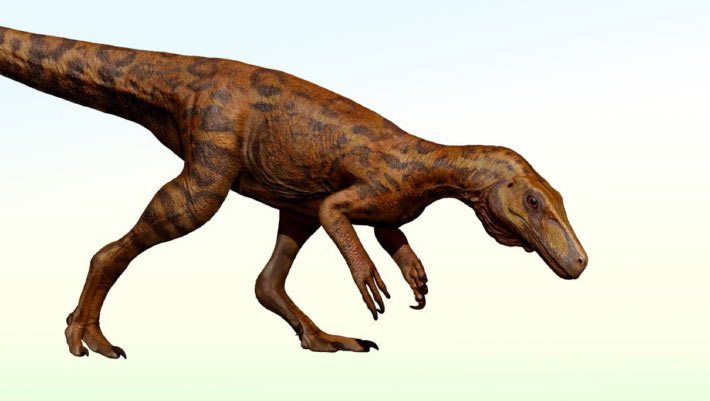
A single fossil bone from southern Brazil suggests that herrerasaurids, among the earliest large meat-eating dinosaurs, survived a major change in the animal community around them. The find points to a group of predators that remained in place even as the fauna they shared their environment with was transformed.
Herrerasaurids are considered some of the first large carnivorous dinosaurs, appearing early in the history of the group. The fragment from southern Brazil offers evidence that these predators were still present after the surrounding ecosystem had shifted. Its presence indicates that the herrerasaurids did not vanish abruptly when the other animals they lived alongside began to change, which is what makes the specimen notable for researchers studying the early dinosaur record.
The source material describing the find is brief and centers on this one bone, so the available evidence does not extend to a full skeleton, a precise date for the layer in which it was found, or a detailed reconstruction of the animals that replaced or accompanied the herrerasaurids. What the fragment does establish is continuity: a large predatory lineage was still living in the region after the ecological composition around it had altered.
That continuity matters because early dinosaurs are often discussed in terms of their origins and rise, while the stretches of time in which they coexisted with changing communities receive less attention. A single well-identified bone can help fill that gap by showing that the herrerasaurids were not confined to an earlier moment that ended all at once. Instead, the evidence suggests a longer and more resilient presence in the southern Brazilian record.
The discovery was reported by, which described it as a finding about herrerasaurids persisting through a shift in their ecosystem. Further fieldwork and comparison with other fossil material from the region would be needed to test how widely this pattern applied, and the current report leaves those questions open.
9