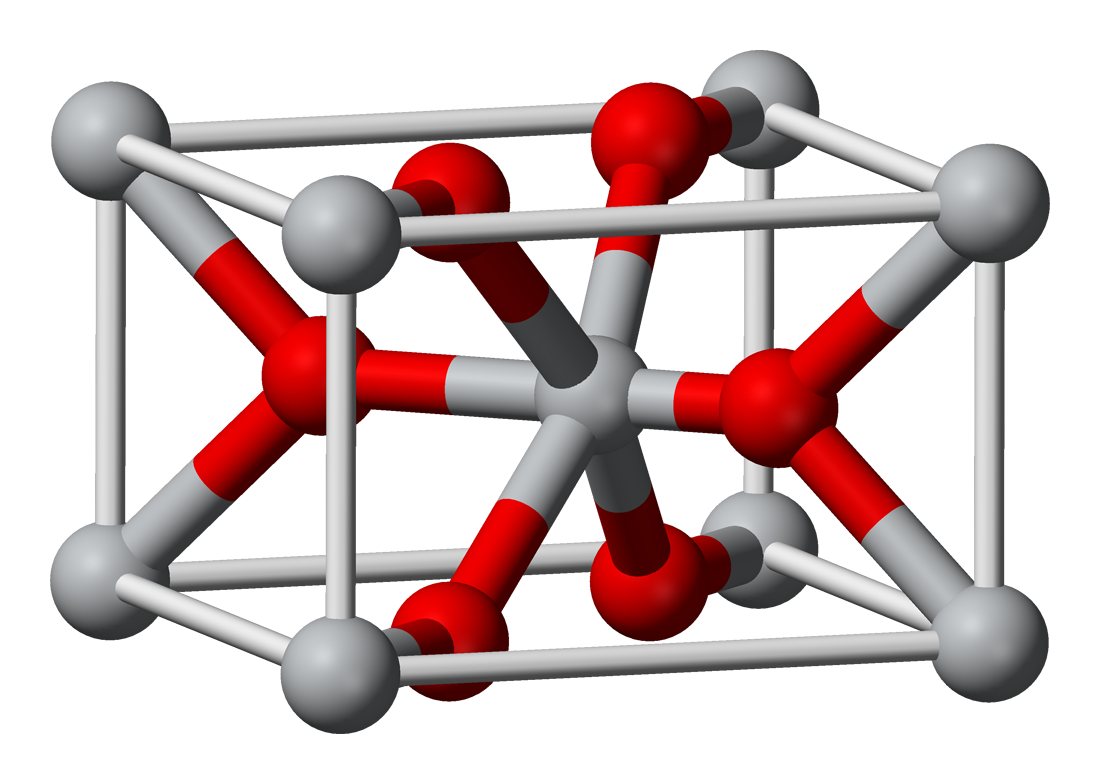
Titanium dioxide, the most widely used white pigment on Earth, has a hidden duality. It exists in two crystal forms that share the same chemical formula and the same atoms, yet behave in markedly different ways. One form scatters light like a mirror, while the other is photocatalytically active and can break down pollutants. The distinction is central to how the material is made and applied.
The two forms are anatase and rutile. Anatase has an open crystal lattice that allows light and electrons to move more freely, which gives it photocatalytic activity when exposed to ultraviolet light. Rutile has a denser, more tightly packed structure that scatters light with high efficiency and resists weathering, which is why it dominates applications such as paints and sunscreens that need long-lasting opacity.
The importance of the two forms was not clear when titanium dioxide was first manufactured in the late nineteenth century. Early batches behaved inconsistently: some produced durable white paints, while others yellowed and cracked within months, and some showed unexpected cleaning properties. Researchers spent decades trying to explain the variation. By the mid-twentieth century, X-ray crystallography revealed that the atoms could arrange themselves in two fundamentally different ways, and that discovery allowed scientists to select the appropriate form for a given use rather than relying on chance.
Manufacturing depends on controlling that structure. Titanium dioxide is extracted from mineral ores and processed through sulfate or chloride routes. Anatase is the metastable form, favored at lower temperatures; when heated to roughly 600 degrees Celsius, it converts irreversibly to rutile. Manufacturers therefore carefully regulate temperature to preserve anatase when photocatalytic activity is required, or drive the conversion to completion when the durability and opacity of rutile are needed.
In photocatalytic applications, ultraviolet light excites electron-hole pairs in anatase that react with water and oxygen to produce reactive species capable of decomposing organic pollutants and killing microorganisms. Coatings containing anatase have been used on building facades to help break down nitrogen oxides from vehicle exhaust. The same chemistry that makes anatase useful for cleaning is what the material's manufacturers must manage carefully during production, so that the intended crystal form is delivered to each application.
The article's account of this research frames the duality as a basis for both product design and industrial control, emphasizing that choosing between the two crystal structures determines whether a titanium dioxide product will be a durable pigment, a reactive cleaning agent, or a mixed-phase material combining both properties.
11