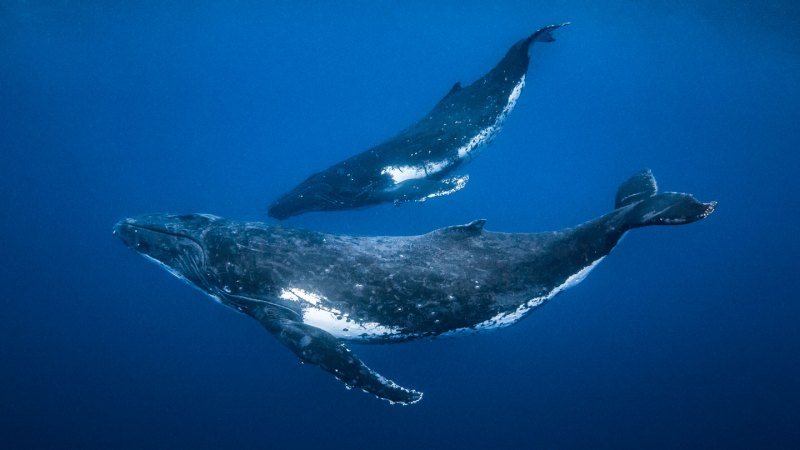
Scientists have discovered that sperm whales alter the pattern of their clicking sounds when boats are nearby, a finding that offers new insight into how marine mammals respond to human activity. Researchers from Project Ceti, a nonprofit initiative working to decode sperm whale communication, spent four years listening to 15 sperm whales off the coast of Dominica in the Caribbean. They identified a distinct variation in the whales' audible clicks when marine traffic was present, a change so consistent that the team can now use it to predict when ships are close.
The study, published in a peer-reviewed journal, focused on the whales' vocalizations, which are often described as a series of clicks that function like a form of echolocation and communication. The researchers found that when boats were within a certain range, the whales altered what they call the 'vowel' sounds within those clicks. These modifications were not random but followed a predictable pattern, suggesting the whales are actively adjusting their calls in response to noise from vessels.
Project Ceti, based in Dominica, has been at the forefront of efforts to understand sperm whale language. The organization uses underwater microphones and artificial intelligence to analyze the complex sequences of clicks, known as codas, that sperm whales produce. The new finding adds a layer to this research by showing that external factors like boat noise can directly influence the structure of these codas. The team noted that the changes were most pronounced when ships were within a few hundred meters of the whales.
The implications of the discovery extend beyond basic biology. Sperm whales rely on sound for navigation, foraging, and social interaction. The presence of boat noise, which is increasing in many parts of the ocean due to shipping, tourism, and fishing, can mask these vital sounds. By altering their clicks, the whales may be trying to compensate for the interference, but the long-term effects on their behavior and health remain unclear. The researchers emphasized that the findings could help inform marine conservation policies, particularly in areas with heavy vessel traffic.
Dominica, where the study took place, is a known habitat for sperm whales and has taken steps to protect them. The country established a marine reserve in 2023 to safeguard the species, and the new data could support efforts to regulate boat traffic in critical whale habitats. The researchers hope that by understanding how whales respond to noise, they can develop better guidelines for shipping lanes, whale-watching tours, and other maritime activities.
The study also highlights the broader challenge of ocean noise pollution. While the immediate focus is on sperm whales, the researchers noted that many marine species, including other whale species, dolphins, and fish, are affected by human-generated sound. The findings from Dominica add to a growing body of evidence that noise pollution is a significant stressor for marine life, one that requires coordinated international action.
Project Ceti's work is part of a larger effort to decode animal communication using advanced technology. The team has previously documented complex patterns in sperm whale clicks that resemble a form of language, with different codas corresponding to different social contexts. The new discovery that these patterns shift in response to boat noise suggests that the whales are not just passive recipients of sound but active participants in a dynamic acoustic environment.
The researchers plan to expand their monitoring to other regions and to study how different types of vessels affect whale behavior. They also aim to work with local authorities and the shipping industry to reduce noise impacts. For now, the finding provides a rare glimpse into the subtle ways that marine mammals adapt to a changing world, and it underscores the importance of protecting the acoustic habitats that are essential to their survival.
164