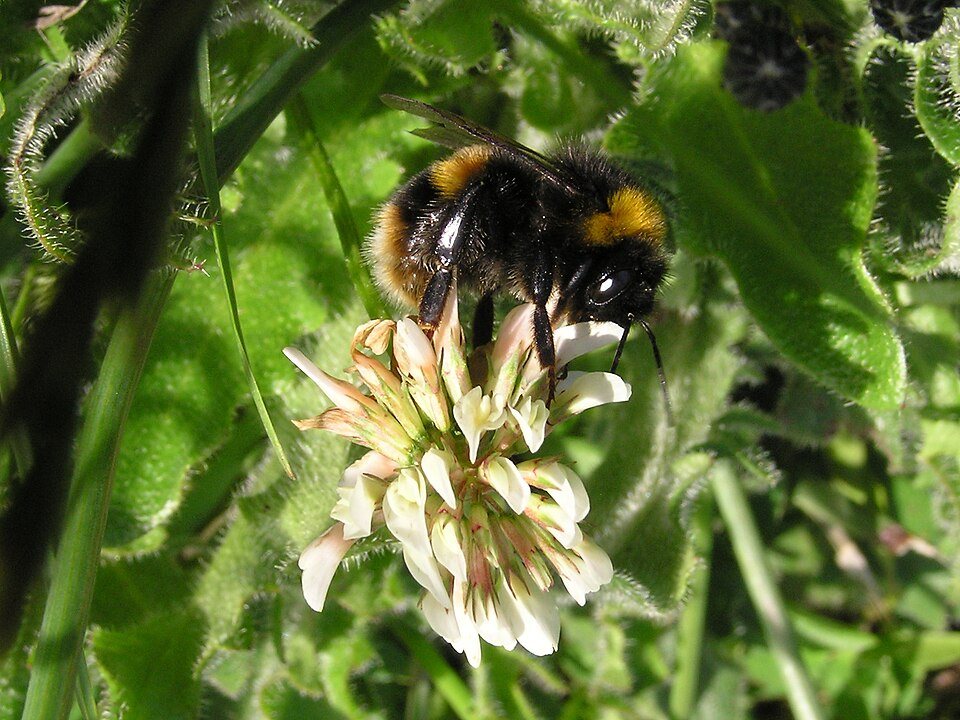
Bumblebees are built for cool climates. Their dense hair and physiology allow many species to forage in conditions that would slow other insects, but those same adaptations can become a liability as temperatures rise. A European analysis now estimates that human-driven climate change has already reduced the area of suitable bumblebee habitat across the continent.
Researchers compared historical conditions from 1901 to 2019 with counterfactual climate scenarios designed to estimate what habitat would have looked like without anthropogenic warming. At the community level, climate change reduced suitable area by about 5% across Europe on average, with local losses reaching roughly 19% in some regions.
The strongest declines were concentrated in southern Europe and lowland parts of central Europe, where warming pushes conditions beyond the preferred range of more species. High-elevation and northern areas showed partial gains as previously cold regions became more suitable. Those gains do not fully compensate for losses because species cannot instantly move into new territory, and suitable climate is only one requirement for establishing a population.
Bumblebees also need flowers across the season, nesting sites and connected landscapes. Intensive agriculture, pesticides, urban development and habitat fragmentation can block movement even where temperatures become favorable. A climate model may therefore identify potential future refuge while real-world land use determines whether bees can reach and survive there.
The distinction between average and local change is important. A 5% European mean can sound modest, but pollinator communities are experienced locally. A region losing close to one-fifth of its suitable climate can undergo major shifts in which species remain, especially if habitat is already fragmented. Rare or range-restricted bumblebees may have fewer options than widespread species.
Pollinator decline has implications beyond conservation. Bumblebees pollinate wild plants and crops, and different species are active under different temperatures and at different times of year. Losing diversity can reduce the resilience of pollination services even if some common species remain abundant.
The study uses counterfactual modelling, so the percentages are estimates rather than direct measurements of every lost colony. Its value is in separating the climate signal from the many other pressures acting simultaneously over the last century. By comparing the world observed with a modelled world without human-driven warming, researchers can estimate how much habitat suitability has shifted specifically because of climate.
The geographic pattern also points toward practical action. Protecting and connecting cooler refuges, especially at higher elevations and latitudes, can help species move as climate zones shift. In warmer regions, restoring flower-rich habitat and reducing non-climate stress may give populations more capacity to persist. Climate change is already redrawing the map for European bumblebees; conservation now has to keep pathways open across that moving map.
102