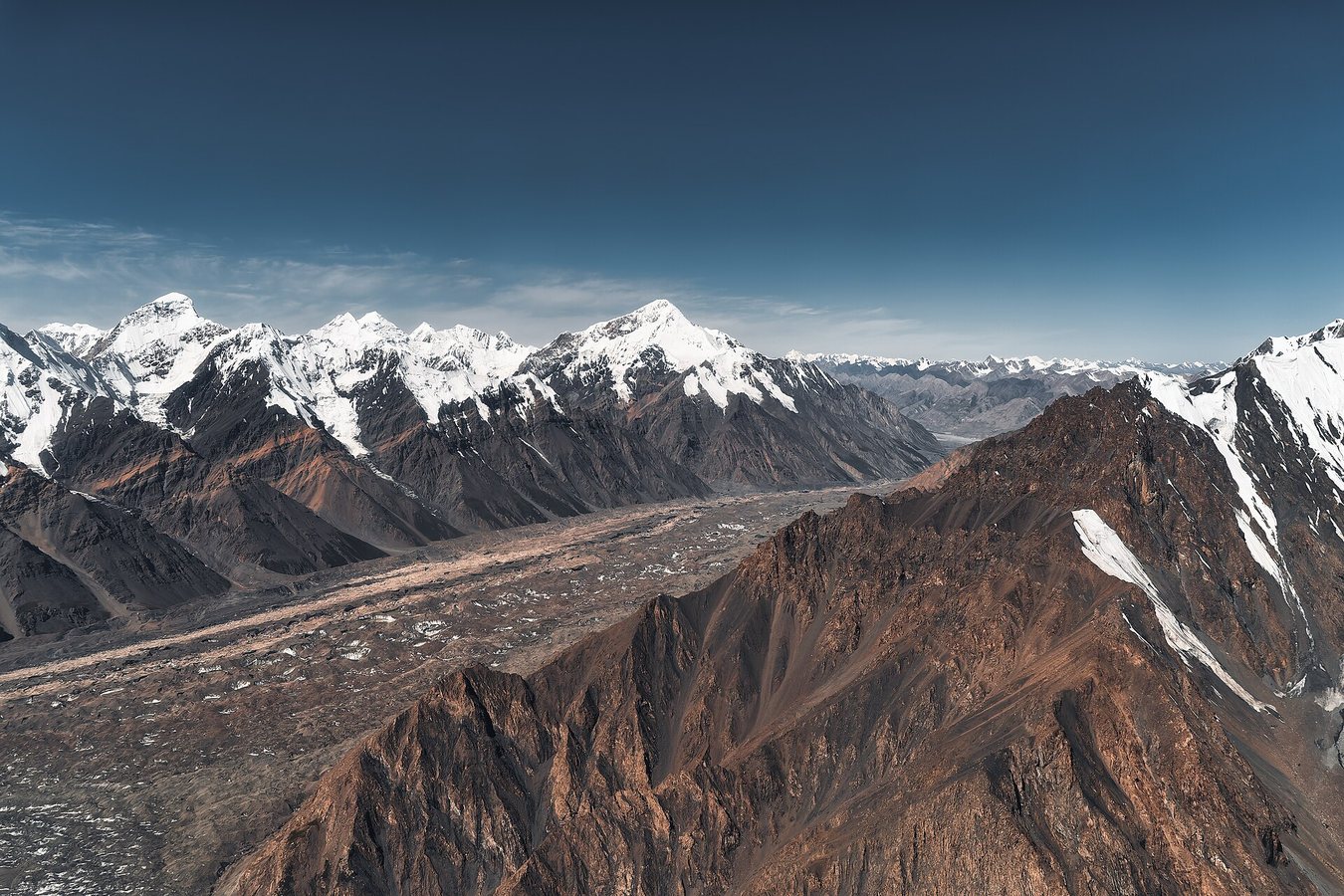
Nearly 300 glaciers in the western United States have disappeared since the 1960s, and almost all of the ice that remains is projected to shrink sharply as the climate crisis deepens, according to a new study published in the Proceedings of the National Academy of Sciences. The research offers the most comprehensive picture so far of how vulnerable mountain glaciers in the lower 48 states have become under a warming climate.
At the midpoint of the last century, more than 1,450 glaciers were scattered across the mountains of the American West. Together they covered about 562 square kilometers, or 217 square miles, across six western states. Researchers now estimate that the total glacier area has shrunk by roughly 35 percent, and the loss appears to be accelerating.
The inventory was led by Andrew Fountain, a geographer at Portland State University, who used satellite data and aerial photography to chart glacier recession. Fountain said he was surprised by the scale of the findings. «When I realized this it was like, 'Yikes – that's a lot more than I thought,'» he said. The study focused on the glaciers closest to populated areas in the lower 48 states, which are far smaller than the large ice bodies that remain in Alaska.
Roughly 300 of these glaciers have been reduced to about the size of two football fields and no longer move under their own weight and gravity, meaning they have functionally disappeared. The shrinkage has been most severe among smaller, south-facing glaciers at lower elevations, particularly below 9,000 feet in the Sierra Nevada and below 6,000 feet in the Cascade range. Glaciers in the Beartooth-Absaroka Mountains of southern Montana are losing about half a meter of ice thickness per year, while the much larger glaciers on Mount Rainier and Mount Baker in Washington are thinning by about 15 centimeters annually.
The findings carry consequences beyond the mountains. Glaciers have historically released cool meltwater that supports ecosystems and agriculture across the region, and the study links their decline to global heating driven by the burning of fossil fuels. Researchers also noted that the smallest glaciers in the lower 48 states are disappearing faster than those elsewhere in the world, because most of them are much smaller than the few large ice fields in Washington state.
17