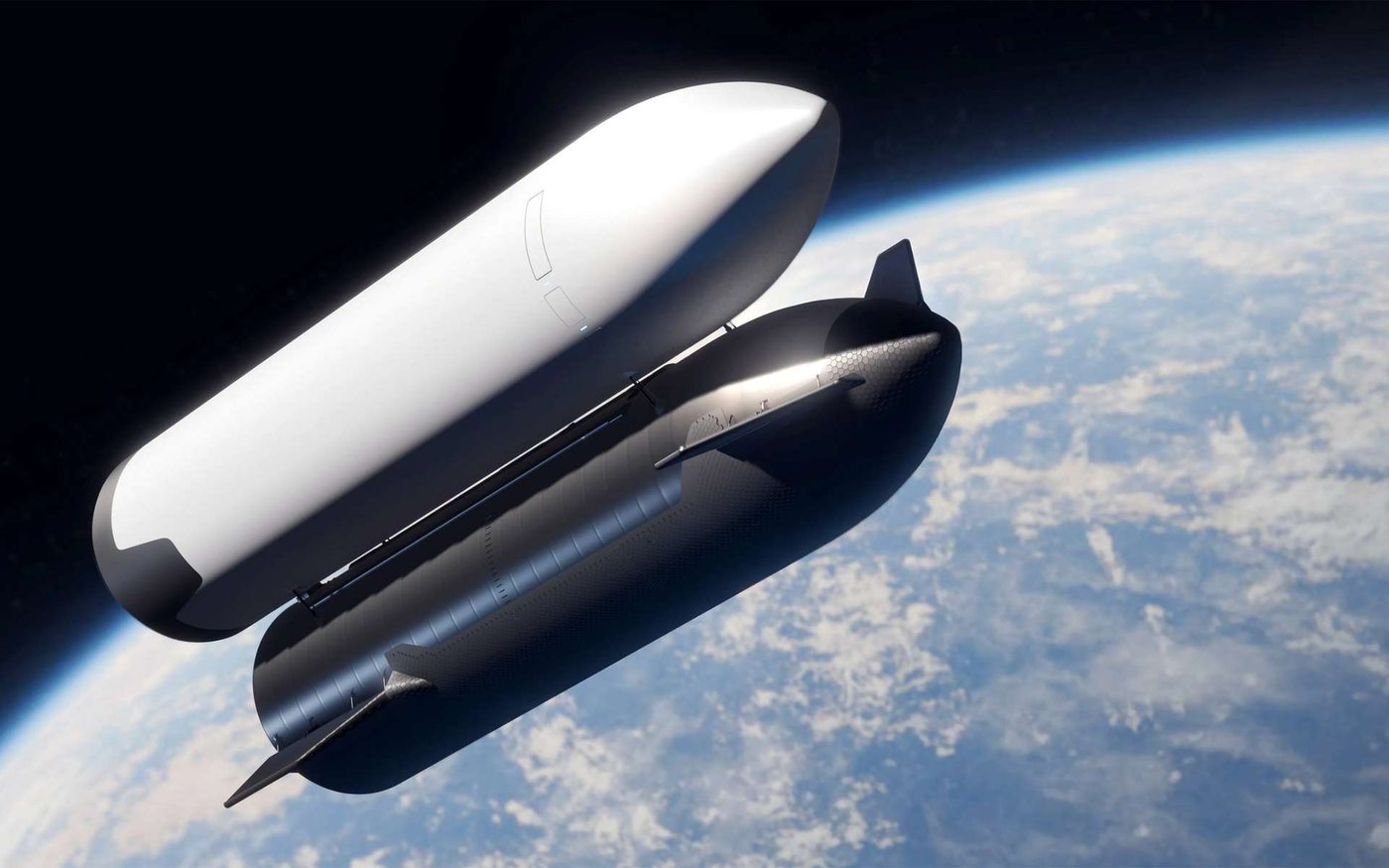
Recovering a Starship is a spectacular achievement, but it is no longer the central challenge for SpaceX. The company must now show, in early 2027, that it can refuel one Starship with another while both are in orbit, a maneuver that has never been carried out at this scale. The future of the program depends on it, since without this capability neither a lunar landing nor a journey to Mars can go forward.
The timing was set out during SpaceX's October 20, 2026 earnings presentation, where chief executive Elon Musk and company president Gwynne Shotwell presented new development targets for Starship. Shotwell identified early 2027 as the target period for both an upper-stage reflight and the orbital refueling attempt. Musk said the company expects Starship to fly about once a week in the first half of 2027, rising to two or more flights per week by the end of the year. These are company objectives rather than a published launch schedule, and SpaceX has not announced that it will reach either rate.
The refueling demonstration is considered one of the hardest prerequisites for NASA's Artemis program. Starship's fuel needs are the reason it must be topped off in Earth orbit before flying beyond low Earth orbit. For a Moon landing mission, this could require up to a dozen launches of Starship tanker spacecraft to an orbiting fuel depot. The Human Landing System variant of Starship must be fueled in orbit rather than on the launch pad, which is why the transfer is critical. NASA picked Starship's upper stage as the first crewed lander for Artemis, a program that aims to build a base near the Moon's south pole over the next decade or so.
The transfer has already been delayed. SpaceX had originally targeted March 2025 for the start of its propellant transfer flight test campaign, and the timeline later slipped to March 2026. As of mid-2026, neither the full ship-to-ship demonstration nor the associated NASA design certification review had taken place. Starship has moved propellant between tanks within a single vehicle, but no transfer between two vehicles in orbit has been attempted. The test is expected to provide data on transfer efficiency and on the boil-off rates of liquid oxygen and methane in space, information that would refine launch requirements for Moon landings.
Each Starship bound for the Moon or Mars must visit an off-Earth fuel depot, because the vehicle cannot launch with enough fuel for those missions without becoming too heavy. Until the refueling test succeeds, the architecture for both lunar and Martian travel remains dependent on a capability that has yet to be proven in flight.
12