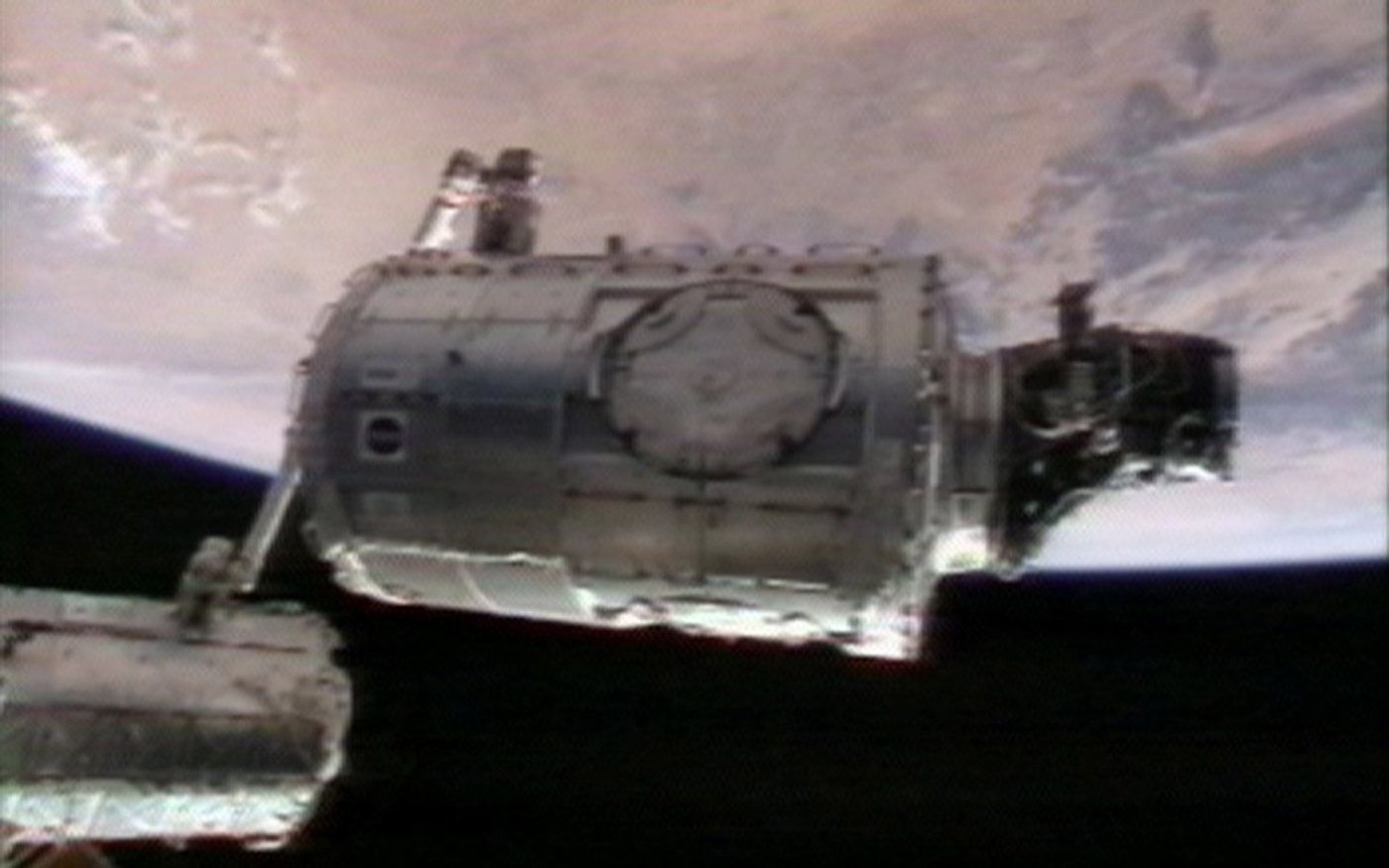
On October 23, 2007, space shuttle Discovery launched from NASA's Kennedy Space Center in Florida carrying Harmony, an Italian-built multiport module that would expand the International Space Station. The mission, designated STS-120, was the 23rd shuttle flight to the station and the first to deliver a pressurized habitable module since the Pirs docking compartment was installed in August 2001.
Harmony, originally named Node 2, is described by NASA as a utility hub that circulates air, water, electrical power and other systems essential to supporting life on the station. It is covered with five common berthing mechanisms, connection points for other station modules, and it links the U.S. Destiny laboratory with the European Columbus laboratory and the Japanese Kibo laboratory. Once installed, the module added about 70 cubic meters of habitable volume, increasing the station's living space by nearly 20 percent.
The shuttle launched at 11:38 a.m. EDT from Pad 39A with a crew of seven. Commander Pam Melroy led the mission, with pilot George Zamka and mission specialists Scott Parazynski, Douglas Wheelock, Stephanie Wilson and Paolo Nespoli of the European Space Agency. Daniel Tani joined the station's Expedition 16 crew and replaced Clayton Anderson, who returned to Earth on Discovery. The mission was originally scheduled for early 2004 before the Columbia disaster, and it was repeatedly delayed until October 2007.
Because of the station's configuration, Harmony was first attached temporarily to the port side of the Unity module. After Discovery undocked, the station's robotic arm moved a pressurized mating adapter from Destiny to Harmony's forward port, and the module was relocated to its permanent position on the forward end of Destiny on November 14, 2007. During the mission, spacewalkers also relocated the P6 truss and its solar arrays to a permanent position on the station.
Discovery landed at Kennedy Space Center on November 7, 2007, after a flight of about 15 days. NASA described the mission as a key step in preparing the station for future assembly flights that would add European and Japanese laboratories.
13