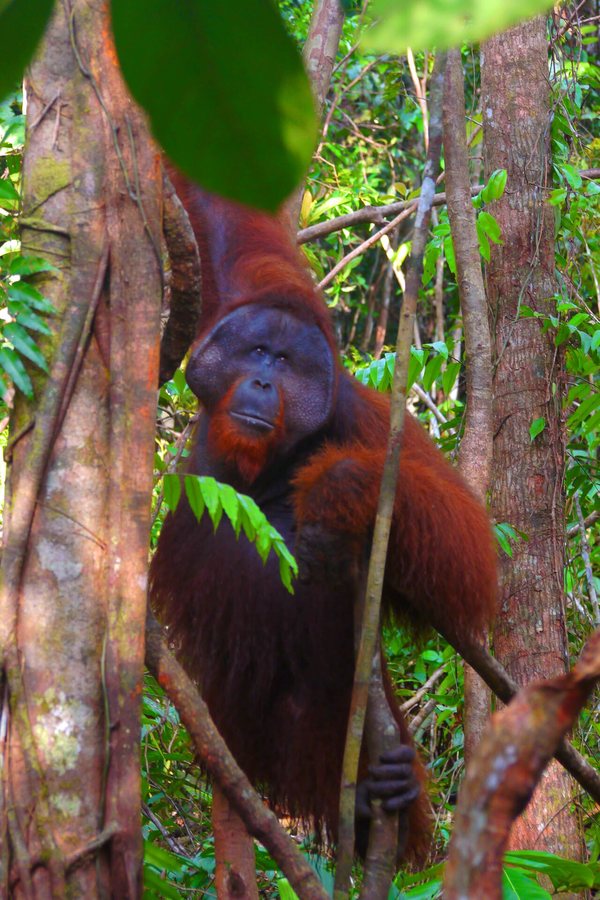
Devastating wildfires across Indonesia's forests and peatlands, intensified by the global El Niño climate phenomenon, are overwhelming the country's orangutan population and pushing rescue teams to their limits, wildlife officials report. The fires have unleashed thick smog across the region while consuming vast tracts of critical habitat for one of the planet's most vulnerable great apes.
Among the most recent rescues was a mother orangutan and her eight-month-old infant, found in an oil palm subsidiary estate. The mother's hands were peeling from walking on scorched ground, and her baby, clinging to her side, was dehydrated and dangerously thin. Rescuers named the pair Mama Abu and Abu — «ash» in Indonesian — a reflection of the charred landscape from which they were pulled last month.
The pair's ordeal illustrates a growing crisis. As fires devour Indonesia's forests and peatland, orangutans are being forced out of their natural habitat and into dangerous contact with human settlements and agricultural operations, where they face starvation, injury, and death. The long-term effects on the animals remain unknown, but conservationists warn that the toll is already severe.
El Niño, a periodic warming of the Pacific Ocean that alters weather patterns worldwide, has been linked to prolonged drought conditions across Southeast Asia, creating tinderbox conditions in Indonesia's typically humid rainforests. Peatland fires are particularly destructive, burning underground for weeks and releasing enormous quantities of stored carbon into the atmosphere. These fires are notoriously difficult to extinguish and can reignite long after surface flames are doused.
The destruction of peatland is especially damaging for orangutans, which rely on healthy forest ecosystems for food, nesting, and shelter. Unlike other great apes, orangutans are solitary and slow to reproduce, making their populations particularly vulnerable to sudden habitat loss. A single fire season can undo years of conservation progress.
Rescue teams operating in the region describe increasingly desperate conditions. Animals arriving at rehabilitation centers are often malnourished, dehydrated, and suffering from burns or respiratory damage caused by prolonged exposure to smoke. The mother and infant rescued from the oil palm estate represent just one of many cases that rescue organizations are handling as the fires continue to burn.
The presence of orangutans in oil palm subsidiary estates highlights a broader conflict between agricultural expansion and wildlife conservation. As forests shrink, orangutans are left with fewer places to go, often wandering into plantations in search of food. These encounters can be fatal for the animals, particularly when they are perceived as pests.
Indonesian authorities and international conservation groups have ramped up rescue efforts, but the scale of the disaster is straining available resources. The combination of El Niño-driven drought, land clearing, and peatland degradation has created conditions that experts describe as a perfect storm for wildlife loss.
Beyond the immediate threat to orangutans, the fires are releasing massive amounts of carbon dioxide, contributing to global climate change and creating a feedback loop that could make future fire seasons even more severe. The smog produced by the fires has also caused respiratory problems for millions of people across Indonesia, Malaysia, and Singapore in past years.
For now, the fate of Mama Abu, baby Abu, and countless other orangutans remains uncertain. What is clear is that the fires are exacting a heavy price on Indonesia's biodiversity, and the full extent of the damage — particularly the long-term survival prospects for the species — will not be known for years. Conservationists warn that without stronger protection for forests and peatlands, the orangutan's future in the wild will grow increasingly precarious.
9