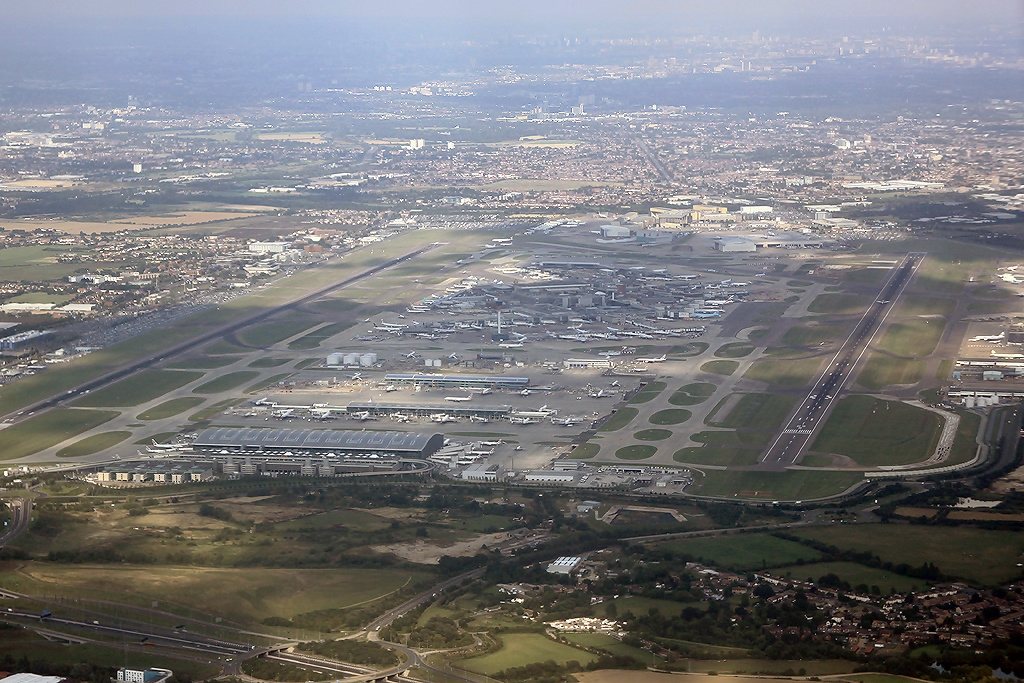
Heathrow airport should be allowed to expand only if airlines pay for the removal of carbon dioxide from the atmosphere, the UK government's climate advisers have said. The Climate Change Committee (CCC) warned that building a third runway and new terminals would breach the country's carbon budgets and make reaching net zero by 2050 impossible under current policies.
The advisory body's position places a significant condition on one of the most contested infrastructure decisions in British politics. The CCC said the government cannot approve expansion without requiring the aviation industry to clean up its emissions, effectively making airlines financially responsible for offsetting the climate impact of additional flights.
According to the committee, the expansion plan as currently proposed is incompatible with existing climate targets. The UK has committed to reducing greenhouse gas emissions to net zero by 2050, and interim carbon budgets set legally binding limits on total emissions over five-year periods. Aviation emissions, which are not currently covered by many national reduction policies, would need to be addressed directly if the runway goes ahead.
The CCC's intervention comes as some within government have pushed for airport expansion as a way to boost economic growth and connectivity. Supporters argue that additional runway capacity at Heathrow, one of the world's busiest airports, would strengthen trade links and create jobs. But climate advisers say those benefits cannot come at the expense of the country's legally binding emissions targets.
Under the committee's proposed condition, airlines using an expanded Heathrow would have to pay for carbon dioxide removal — a suite of technologies and natural processes that extract CO2 from the atmosphere and store it permanently. These methods remain expensive and are not yet deployed at the scale that would be required to offset a major increase in aviation emissions.
The advisers also noted that current government policies are insufficient to keep the UK on track for net zero even without expansion. Adding a third runway would widen that gap further, making the target unachievable unless new measures are introduced. The committee's assessment suggests that any approval would need to be paired with a robust and funded plan for emissions reductions and removals.
The aviation industry has long argued that it can grow while reducing its climate impact through improvements in fuel efficiency, the use of sustainable aviation fuels, and eventually zero-emission aircraft. However, these solutions are still in development, and the CCC's stance indicates that the government's own advisers do not believe they will be enough on their own to justify expansion under existing carbon budgets.
The debate over Heathrow's third runway has persisted for decades, with previous proposals blocked on environmental grounds. The latest push has revived the controversy, pitting economic development priorities against climate commitments. The CCC's recommendation effectively sets a test for any future decision: expansion may proceed only if the aviation sector pays for the pollution it creates.
Environmental groups have welcomed the committee's position, saying it confirms that airport expansion cannot be treated as a standalone economic project. They argue that allowing growth without binding emissions conditions would undermine the UK's credibility on climate action. Industry representatives, meanwhile, are likely to resist additional costs that could make UK aviation less competitive.
The government has not yet responded formally to the CCC's advice. Any decision on Heathrow will require balancing legal climate obligations, economic arguments, and the practical challenges of scaling up carbon removal. For now, the committee's message is clear: under current policies, the third runway cannot be approved without a mechanism to pay for cleaning up the carbon it would produce.