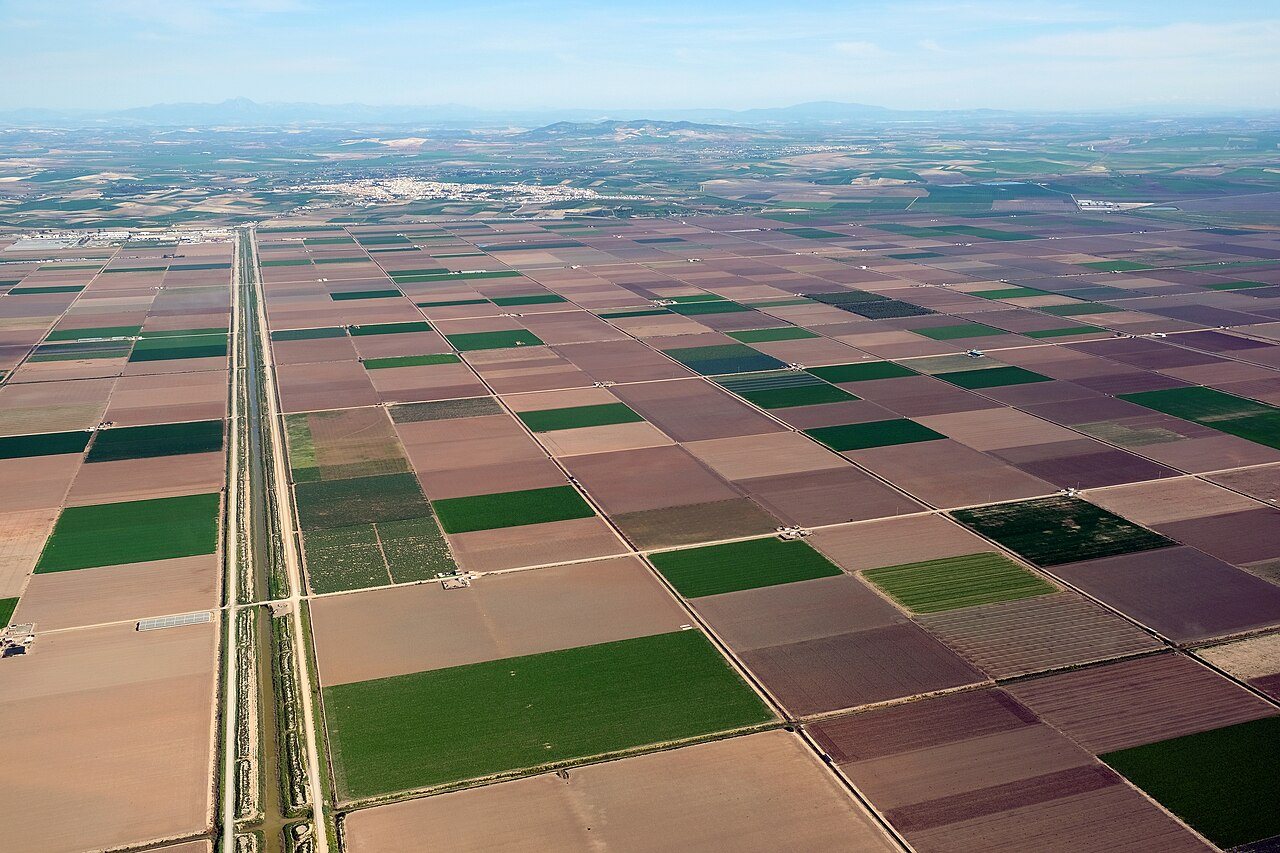
U.S. irrigation generates greenhouse gas emissions, but new research indicates it prevents vastly more by allowing farmers to grow more food on less land. Without irrigation, replacing lost crop yields would require converting natural ecosystems into farmland, releasing an estimated 6.86 gigatons of greenhouse gases. That is equivalent to about 363 years of current annual U.S. irrigation emissions.
The finding reframes irrigation as a climate strategy rather than merely an agricultural input. By concentrating production on existing farmland, irrigation reduces pressure to clear forests, grasslands, and other carbon-rich ecosystems for agriculture. When those ecosystems are converted, the carbon stored in trees, roots, and soil is released into the atmosphere, accelerating climate change.
The research estimates that the emissions avoided by not converting natural land far exceed the emissions produced by irrigation itself, including energy used to pump water and the methane and nitrous oxide associated with irrigated soils. The 6.86 gigaton figure represents the greenhouse gases that would be released if farmers had to replace the yields currently supported by irrigation by expanding into new land.
The comparison to 363 years of current annual U.S. irrigation emissions underscores the scale of the trade-off. In other words, the climate benefit of irrigation, measured in avoided land conversion, could outweigh its own emissions for centuries under current conditions. That does not mean irrigation is emissions-free, but it suggests that policies aimed at reducing agricultural emissions should consider the full land-use picture.
The study arrives amid broader debates over environmental regulation and climate policy in the United States. The Trump administration's Environmental Protection Agency recently moved to erase limits on emissions from coal and gas power plants, arguing that the rules raise electricity costs and have little climate impact. Critics say those claims do not withstand scrutiny, and the rollback is part of a wider effort to dismantle the legal authority of the EPA to regulate planet-heating pollution.
Against that backdrop, the irrigation research offers a reminder that climate accounting is rarely simple. Agricultural systems can be both sources and sinks of greenhouse gases, and land-use decisions often determine whether a practice is a net climate benefit or a net cost. Irrigation's role in boosting yields on existing cropland is central to that calculus.
The study does not advocate for unlimited irrigation, nor does it dismiss the emissions it produces. Instead, it quantifies a counterfactual: what would happen if irrigation disappeared and global food demand had to be met by expanding farmland. The answer, according to the estimate, is a massive pulse of carbon into the atmosphere that would dwarf the ongoing emissions from irrigation operations.
For farmers, the finding may reinforce the value of efficient irrigation systems that maximize crop output per unit of water and land. For policymakers, it suggests that climate strategies focused solely on reducing on-farm emissions could miss the larger benefit of avoiding deforestation and habitat loss. The research adds to a growing body of work showing that intensifying agriculture on existing land can spare natural ecosystems, provided the intensification is managed sustainably.
The estimate of 6.86 gigatons is a global-scale figure, reflecting the emissions that would result from converting natural ecosystems to replace irrigated production. It is not a prediction of what will happen, but a measure of the climate service that irrigation currently provides by keeping that land conversion at bay. The comparison to 363 years of U.S. irrigation emissions translates that service into a familiar unit, making the trade-off more tangible for policymakers and the public.
As climate policy remains contested in Washington, the irrigation study highlights how land use, food production, and emissions are intertwined. It suggests that any serious effort to reduce greenhouse gases must account for the carbon locked in natural landscapes and the consequences of clearing them for agriculture. In that context, irrigation's climate benefit may be one of the more underappreciated tools in the agricultural toolkit.