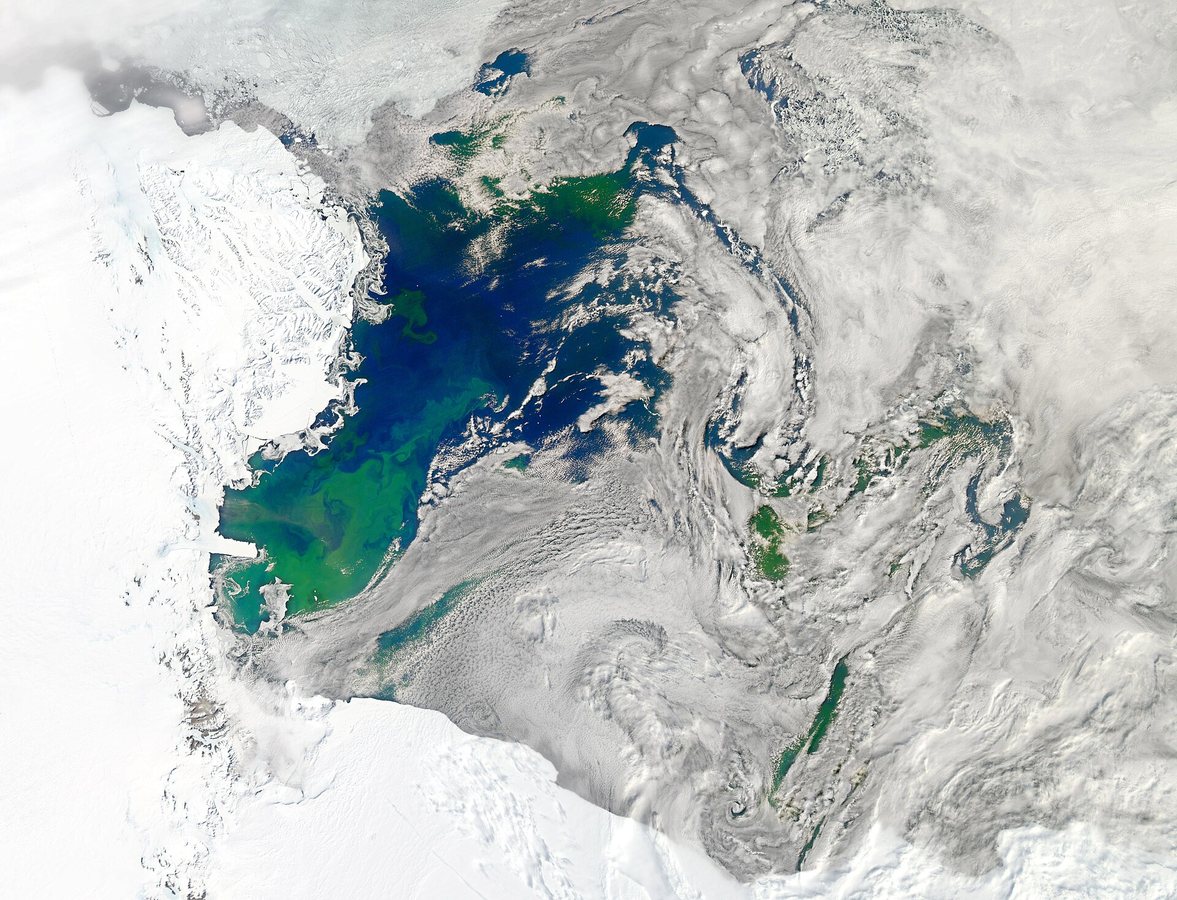
Marine heatwaves are usually discussed as ecological disasters, and for good reason: prolonged ocean warmth can kill corals, redistribute fish and disrupt food webs. A global carbon analysis reveals a more complicated effect in some regions. During marine heatwaves, continental shelf seas — especially at high latitudes — were associated with increased uptake of carbon dioxide from the atmosphere.
Using several observation-based estimates of air-sea CO2 flux, researchers examined marine heatwave periods from 1985 to 2020. Across shelf seas, the events were associated with an average increase of about 11% in net CO2 uptake. The strongest contribution came from polar and subpolar shelves. In the open ocean, the response was different and in many cases moved in the opposite direction.
The result does not mean marine heatwaves are beneficial for climate. A temporary increase in CO2 uptake by one part of the ocean does not cancel the ecological damage caused by extreme heat, nor does it imply that warming oceans will continue absorbing more carbon indefinitely. The carbon response depends on a combination of temperature, biology, mixing, freshwater and the chemistry of the water entering and leaving each region.
At high latitudes, heatwaves can alter sea-ice cover, stratification and biological activity in ways that change the difference in CO2 concentration between air and water. Shelf seas are also strongly influenced by nutrients and carbon transported from land, deep water and adjacent basins. Those factors can outweigh the simple physical effect that warmer water generally holds less dissolved gas.
The contrast between shelves and the open ocean is scientifically important because global carbon budgets often emphasize large-scale averages. Coastal and shelf regions occupy a smaller area but can have disproportionately intense biological production and exchange with sediments. If their response to extremes differs from the open ocean, models need enough spatial detail to represent that behavior rather than applying one rule everywhere.
The study is based on observationally constrained flux products, and uncertainties remain largest in poorly sampled waters, including parts of the polar oceans. More direct measurements during individual heatwaves will be needed to identify the mechanisms responsible for the statistical pattern and determine how long the extra carbon remains stored.
As marine heatwaves become more frequent and intense, understanding these regional carbon responses will matter for projecting the future ocean sink. Extreme warming can damage ecosystems while simultaneously increasing CO2 uptake in particular shelf regions. Both effects can be true, and neither should be used to minimize the other.
97