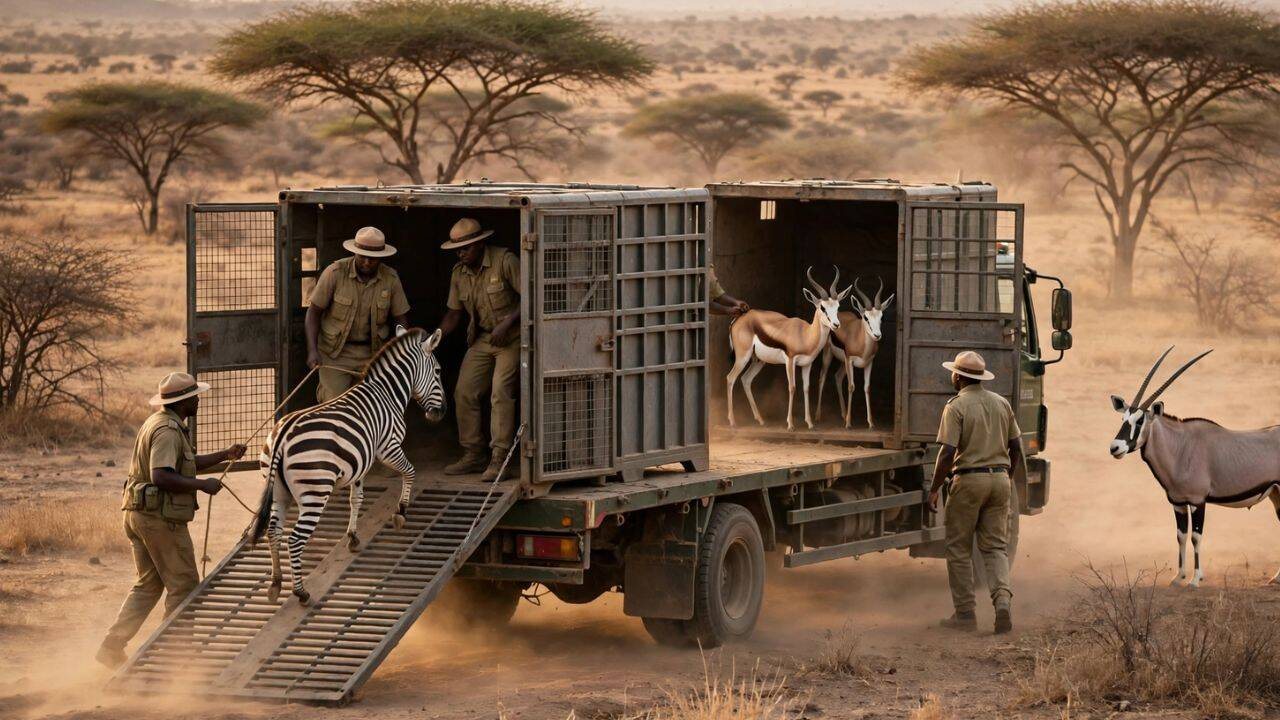
Namibia has relocated 575 wild animals out of Etosha National Park, one of Africa's most important wildlife reserves, and released them into community conservancies in the country's north. The operation, led by the environment ministry, is designed to restore wildlife numbers in the areas receiving the animals and to give the region's lions a larger supply of prey.
The animals moved include several species, among them zebra, springbok, oryx and eland. Their relocation followed a drought that hit Etosha hard. Reduced rainfall shrank the grazing land and limited water access, placing heavy stress on the park's herbivore populations. Even as conditions tightened, herbivore numbers in Etosha had been climbing, which raised concern about the park's carrying capacity. Too many animals packed into a limited habitat face risks including starvation and damage to the land they depend on, so moving part of the population was seen as a way to ease pressure on the park.
The conservancies receiving the animals are managed by local communities, a model that links wildlife protection with the people who live alongside it. Funding and logistical support for the move came from conservation partners, allowing the transfer of such a large group of animals across the country. For the communities involved, the arrival of new herds is intended to strengthen wildlife populations on land they manage, which can in turn support tourism and local livelihoods.
Important questions remain unresolved. The long-term survival rate of the relocated animals has not yet been established, and the effect on lion populations in the new areas has not been measured. Relocations of this scale carry uncertainty, as animals must adapt to unfamiliar terrain, water sources and predators. Whether the operation succeeds in restoring balance in both Etosha and the northern conservancies will depend on how the transferred herds fare in the months and years ahead.
Credit. Based on reporting for Environment News, Earth News, Global Warming, Wild Life, Carbon Trading, Climate Business, Climate Change & Pollution Ne. Is this your work? Write to us.
44