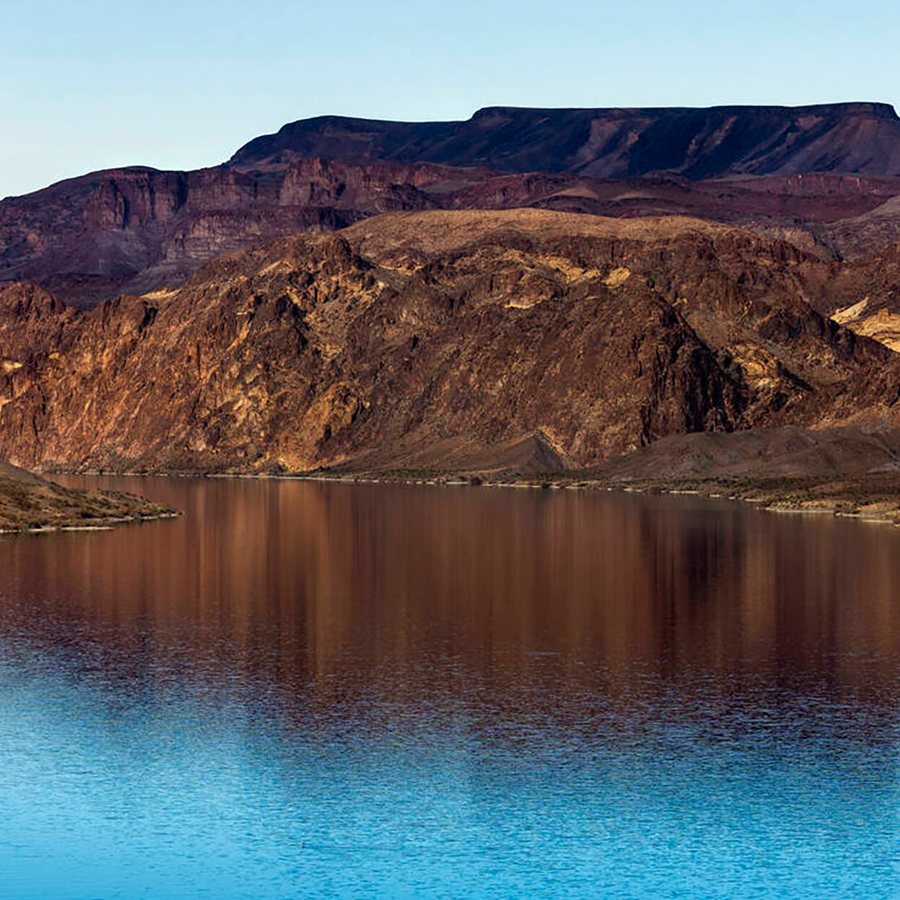
Nevada filed a federal lawsuit on Monday challenging the Trump administration's plan for the imperiled Colorado River, opening what could become the first of many court battles over a waterway that supplies 40 million people, dozens of tribes, and 5.5 million acres of farmland across the American West.
The federal plan, issued Friday, cuts roughly 20 percent of the water supplied to the lower basin states — Nevada, Arizona, and California — over the next two years, with the potential for harsher cutbacks in the future depending on conditions. Nevada's lawsuit argues that federal officials did not impose mandatory water restrictions on states in the river's upper basin, creating an unfair burden on the lower basin states that are already facing significant reductions.
The Colorado River has been in crisis for decades, with demand consistently outstripping supply as a megadrought intensified by climate change shrinks the river's flow. The river system provides water for major cities including Las Vegas, Phoenix, Los Angeles, and Denver, as well as for vast agricultural operations that grow a significant portion of the nation's winter vegetables. The river also supports hydropower generation at dams including Hoover Dam and Glen Canyon Dam, which have seen reservoir levels drop to historic lows in recent years.
The administration's plan represents an attempt to address the chronic over-allocation of the river's water, which has been governed by a complex set of compacts, court decisions, and agreements dating back more than a century. The lower basin states have borne the brunt of mandatory cuts in recent years, while upper basin states — Colorado, Utah, Wyoming, and New Mexico — have largely avoided mandatory reductions, arguing that their usage is limited by natural conditions and that they have not yet fully developed their legal entitlements.
Nevada's lawsuit contends that this disparity violates the legal framework governing the river and that the federal government has the authority and obligation to impose cuts across all basin states. The state argues that the plan's failure to require upper basin reductions shifts an unfair share of the burden onto lower basin states and their residents.
The lawsuit is likely to be the first of several legal challenges to the plan. Arizona and California, which face larger absolute cuts than Nevada due to their larger allocations, have not yet filed suit but have expressed concerns about the plan's implementation. Agricultural interests in California's Imperial Valley, which holds some of the most senior water rights on the river, have also signaled potential legal action.
The dispute comes as the seven basin states and the federal government continue negotiations over long-term rules for managing the river after 2026, when the current guidelines expire. Those negotiations have been contentious, with states failing to reach consensus on how to allocate reductions in a future of reduced supply. The federal plan was issued as an interim measure while those broader talks continue.
Water managers across the West are watching the lawsuit closely, as its outcome could set precedents for how the federal government can compel cuts during shortages. The case also highlights the growing tension between states that have developed their water allocations and those that have not, a divide that will shape the river's future management for decades to come.
Nevada has historically been one of the most efficient water users in the basin, with aggressive conservation programs in the Las Vegas area that include turf removal incentives and water recycling. Despite those efforts, the state remains heavily dependent on the river, which supplies about 90 percent of southern Nevada's water. The lawsuit underscores the state's position that conservation alone cannot solve the river's imbalance and that all users must share in the necessary reductions.
135