The ocean is Earth's largest reservoir for excess heat from global warming, but measuring how much it has absorbed over many decades is difficult. A new reconstruction of upper-ocean heat content sharply reduces the uncertainty in the historical record while reinforcing the central conclusion: the ocean has warmed enormously since the mid-20th century.
The analysis covers the upper 2,000 metres, where most long-term ocean observations are concentrated. Researchers estimate that this layer gained about 449 zettajoules of heat since 1955, with an uncertainty range around that central value. One zettajoule is 10^21 joules, so the scale is far beyond ordinary energy comparisons.
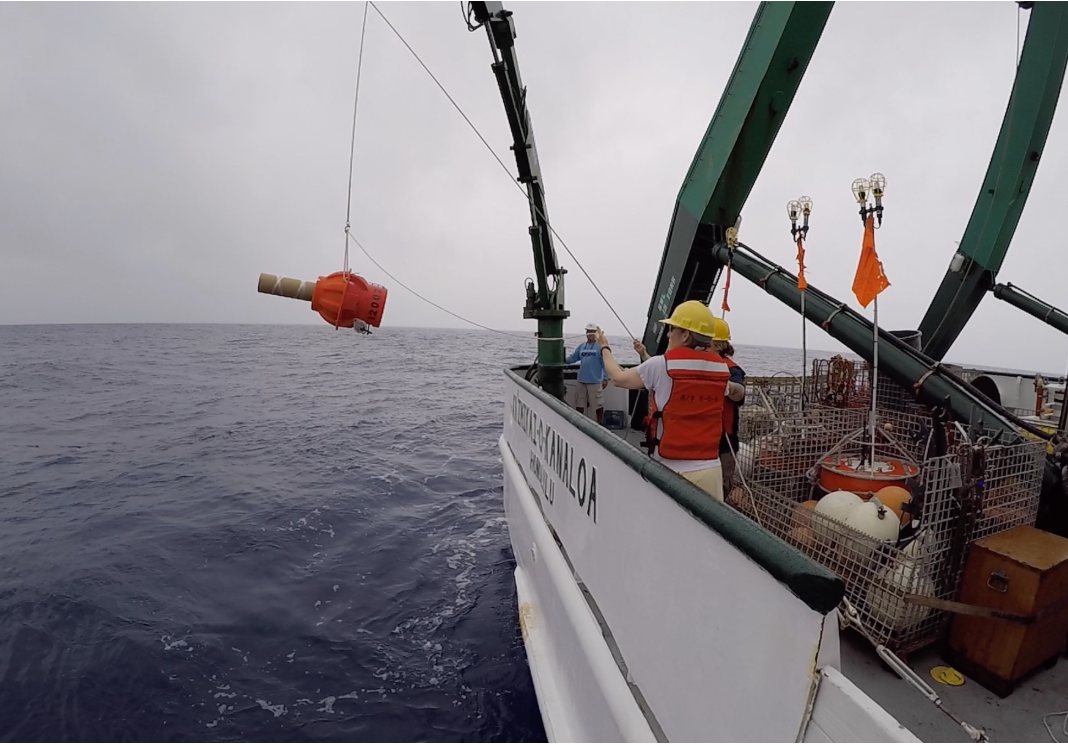
What changed most in the new work is not the direction of the trend but confidence in its size. The estimated uncertainty for global heat content fell by roughly a factor of six between the sparse observing era of the 1950s and 1960s and recent decades. Modern profiling floats provide far better spatial coverage, while statistical reconstruction methods help account for regions and periods with limited measurements.
Historical ocean data are uneven. Ships tended to follow commercial or research routes, instruments changed over time, and large areas of the Southern Hemisphere were poorly sampled. Measurements also contain biases related to the technology used to estimate temperature at depth. Reconstructing a global signal therefore requires careful correction and a realistic estimate of what remains unknown.
Ocean heat content is a particularly important climate indicator because it is less noisy than surface air temperature. Short-term weather patterns can move heat between the atmosphere and ocean, producing strong year-to-year changes at the surface. The ocean integrates energy over longer periods. Persistent growth in its heat content is direct evidence of an imbalance in Earth's energy budget.
That stored heat has consequences. Warmer water expands, contributing to sea-level rise. Marine heatwaves draw energy from a warmer baseline. Changes in subsurface temperature can affect currents, stratification, oxygen levels and ecosystems. Some of the heat will remain in the ocean for decades or centuries even if atmospheric warming eventually stabilizes.
The improved reconstruction is useful for both attribution and prediction. Climate models can be tested against a more precise observational target, and estimates of Earth's energy imbalance can be constrained more tightly. The history of ocean warming was already unmistakable; this work makes its magnitude more sharply defined.
96