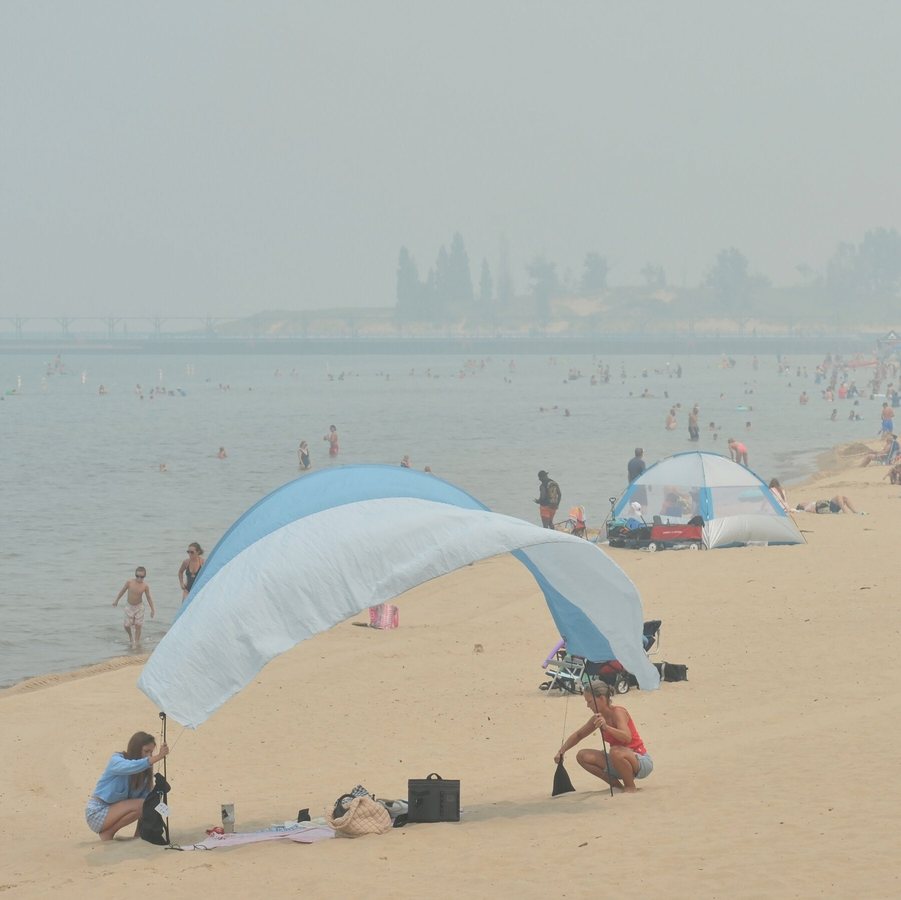
Hazy skies over the shores of Lake Michigan have become an unwelcome feature of the summer travel season, as smoke drifting south from Canadian wildfires blankets one of the Midwest's most popular vacation regions. The conditions have disrupted outdoor recreation, scenic views, and the daily rhythms of tourism in a state that draws millions of visitors to its lakeshore each year.
The smoke is the visible edge of a broader pattern: climate change is increasingly reshaping when, where, and how Americans travel during the summer months. Wildfire seasons are growing longer and more intense, sending plumes thousands of miles beyond their source and turning clear-weather destinations into places where air quality can shift within hours.
For Michigan, a state whose summer identity is tied to its beaches, dunes, and lakefront towns, the effect is both practical and economic. Visitors who plan trips around hiking, boating, and camping may find those activities curtailed by poor air quality. Local businesses that depend on predictable summer crowds face uncertainty as smoke events become harder to anticipate.
The disruption is not limited to the Great Lakes. Wildfire smoke has repeatedly crossed international borders in recent years, affecting air quality across large stretches of the United States and Canada. Health officials have warned that fine particulate matter in smoke can aggravate respiratory and cardiovascular conditions, prompting advisories that discourage prolonged outdoor exertion.
Those advisories carry direct consequences for the travel industry. Hotels, campgrounds, tour operators, and event organizers increasingly must plan for the possibility that a smoke event will coincide with peak season. Some destinations are adjusting marketing, refund policies, and contingency plans to account for conditions that were once considered rare.
Scientists have linked the intensifying wildfire activity to warmer and drier conditions in many forested regions, including the boreal forests of Canada. Longer fire seasons and more extreme fire behavior increase the likelihood that smoke will travel far from its origin, turning a regional hazard into a continental one.
For travelers, the shift means that summer plans now carry a new variable. Air quality forecasts are becoming as relevant as weather forecasts for people deciding whether to spend a day on the water or on a trail. Some are choosing to build flexibility into their itineraries, while others are reconsidering destinations altogether.
The tourism sector, meanwhile, is being pushed to adapt. Communities that rely on summer visitors are weighing how to communicate risk without driving away business, and how to protect the health of both residents and guests when the air turns hazy.
The scene on Lake Michigan's shores, where smoke from Canadian fires has blurred the horizon, offers a preview of a challenge that is likely to grow. As climate change continues to alter the conditions that shape summer travel, the industry and the public alike are learning to plan around a season that no longer behaves as it once did.
15