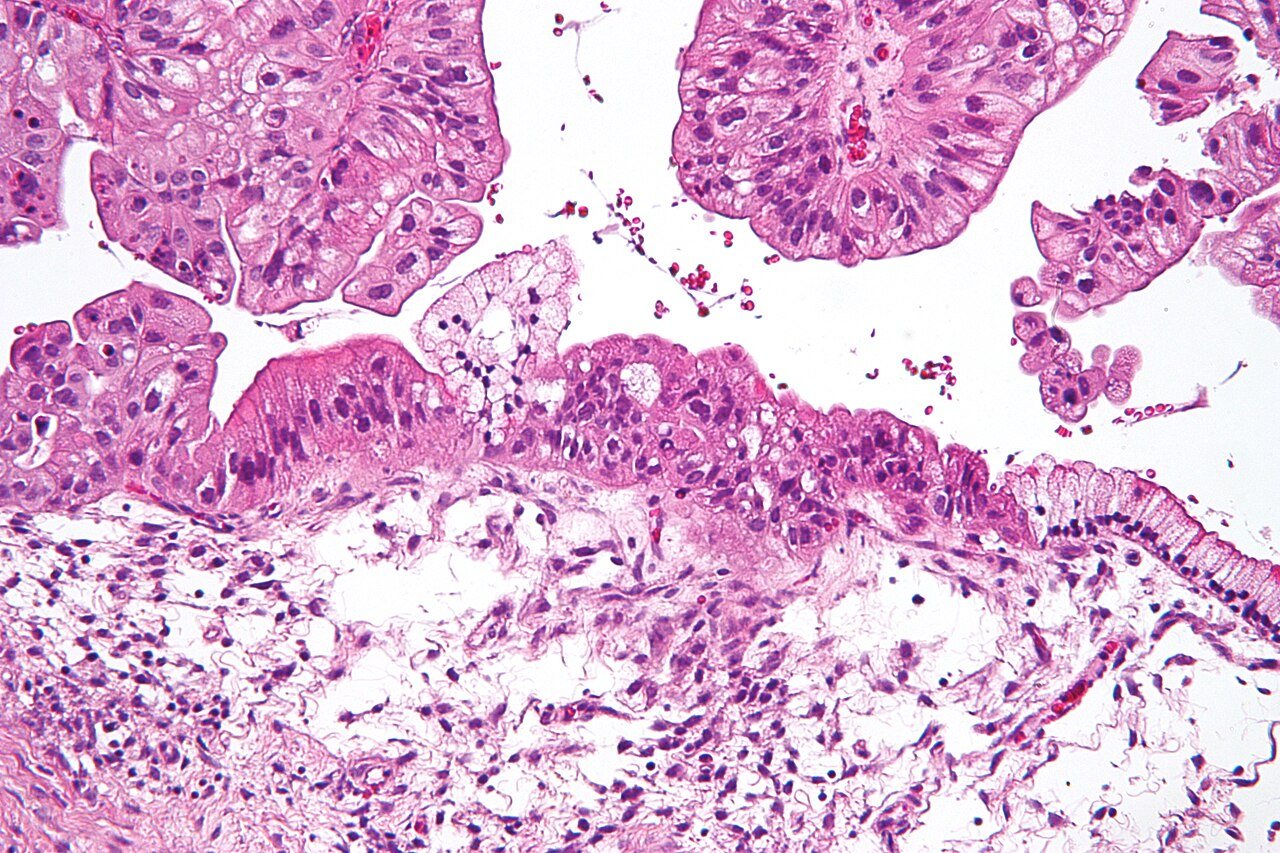
A newly published study in Nature Medicine reports that a blood-based marker can help identify ovarian cancer at an early stage, in some cases before a tumor has formed. The marker, an RNA signal called Tu-Stroma, is designed to pick up microscopic changes in the body rather than searching for tumors that are already present.
The disease is difficult to catch early. Ovarian cancer is frequently diagnosed only after it has spread, which limits treatment options and worsens outcomes. Many earlier detection efforts concentrated on finding smaller tumors, while current screening methods have been poor at identifying the disease in its earliest stages.
In the study, researchers tested Tu-Stroma in a group of 506 individuals. The marker was able to distinguish early-stage cancer from benign lesions, and the authors report that it performed better than CA125, the established blood test used in ovarian cancer evaluation. The researchers also said the marker showed promise for premalignant conditions, the stage at which intervention could be most useful.
The findings remain preliminary. The results still need to be confirmed in larger and more diverse populations before the test could be considered for routine use. If validated, however, a blood-based signal that reflects changes before tumors form could offer a practical route to earlier diagnosis of a cancer that has long been hard to detect in time.
Credit. Based on reporting for The Guardian. Is this your work? Write to us.
39