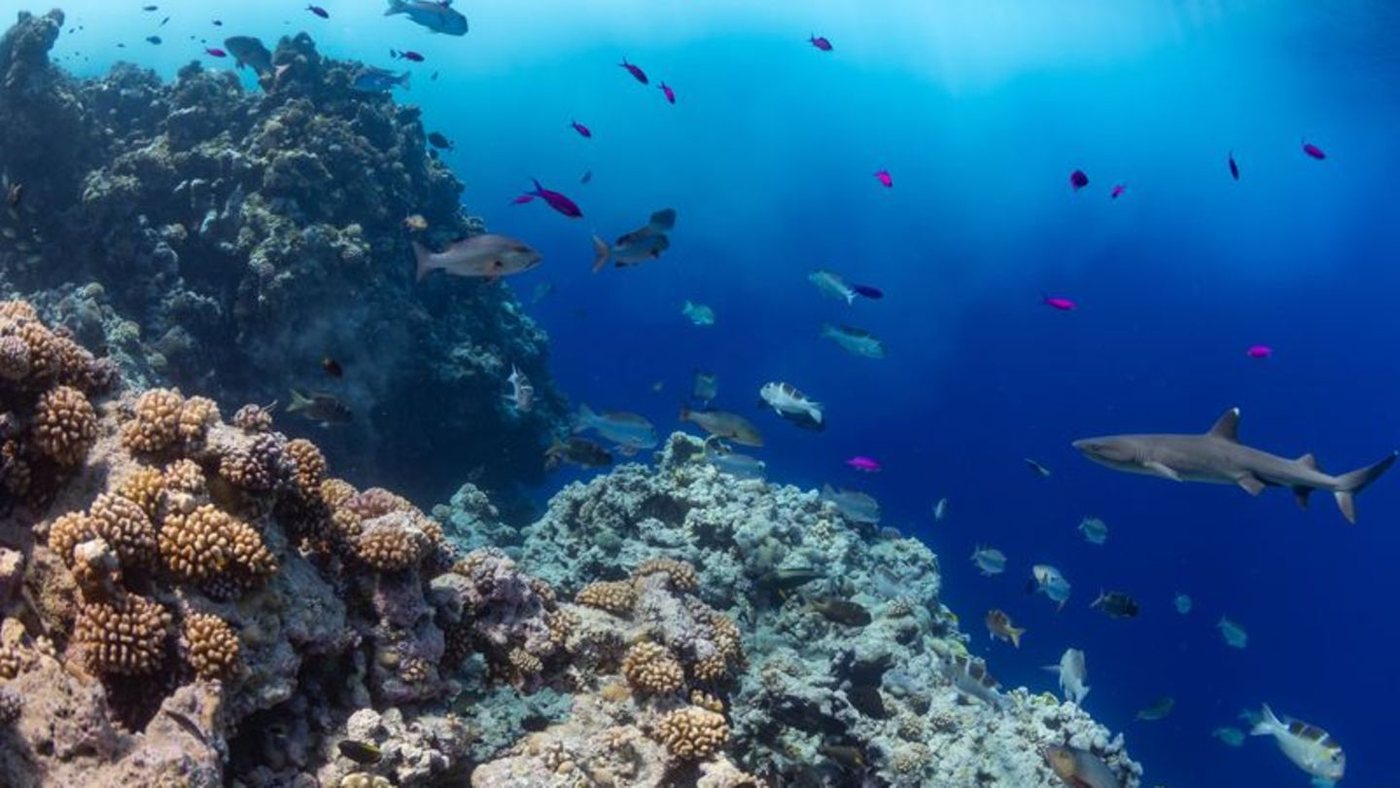
Two remote coral atolls in the Marshall Islands, Bikar and Bokak, appear to be among the most pristine marine ecosystems left on the planet. A study published in the journal Frontiers in Marine Science describes a rich community of seabirds, reef fish and predators living in waters far from any major landmass.
The atolls lie in the central Pacific, hundreds of kilometers from other land. Together they form a region of roughly 48,000 square kilometers, which the Marshall Islands has now designated as its first marine protected area. The islands belong to the Marshall Islands territory, and their isolation has helped keep the surrounding reefs largely free of the human pressures seen elsewhere in the ocean.
The research was led by Alan Friedlander of the University of Hawaii. His team combined cameras, diving surveys and a submarine to count what lives in the water and on the islands. They recorded at least 15 seabird colonies where breeding is likely or already confirmed. Underwater, they logged more than 266 groups of reef fish, along with over 200 groups of deep-sea and mid-water fish. Fifteen groups of predators, including sharks and mackerel, were also present.
Several findings stood out. The survey documented 14 fish groups never before recorded in the Marshall Islands, and the researchers believe two of the species they saw may be entirely unknown to science. Whether those two candidates are confirmed as new species remains an open question that will require further analysis.
The authors describe Bikar and Bokak as potentially among the most intact ecosystems anywhere in the world. Because they show what a healthy reef system can look like with little human interference, they could serve as reference sites for scientists and conservation managers working to restore damaged reefs elsewhere.
Credit. Based on reporting for geo.de. Is this your work? Write to us.
14