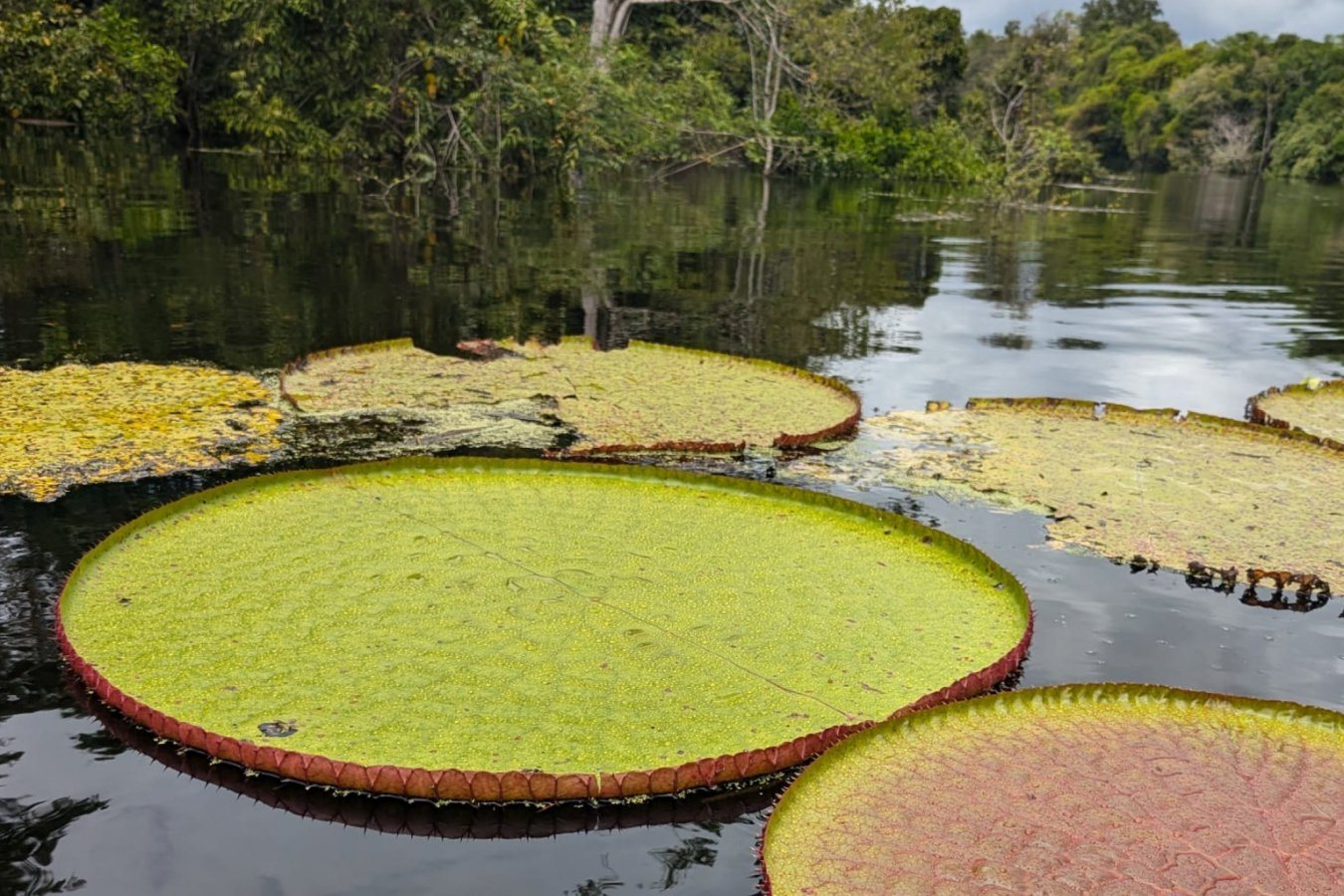
Botanists have described a new species of giant waterlily from a remote river in Colombia, a discovery that helps nearly double the number of known species in the genus Victoria from two to five. The plant, named Victoria colombiana, was confirmed after an expedition that combined social media photographs, satellite imagery and a nighttime boat dash through the jungle.
The find is notable because giant waterlilies are hardly inconspicuous. Their leaves can grow up to 3 metres wide, yet for decades only two species were recognised: Victoria amazonica and Victoria cruziana. That picture began to shift in 2016, when Carlos Magdalena of the Royal Botanic Gardens, Kew, noticed that plants grown from Bolivian seeds had unusually large leaves. In 2022, Magdalena and colleagues published evidence that those plants belonged to a new species, Victoria boliviana.
The latest discovery began in 2021, when Jeremiah Harris, who runs a carnivorous plant business in the United States, posted pictures online of plants he had seen while swimming near the Inírida river in Colombia. He assumed they were V. amazonica, but Magdalena was struck by the images because scientists had believed no giant waterlilies grew in that region. Maarten Christenhusz of the Botanical Society of Britain and Ireland, who helped describe two of the new species, said the river is geographically completely separated from the Amazon and has been for millions of years, making the find especially interesting.
Magdalena, Christenhusz and their team examined satellite photos and spotted telltale green dots confirming that giant waterlilies were indeed growing there. They then organised an expedition to the area. The team found two plants, but neither was flowering, and analysing the flowers is a crucial step in establishing whether a waterlily is genuinely a new species. At 11pm on the final night of the trip, with their plane due to leave at 9am, the researchers appeared to have failed.
Then one of the guides, Gustavo Melo from the Indigenous Tucano community, said he knew where more giant waterlilies were growing. The team set off by boat in the dark and found five plants in a small lake just before sunrise, including some that were flowering. Magdalena, Christenhusz and their colleagues have now published a paper describing the new species as Victoria colombiana. It differs from V. amazonica in the orientation of the spines beneath its leaves and in the shape of its flowers and fruits. The spines are a defence against manatees and plant-eating fish, Christenhusz said, so they vary between species depending on which herbivores are most prevalent.
As far as the team is aware, V. colombiana is found in only one small area. A single event, such as a pollution spill, could wipe out the entire species, Christenhusz warned. The team is planning to try to collect seeds to help ensure the species survives.
Meanwhile, Magdalena realised that giant waterlilies growing in the Pantanal region of South America, hundreds of kilometres to the south-east of Colombia, must have been isolated from other populations for a very long time. Genetic studies revealed that they are another distinct species, despite looking very similar to V. cruziana. Magdalena, Christenhusz and their colleagues will publish a paper soon to describe this fifth species, which they have decided to name Victoria mattogrossensis.
The discoveries add to a growing understanding of biodiversity in South America's freshwater systems, where large plants can remain overlooked despite their size. The research also highlights how social media, satellite technology and local Indigenous knowledge can combine to reveal species that formal surveys had missed. The formal description of V. colombiana appears in the journal Phytotaxa.
15