Scientists in New England are testing whether shellfish such as lobsters can tolerate seawater made more alkaline to help the ocean absorb more carbon dioxide from the atmosphere. The research addresses one of the most pressing threats to marine ecosystems: ocean acidification, which is driven by rising CO2 emissions and weakens the shells and skeletons of many marine organisms.
The experiments involve adding alkaline minerals to seawater, a technique sometimes called ocean alkalinity enhancement. The idea is that more alkaline water can take up additional CO2 from the air, potentially helping to slow climate change. But before the method can be considered at scale, researchers need to know whether the chemical shift harms marine life, especially commercially important species such as the American lobster.
For many in the New England region, the lobster roll is synonymous with summertime. Loaded into a toasted bun, chunks of the sweet meat are served hot and soaked in butter, or chilled and slathered in mayonnaise with celery and herbs. The only thing more debated than the recipe is the price: the once-humble roll now routinely fetches $30 or even $50, a sign of the changing times and seas.
Scott Lord brings in his catch of lobster to the wharf in Tenants Harbor, Maine, where the fishing economy depends heavily on the health of crustacean populations. Local fishermen and scientists alike are watching the alkalinity experiments closely, because the outcome could shape both climate policy and the future of the region's signature industry.
The research is part of a broader effort to understand whether ocean-based carbon dioxide removal methods can work safely and effectively. Proponents argue that the ocean already absorbs a large share of human-caused CO2, and enhancing that natural process could be a powerful tool against global warming. Critics and cautious scientists, however, stress that large-scale intervention in ocean chemistry carries unknown risks to marine food webs and ecosystems.
The current tests focus on whether lobsters and other crustaceans can tolerate the elevated alkalinity levels that would be required for meaningful carbon uptake. Early results are not yet public, but the research team has been measuring survival rates, shell condition, and behavior in tanks with modified seawater chemistry.
The project now faces a serious obstacle: the Trump administration's halt to federal funding threatens to scupper the research. Without federal support, the team may be unable to continue the experiments, which require costly equipment, lab space, and long-term monitoring. Researchers are exploring alternative funding sources, but the uncertainty has already slowed the work.
The funding freeze is part of a broader pattern of cuts to climate and ocean science programs, which has drawn concern from marine biologists, environmental groups, and fishing communities who rely on scientific data to manage fisheries. The lobster industry alone supports thousands of jobs across Maine and neighboring states, and its future is tied to the health of the ocean environment.
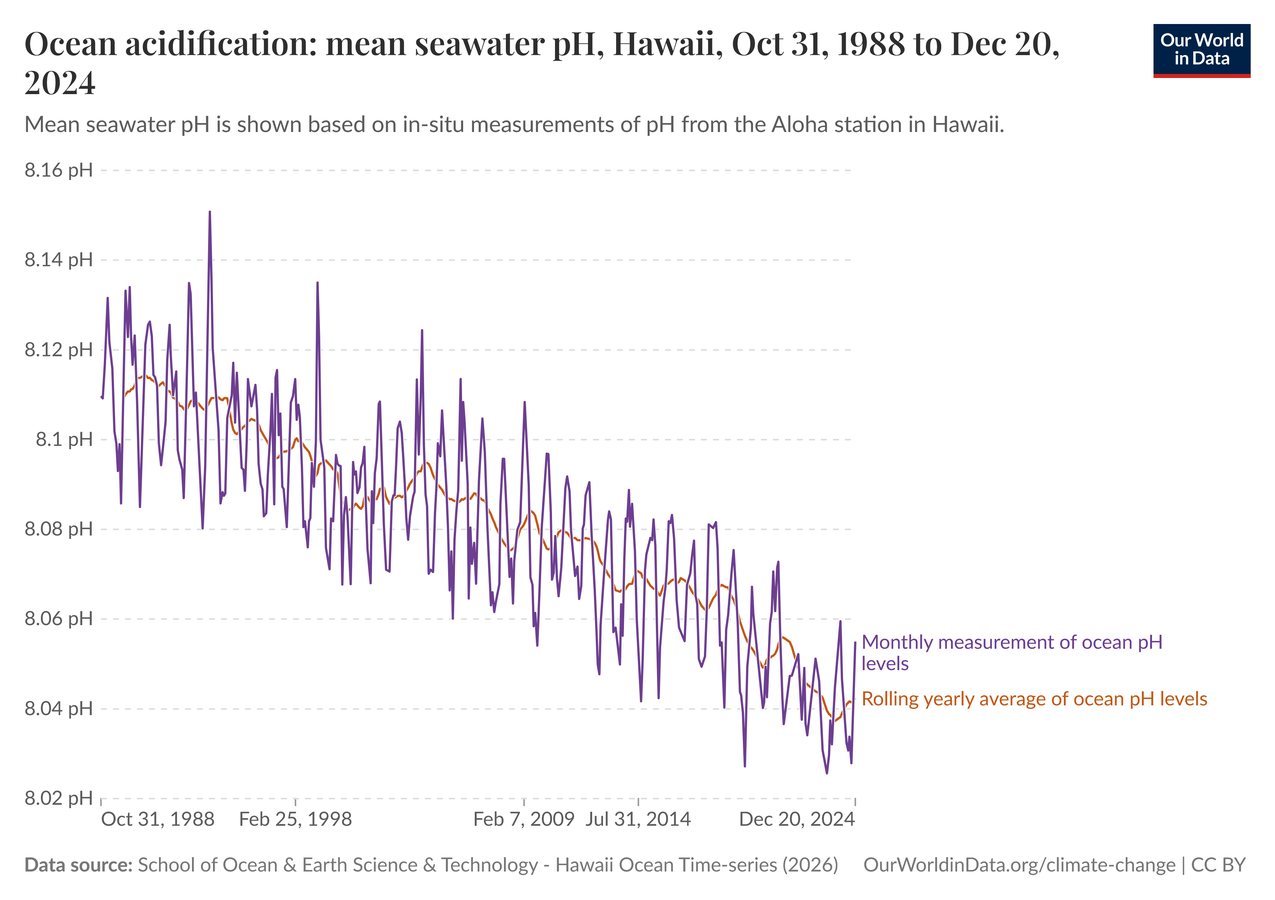
Ocean acidification is often called climate change's equally evil twin. As CO2 dissolves in seawater, it forms carbonic acid, lowering the pH of the ocean. Since the Industrial Revolution, surface ocean acidity has increased by about 30 percent. Shellfish, corals, and some plankton struggle to build their calcium carbonate structures in more acidic water, which can ripple through the entire marine food chain.
Alkalinity enhancement is one of several proposed ocean-based carbon dioxide removal techniques, alongside approaches such as seaweed farming and artificial upwelling. None of these methods has been deployed at scale, and scientists agree that more research is needed to understand their effectiveness, costs, and environmental impacts.
The New England lobster study is a small but significant piece of that larger puzzle. If the tests show that shellfish can tolerate alkaline conditions, the method could move closer to field trials. If not, researchers will need to look for other ways to protect both the climate and the creatures that live in the sea.
64