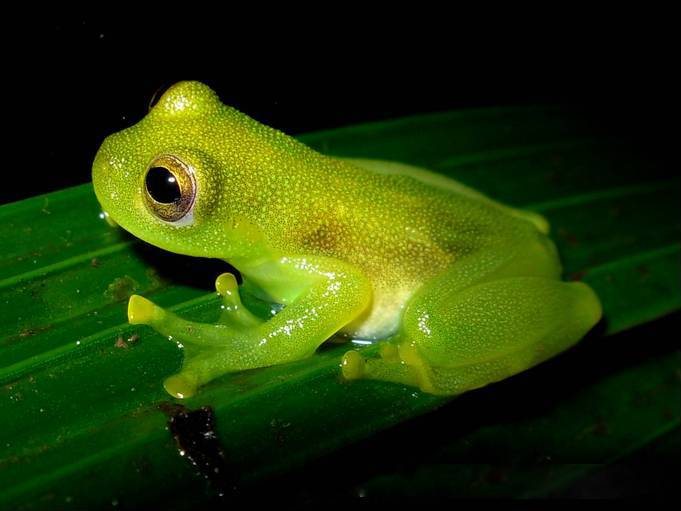
A male glass frog has been observed mounting a vigorous defense of its eggs against a swarm of parasitic wasps, using powerful kicks from its hind legs to repel the attackers. The behavior, captured in footage from the BBC Earth series Planet Earth II, offers a rare glimpse into the active parental care that some amphibians provide to their offspring.
The footage shows the frog, a species known for its translucent skin, positioned over a clutch of eggs deposited on a leaf. Parasitic wasps are a known threat to glass frog eggs, as they lay their own eggs inside the developing embryos, which then serve as food for the wasp larvae. The frog's response is swift and physical: it lashes out with its hind legs, kicking the wasps away from the vulnerable egg mass. This defensive posture is repeated as the wasps continue their attempts to reach the eggs.
This behavior is notable because it demonstrates a level of parental investment that is relatively uncommon among frogs. Many amphibian species lay eggs and abandon them, relying on environmental conditions or sheer numbers for survival. The male glass frog, however, remains with the clutch, providing protection against predators and potentially maintaining moisture levels. The active, physical defense against a specific predator like a wasp shows a targeted response to a direct threat, rather than a passive or generalized guarding strategy.
The footage is part of the Planet Earth II series, which has been celebrated for its use of new camera technologies to capture intimate animal behaviors. The series, narrated by David Attenborough, has brought attention to the often-hidden lives of species across the globe, from urban environments to remote islands. The glass frog segment highlights the challenges faced by small creatures in the rainforest, where threats can come from any direction, including from above.
Glass frogs are native to the tropical forests of Central and South America. Their name comes from their translucent abdominal skin, which allows observers to see their internal organs, including the heart and digestive tract. This transparency is thought to provide camouflage, making the frogs harder for predators to spot against the background of green leaves. The eggs, which are also often translucent, are typically laid on leaves overhanging streams, so that when the tadpoles hatch, they drop into the water below.
The defensive behavior captured in the footage underscores the evolutionary pressures that shape amphibian life. While the wasps are small, their impact on a clutch of eggs can be devastating, with a single swarm potentially destroying an entire brood. The male frog's persistent effort to fend them off, despite the wasps' numbers, illustrates the high stakes of reproduction in a competitive ecosystem. The footage serves as a reminder of the complex interactions that occur in nature, often unseen by human eyes, and the lengths to which animals will go to ensure the survival of their genetic line.
62