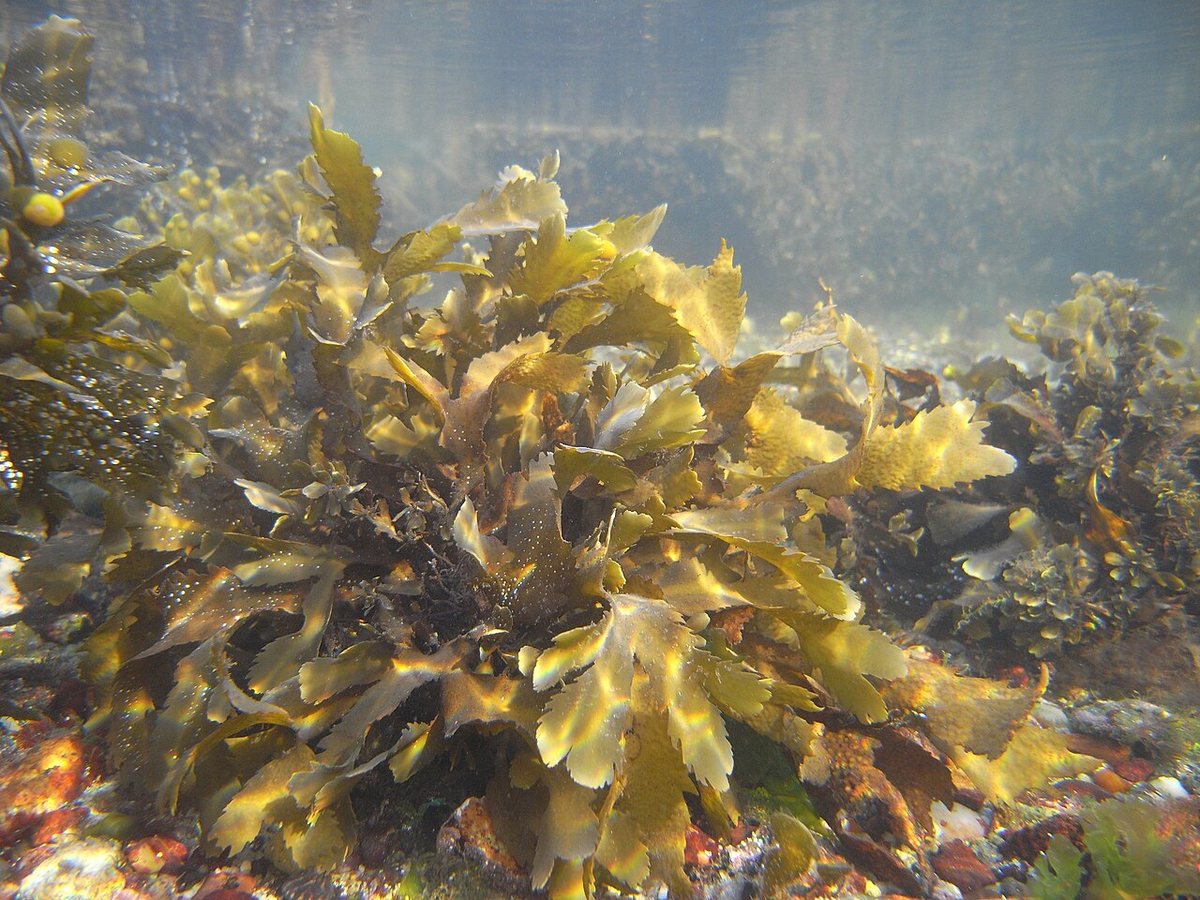
Growing seaweed has long been promoted as a natural way to slow climate change, but a new study argues that this approach is fundamentally mistaken. The research concludes that the loss of existing seaweed ecosystems emits far more carbon dioxide than any expansion of seaweed farming could ever absorb.
Seaweeds absorb an estimated 3.7 billion tonnes of carbon dioxide through photosynthesis every year, drawing it from seawater, which then pulls more CO2 from the air above. They mostly grow near coasts, where they are eventually digested or decomposed, releasing carbon back into the environment. However, fragments of fronds, along with sugars and carbohydrates that dissolve in seawater, can sink into the deep sea, sequestering a small fraction of that CO2 as “blue carbon” for thousands of years.
Scientists and start-ups have suggested that seaweed growth, especially kelp, could be massively expanded to take up more CO2, something the UN has said will be necessary on a large scale to reverse dangerous levels of global warming. But the new study, led by Karen Filbee-Dexter at the University of Western Australia, warns that this strategy may backfire. With an estimated 60 per cent of kelp forests already in decline, these ecosystems could eventually begin emitting more CO2 than they absorb.
Kelp forests currently cover around 640,000 square kilometres worldwide, an area slightly larger than France, but they are dying off as ocean temperatures reach record highs. The researchers argue that efforts should shift from growing seaweed to preserving what remains. “Instead of asking how much carbon we can remove with seaweeds, we should be asking how much carbon we can stop from being released as these ecosystems are damaged by climate change,” says Filbee-Dexter.
The study points to real-world failures that support this caution. Running Tide, a US carbon removal start-up that raised $70 million to cultivate kelp on wooden buoys that would sink into the deep sea, struggled to grow kelp in the open ocean and shut down last year. Other projects have attempted to restore lost kelp forests, such as an experiment in northern Norway that brought back 70 hectares of kelp by poisoning sea urchins. While that restoration is a win for biodiversity, it only draws down about 50,000 tonnes of CO2 per year, compared with the estimated 14 million tonnes of CO2 released annually by global kelp loss.
Preserving kelp ecosystems is at least eight times cheaper per hectare than restoring them, yet only 2 per cent of kelp forests lie in protected areas. Seaweed farming now occupies 4,000 square kilometres of ocean, but that is only about a third of the kelp forest cover lost each year. After factoring in emissions from farming operations, such as boat fuel and plastic lines, nine out of 11 seaweed farms were found to emit more CO2 than they sequestered in a study published earlier this year.
Filbee-Dexter acknowledges that seaweed restoration and farming are unlikely to be major climate solutions, but she stresses that they still have value. Restoration can improve biodiversity, and farming can produce low-carbon alternatives to fossil-fuel products like fertiliser. Pamela Walsh at Queen’s University Belfast disagrees with writing seaweed off entirely, arguing that scientists do not yet have a solid enough understanding of how much carbon seaweed sequesters. “Blue carbon is part of the puzzle,” she says. “It can make a contribution. The question is how that is determined and validated.”
The study is published in the journal PLOS Biology.
117