Rapid warming in the Arctic is driving the emergence of two distinct climate regimes across Siberia, a development that could destabilize vast stores of methane trapped beneath permafrost and accelerate global warming, according to new research.
The study, focused on the Siberian Arctic, reveals that different regions are responding to temperature increases in contrasting ways. One regime is characterized by intense summer warming that drives deep permafrost thaw, while the other involves milder warming but increased winter precipitation, which insulates the frozen ground and slows its refreezing. Both pathways, the researchers warn, can unlock ancient carbon deposits that have remained frozen for millennia.
Scientists describe the methane reservoirs beneath Siberian permafrost as a potential "sleeping giant" of the climate system. Methane is a greenhouse gas many times more potent than carbon dioxide over a short timescale, and its large-scale release could create a feedback loop in which warming triggers more emissions, which in turn drives further warming.
The distinction between the two regimes matters for prediction. If researchers treat the entire Siberian Arctic as a single uniform system, they risk underestimating how quickly different areas will thaw and how much methane they might release. The new findings suggest that regional climate models must account for these divergent conditions to produce reliable forecasts of future emissions.
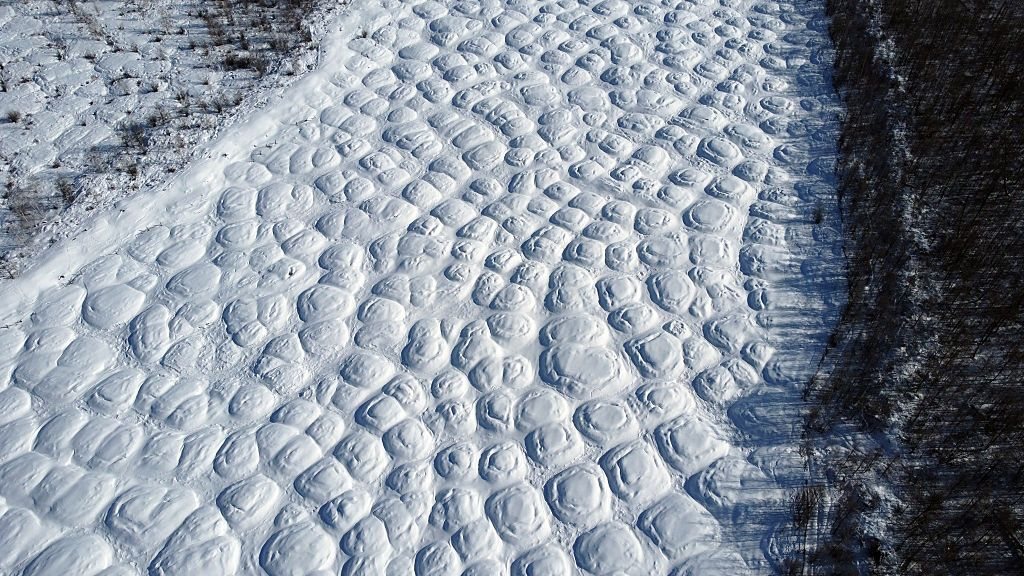
Permafrost across Siberia acts as a natural vault, holding organic material from plants and animals that died tens of thousands of years ago. When the ground thaws, microbes begin to break down that organic matter, producing methane and carbon dioxide. The process is already underway in parts of the Arctic, where craters and sagging ground have appeared as ice-rich soils collapse.
The research adds to a growing body of evidence that Arctic warming is not proceeding uniformly. Some areas experience rapid, dramatic change, while others shift more gradually, yet both trajectories ultimately lead to the same destination: the exposure of carbon that has been sequestered since the last ice age.
For climate scientists, the implications extend beyond Siberia. The Arctic acts as a bellwether for the rest of the planet, and the mechanisms identified in this study could apply to other permafrost regions in North America and Scandinavia. Understanding the precise conditions that trigger methane release is essential for refining global climate projections.
The findings also carry significance for international climate policy. If methane emissions from thawing permafrost rise faster than current models anticipate, nations will need to make deeper cuts in human-caused greenhouse gas emissions to offset the natural releases. The study underscores the urgency of reducing fossil fuel use while natural carbon stores remain relatively stable.
Researchers involved in the work emphasize that the window for action is narrowing. The transformations now visible in the Siberian Arctic are not distant possibilities but ongoing realities, and the pace of change is accelerating. Each additional fraction of a degree of warming increases the likelihood that the methane "sleeping giant" will begin to stir in earnest.
141