Physicists have used a model inspired by black holes to describe a new kind of quantum critical behaviour, a finding that may help explain some of the most puzzling materials studied in condensed matter physics. The work, published in Reports on Progress in Physics in 2026 by a team led by Zhao and colleagues, suggests that a tool borrowed from gravity theory could offer a practical route into problems that conventional methods struggle to handle.
Quantum criticality describes a tipping point between different states of matter at absolute zero. Unlike ordinary phase changes driven by temperature, these transitions are triggered by factors such as magnetic field, pressure or chemical potential. Near the critical point, fluctuations in the system become strong and remain correlated over long distances, which breaks down the simple quasiparticle pictures that physicists normally rely on to predict how electrons behave.
The difficulty is particularly acute in materials where electrons interact strongly with one another. Quantum criticality has been linked to phenomena such as Kondo breakdown, strange metals and unconventional superconductivity, all of which defy standard theory. Because direct calculations for strongly interacting electrons are so hard, researchers have struggled to build reliable models of these effects.
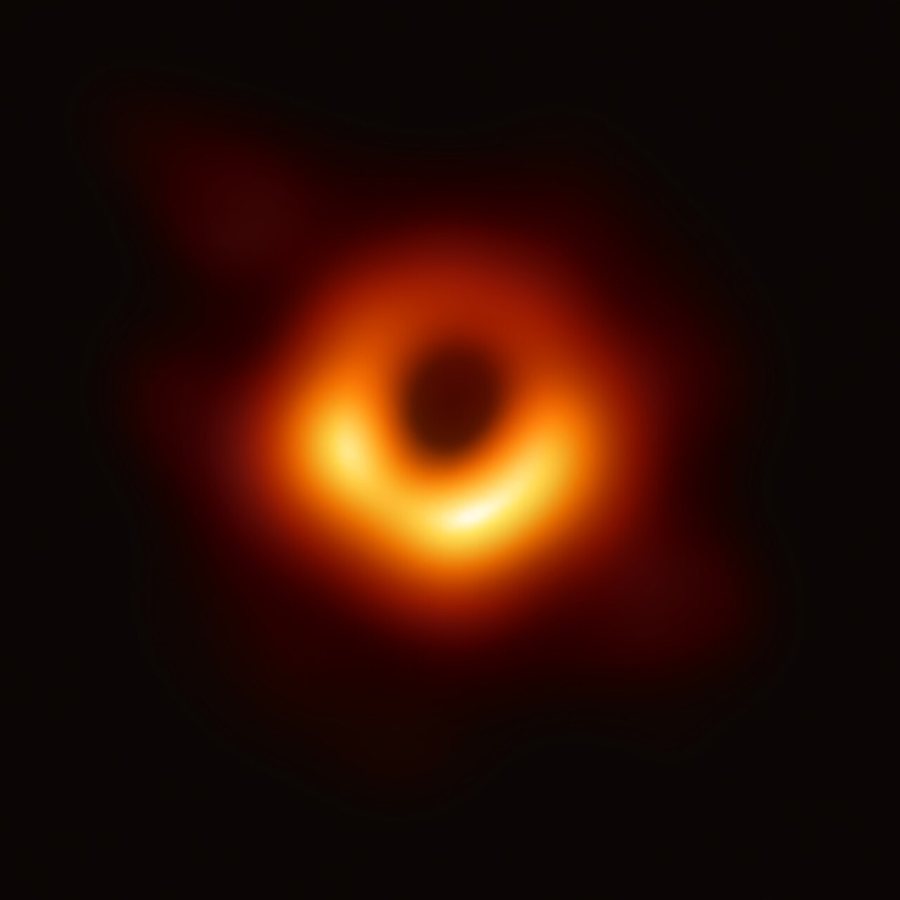
The new study takes a different approach through holography. This framework proposes that the same physics can be described by a higher-dimensional theory of gravity containing a black hole. By using a black-hole-inspired model, the team examined criticality driven by a magnetic field and found a new type of quantum critical behaviour.
The researchers report that the magnetic Grüneisen ratio diverges near the critical point with a universal scaling law. That scaling is consistent with results from recent experiments on heavy-fermion materials, which the authors suggest may point to a new universality class of quantum criticality. The authors stress, however, that the link to these materials is a suggestion rather than a confirmed explanation, and that holography has not yet been proven as a reliable tool for real materials. Further work will be needed to test whether the model captures the physics of actual compounds.
Credit. Based on reporting by Lorna Brigham for Physics World. Is this your work? Write to us.
8