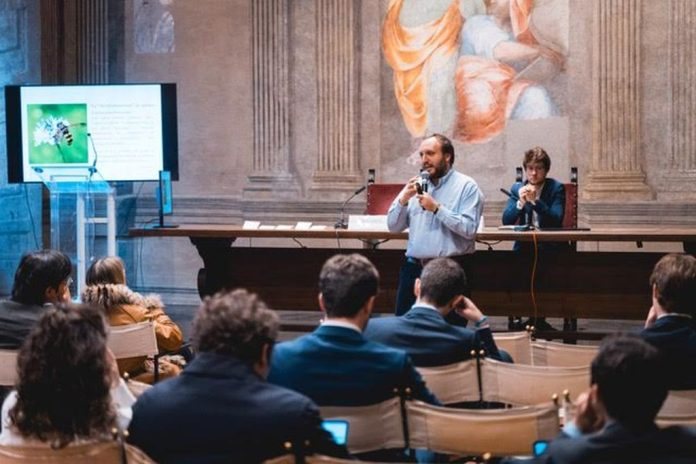
Students and young people gathered at Palazzo Baldassini in Rome for a one-day program aimed at helping them tell reliable science from fake news. The event, titled around scientific research and misinformation, focused on health literacy and on how to judge whether a source can be trusted. It was funded by a non-conditioning contribution from Fondazione MSD Italia, whose director, Marina Panfilo, opened the day.
The program combined expert talks with hands-on practice. Lorenzo Gagliardi, a researcher at Italy's National Research Council (CNR), explained how cognitive biases shape the way people accept or reject information, and outlined techniques for debunking false claims. Gianluca Dotti, a science journalist, addressed the responsibilities of those who communicate complex health topics to the public, where a small simplification can easily become a distortion.
The most practical part of the day was a workshop. Participants divided into five groups, and each group examined one of five fake health news items with guidance from the speakers. The groups identified an authoritative source to check each claim against, then wrote a script for a 45 to 60 second explainer video that corrected the item they had studied. The exercise asked students not only to spot misinformation but to produce accurate content themselves.
The organizers framed the event as an early step in building habits of verification among young people, who are heavily exposed to health information online. The reporting, however, does not provide attendance figures or any follow-up results, and it does not say whether the training changed how the students later assess or share information. Whether the skills taught in Rome carry over beyond the workshop therefore remains an open question.
Credit. Based on reporting for Mediaone online. Is this your work? Write to us.
18