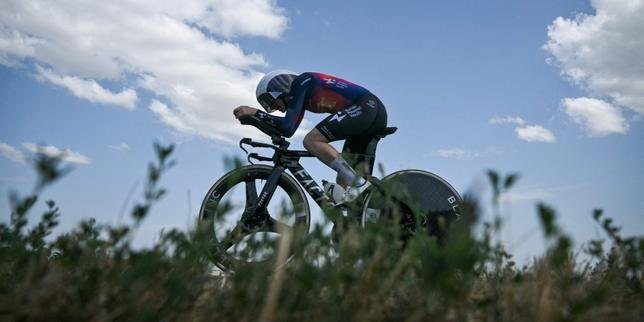
Marlen Reusser set the fastest time in the Tour de France Femmes 2026 time trial on Tuesday, dominating the 21-kilometer course between Gevrey-Chambertin and Dijon as French contender Pauline Ferrand-Prévot lost significant time in the stage-four race against the clock.
The individual time trial, held on the roads of the Côte-d'Or in eastern France, marked the return of the format to the women's Tour after a two-year absence. Riders departed from Gevrey-Chambertin and raced toward the finish in Dijon over a route that demanded careful pacing and a sustained, powerful effort from the first meters to the last.
Reusser's performance stood as the benchmark of the afternoon, with the Swiss rider stopping the clock ahead of the rest of the field. Her time remained the day's fastest as the remaining competitors completed the course, confirming the reputation she has built as one of the strongest time-trial specialists in the women's peloton. It was an early statement from a rider who has made the race against the clock her signature in recent seasons.
The result was a heavy blow for Ferrand-Prévot. Reports from the stage described the French rider as struggling on the course, losing substantial time at the intermediate points and watching her hopes for the general classification take a serious hit. For a rider competing on home roads, the setback was particularly costly, coming in a discipline that often defines the outcome of a stage race.
Tuesday's stage was the first time-trial test of this year's edition and the first since the women's Tour last included the discipline two years ago. That long absence made the stage a focal point of the race, with overall contenders knowing that every second lost over the 21 kilometers could carry a heavy price in the final standings.
The course offered little margin for error. The distance, shorter than the longest time trials in professional cycling, rewarded riders who could hold a punishing pace from the start without fading in the final kilometers. The finish in Dijon arrived after a rolling run through the Côte-d'Or, a region known well beyond the world of cycling for its vineyards.
Beyond the fight for the stage win, the day carried wider significance for the race. In stage racing, time trials often create the gaps that ultimately decide the podium, and the shifts recorded in the Côte-d'Or were certain to influence the way teams approach the road stages to come. Riders who lost time will now look for chances to reclaim those seconds, while those who gained will be determined to protect their advantage.
Attention now turns to the remainder of the Tour de France Femmes, where the general-classification contenders will have their first opportunity to respond. For Reusser, the day ended with the satisfaction of a commanding victory. For Ferrand-Prévot, the damage has been done, and the coming stages will determine whether it proves decisive.