Wild monkeys in West Africa can climb vertical tree trunks using a degree of foot flexibility that scientists did not realize the animals possessed. The discovery challenges a key assumption about what the last common ancestor of humans and chimpanzees looked like and how it moved through its environment.
Researchers observed the monkeys using their feet in ways that were previously thought to be unique to early hominins, the group that includes humans and their fossil ancestors. The finding suggests that certain features of fossil feet, long interpreted as evidence of upright walking or specialized climbing, may not be as diagnostic as paleoanthropologists once believed.
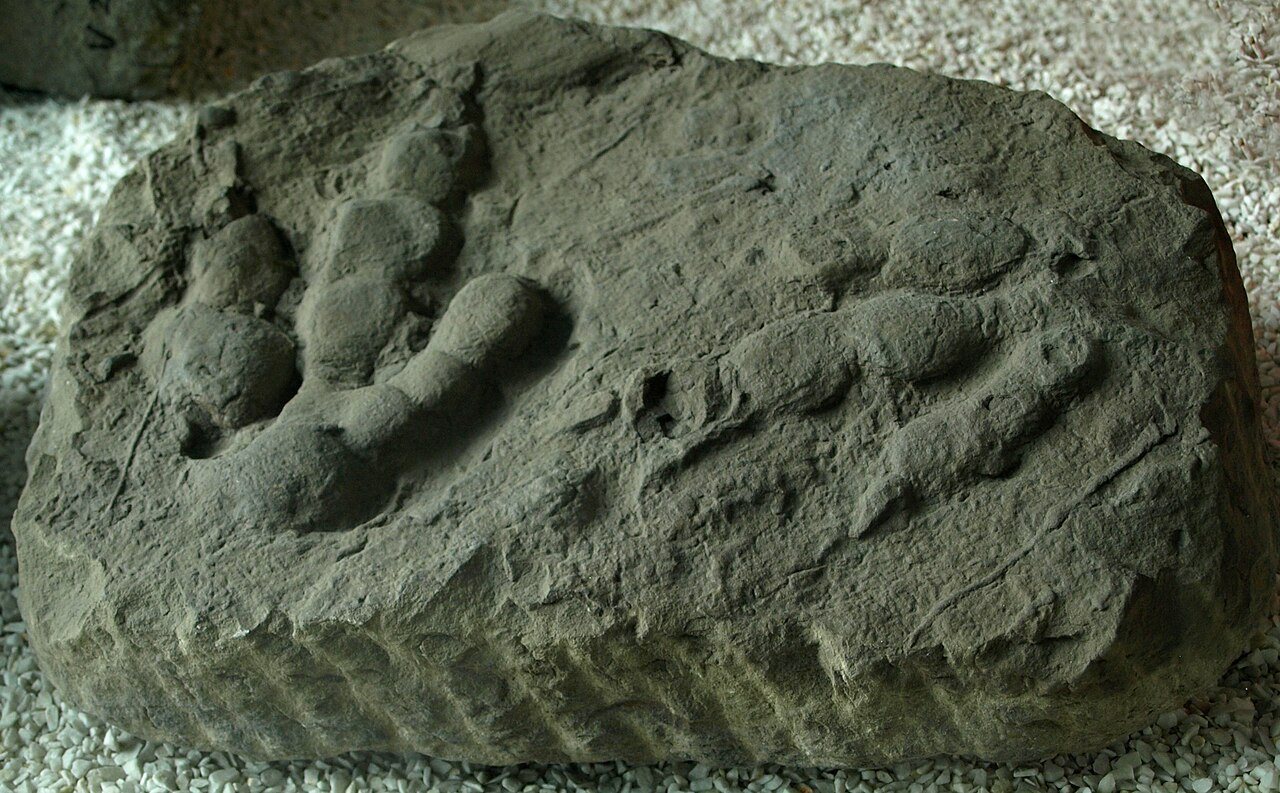
The study focused on the mechanics of foot movement during vertical climbing, a behavior essential for survival in forested habitats. Scientists documented that the monkeys could flex their feet at the midfoot joint in a manner that mimics the motion seen in some fossil footprints attributed to early human ancestors. This flexibility allowed the animals to grip tree trunks securely while ascending, a capability that had not been fully appreciated in living primates.
Because the same foot motion appears in both modern monkeys and fossil hominins, researchers argue that it may represent a primitive trait inherited from a distant common ancestor rather than a derived feature unique to the human lineage. If correct, this would overturn a central pillar of how scientists reconstruct the locomotion of the last common ancestor of humans and chimpanzees.
For decades, paleoanthropologists have used fossil foot bones and footprints to infer when upright walking evolved and how early hominins moved between trees and ground. The new observations introduce a cautionary note: features once considered hallmarks of bipedalism may instead reflect a more general climbing ability shared across primate lineages.
The implications extend beyond reinterpretation of individual fossils. They affect the broader evolutionary narrative of how humans became habitual bipeds. If the last common ancestor possessed flexible feet suited for climbing, then the transition to walking on two legs may have involved a more complex interplay of habitat change, diet, and locomotion than previously modeled.
The research team emphasized that the monkeys were not walking upright but using their feet in a way that produced a mechanical signature similar to that seen in fossilized hominin tracks. This overlap raises questions about how confidently scientists can assign fossil footprints to specific species or behaviors without comparative data from living primates.
The findings also highlight the value of studying wild primate behavior in natural settings. Laboratory studies of foot anatomy had not revealed the full range of motion these monkeys achieve during real climbing tasks. Only direct observation in the field exposed the flexibility that had gone unnoticed.
Scientists say the results do not invalidate the evidence for human bipedalism, which is supported by a wealth of skeletal and footprint data. Instead, they refine the toolkit used to interpret that evidence. The study urges caution in drawing conclusions about locomotion from isolated foot bones or trackways, especially when the behavior of living relatives remains incompletely documented.
The research adds to a growing body of work showing that primate locomotion is more versatile than anatomy alone suggests. It also underscores the importance of integrating behavioral ecology with paleontology to build accurate models of human origins.
Future studies will likely examine whether other primate species exhibit similar foot flexibility and whether the trait appears in the fossil record earlier than previously recognized. For now, the discovery serves as a reminder that assumptions about the past must be tested against the living world.
71