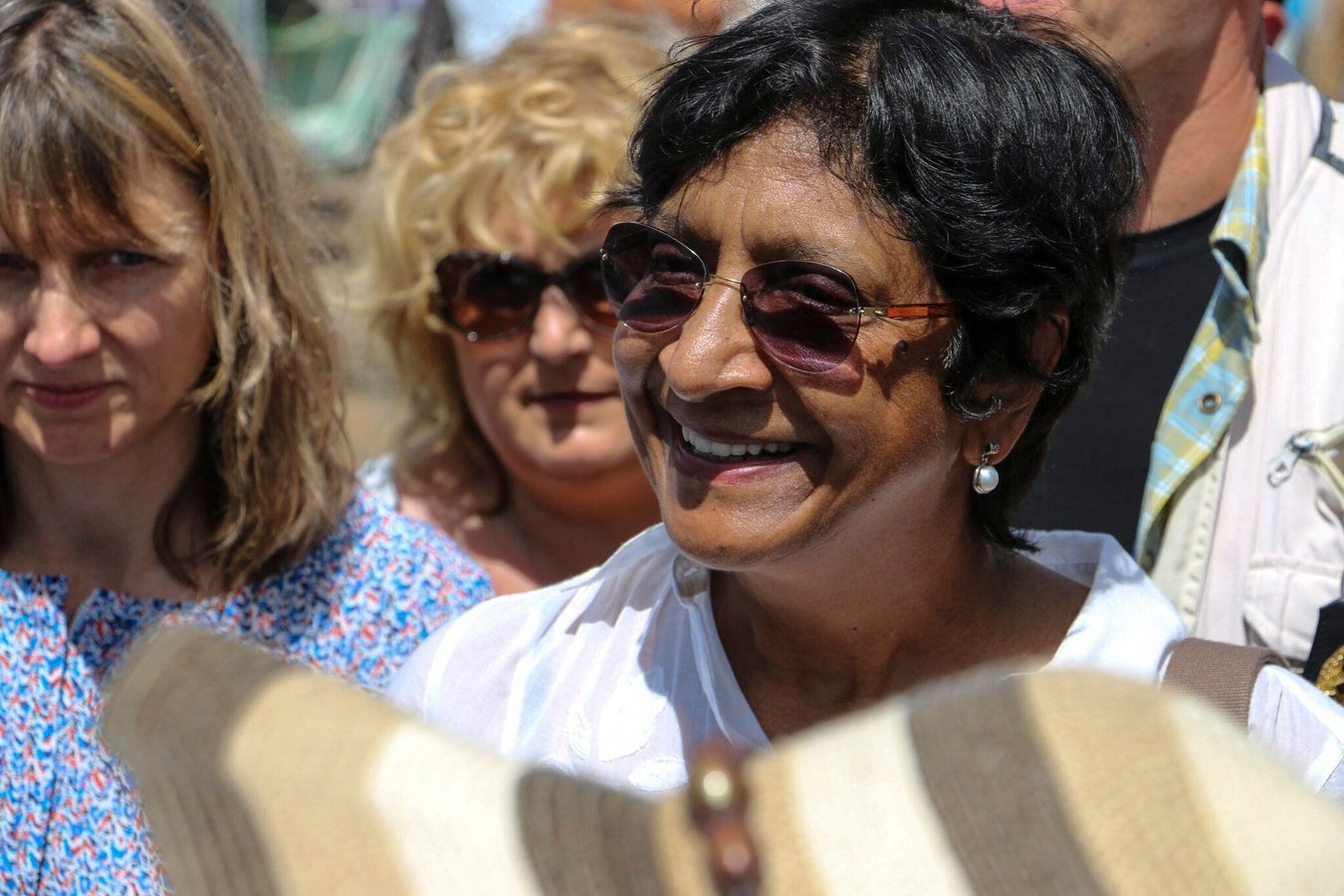
South African jurist Navanethem «Navi» Pillay, 85, has been awarded the 2026 Nobel Peace Prize, the Norwegian Nobel Committee announced Friday in Oslo. The committee cited her lifelong work to advance peace and international law, recognizing a career that spans anti-apartheid legal defense, international criminal tribunals, and United Nations leadership.
Pillay, born in Durban to an Indian Tamil family during apartheid, began her legal career defending Nelson Mandela and others who challenged the racial order. She later became the first non-white woman to serve as a judge on South Africa's High Court. Her public service extended to the International Criminal Tribunal for Rwanda, where she was one of three judges on the landmark 1998 Akayesu trial. That judgment was the first by an international court to interpret the Genocide Convention and established that rape and other forms of sexual violence could constitute acts of genocide when committed with intent to destroy a protected group. Pillay also served as a judge at the International Criminal Court and as UN High Commissioner for Human Rights from 2008 to 2014. She currently sits as a judge at the International Court of Justice in the case in which The Gambia accuses Myanmar of violating the Genocide Convention.
The Nobel Committee said the award reflects the role of legal institutions in resolving conflict and holding perpetrators of grave crimes accountable. It did not present the prize as a ruling on any current conflict. The committee also highlighted Pillay's work strengthening institutions that investigate and prosecute war crimes, crimes against humanity, and genocide.
International reaction was swift and largely positive. Pillay is the fourth African woman to receive the Nobel Peace Prize. Her selection was celebrated by human rights advocates and legal experts who praised her decades of work on international justice. Johann Soufi, a lawyer and prosecutor specializing in international law, was among those who welcomed the decision, noting its significance for human rights.
However, the award drew sharp criticism from Israel. Israeli officials objected to Pillay's role as chair of the UN Independent International Commission of Inquiry on the Occupied Palestinian Territory, including East Jerusalem, and Israel. In a September 2025 report, the commission concluded that Israeli authorities and security forces had committed acts that amounted to genocide during the war in Gaza. Israel rejected those findings and accused Pillay of bias, drawing a parallel with Nazi-era figures. The commission's conclusion has been disputed, and the Nobel Committee did not endorse it as part of the prize citation.
The controversy underscores the broader debate over the role of international legal bodies in contemporary conflicts. Pillay's career has consistently focused on using law to address mass atrocities, from apartheid South Africa to Rwanda to the occupied Palestinian territories. Her work at the Rwanda tribunal helped shape global legal practice around conflict-related sexual violence, and her tenure at the UN human rights office advanced monitoring and accountability mechanisms.
The Nobel Committee's decision places Pillay alongside previous laureates recognized for legal and human rights advocacy. The prize, announced in Oslo, includes a monetary award and a gold medal. The formal ceremony is scheduled for December 10 in Oslo, where Pillay will deliver a lecture. The award comes amid multiplying armed conflicts and intensifying geopolitical tensions, a context that the committee acknowledged in its citation emphasizing the importance of legal institutions in resolving disputes and holding perpetrators accountable.
Pillay's selection also highlights the often contentious intersection of law, politics, and human rights. While her supporters see the prize as a validation of international justice, her critics view it as a political statement. The Nobel Committee has maintained that the award recognizes her contributions to peace and international law, not any specific finding. As the world reacts, Pillay's legacy as a jurist and advocate continues to shape debates over accountability and the rule of law in global affairs.
12