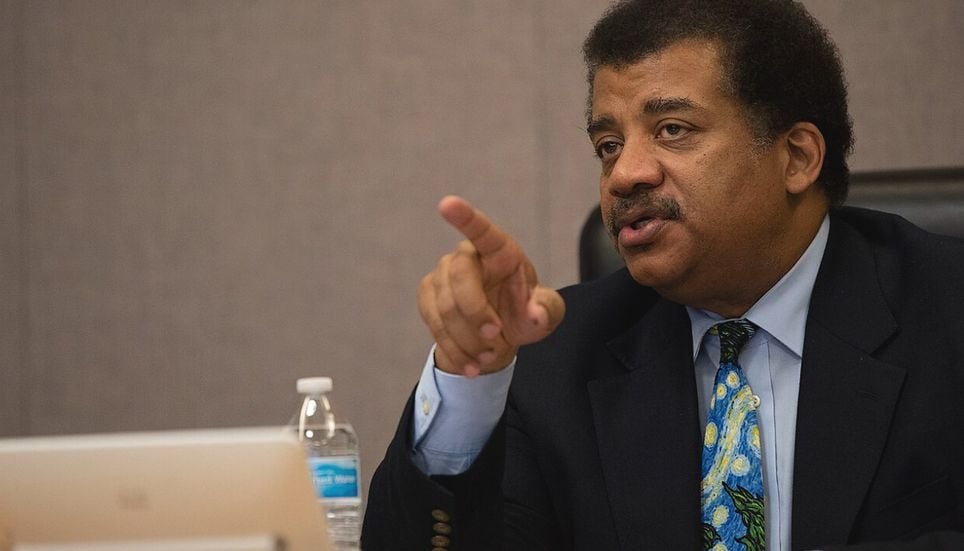
Astrophysicist Neil deGrasse Tyson has said that humans can travel through time into the future but not back into the past, a distinction rooted in Albert Einstein's theory of relativity. Speaking in a recent interview, he separated what physics allows from the time travel depicted in novels, films and television series, which has long captured public imagination.
Tyson made the remarks during an appearance on the YouTube interview programme Hot Ones Game Night, broadcast on 14 October and hosted by Joe Santagato. Asked whether human beings could ever travel through time, he first dismissed the idea, then refined his answer to separate travel forward from travel backward. "We can travel through time to the future, but not to the past," the astrophysicist said.
To illustrate the point, Tyson described a traveller moving through space at very high speed. If that person aged ten minutes during the journey, they could return to Earth to find that an hour, a day or even a year had passed for those who stayed behind, depending on the speed reached. This effect, known as time dilation, shows that time can pass at different rates depending on an observer's motion and gravitational conditions. The traveller would therefore come back to a planet many years ahead of the one they left.
Tyson stressed a key limitation, however. Experiencing less time than other people does not let someone choose a date or return to an earlier moment. Relativity describes differences in the amount of time that elapses, but it does not show that travelling backwards through history is possible. In his words, the traveller is in effect a prisoner of their own present, moving from an inaccessible past toward an unknown future, with no proven way to return to the starting point.
The practical obstacles are also large. Making space travel at speeds close to that of light a reality presents enormous technological challenges, and the existence of time dilation does not mean such journeys are currently within the reach of available technology.
The interview also touched on science communication. Santagato asked Tyson to rank four figures associated with science by intelligence: Stephen Hawking, Carl Sagan, Bill Nye and Tyson himself. Tyson placed Hawking at the top, after Einstein, said he would put Sagan ahead of himself, and shared third place with Nye, whom he described as a friend with comparable abilities. The ranking was a personal opinion expressed during the interview rather than a scientific assessment.
20