Belgian physicist Francis Halzen, 82, was awarded the Nobel Prize in Physics this Tuesday for his decisive contributions to the IceCube Neutrino Observatory and the discovery of high-energy neutrinos of astrophysical origin, subatomic particles that arrive from outside our galaxy.
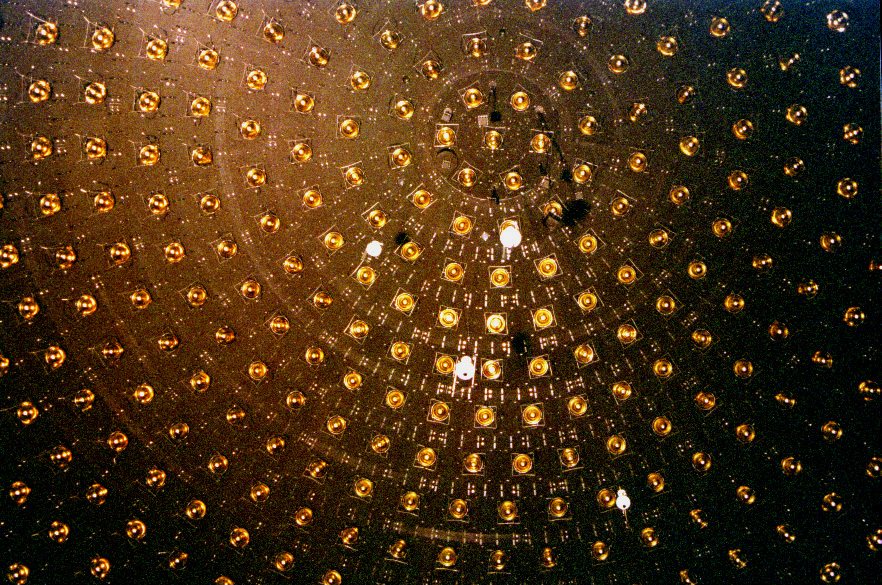
The Nobel committee, meeting in Stockholm, recognized the «vision and scientific leadership» of Halzen, a professor at the University of Wisconsin-Madison in the United States, and described him as the driving force behind an observatory that consists of «a cubic kilometer of ice equipped with light sensors».
«This year's prize is about ghostly messengers from space», said Ellen Moons, secretary general of the Royal Swedish Academy of Sciences, during a press conference. Professor Eva Olsson, a member of the Nobel Committee for Physics, explained that the award «has to do with a giant cube of ice located at the South Pole of our planet» that enables the detection of neutrinos.
Halzen first presented his idea for the observatory in 1988 and gained the support of other researchers. Preliminary tests were carried out a few years later, but the observatory was not completed until 2011. «Cosmic neutrinos with extremely high energies are very rare, so an enormous volume of ice is needed to observe a suitable number of collisions», the jury noted.
The academy explained that high-energy neutrinos are created in the same environments as other particles. «However, unlike other particles, neutrinos reach us without changing direction or losing energy. This means they can provide information that is not available in any other way», it said in a statement.
«It was a great surprise and, obviously, I did not expect it», Halzen said by phone during the press conference, shortly after the prize was announced. «But it is a great pleasure to know that I have been granted this prize», he added. The physicist also expressed his hope that the award would serve to recognize «the truly brave people who joined me at the beginning of this project».
Belgian Prime Minister Bart De Wever conveyed his «sincerest congratulations» to Halzen. «An impressive recognition of a life dedicated to unraveling the greatest secrets of the cosmos through its tiniest manifestations», De Wever said on the social network X.
When asked whether these neutrinos could carry messages from possible distant civilizations, Halzen replied that «it has been speculated that (...) this would be an ideal way to communicate with extraterrestrials», but added: «I don't think I'm going to get into that topic. I think we already have enough real problems to deal with at this moment».
Last year, the Nobel Prize in Physics was awarded to Briton John Clarke, Frenchman Michel Devoret and American John Martinis for putting quantum mechanics into practice and enabling the development of all kinds of digital technology, from mobile phones to a new generation of computers.
This prize is the second Nobel of the season, after the Medicine prize awarded on Monday to American Karl Deisseroth and Germans Peter Hegemann and Georg Nagel for their work in optogenetics, which consists of controlling nerve signals with light. The Physics prize will be followed by the Chemistry prize on Wednesday. Thursday will bring the Literature prize, with several Latin American writers among the favorites, such as Argentina's Samanta Schweblin and Mexico's Cristina Rivera Garza. The most anticipated, the Nobel Peace Prize, will arrive on Friday. This year some experts suggest the jury could opt for consensus, after the controversy surrounding last year's laureate, Venezuelan opposition leader María Corina Machado. The Economics prize will close the Nobel season on October 12.
Credit. Based on reporting for Diario Libre. Is this your work? Write to us.
107