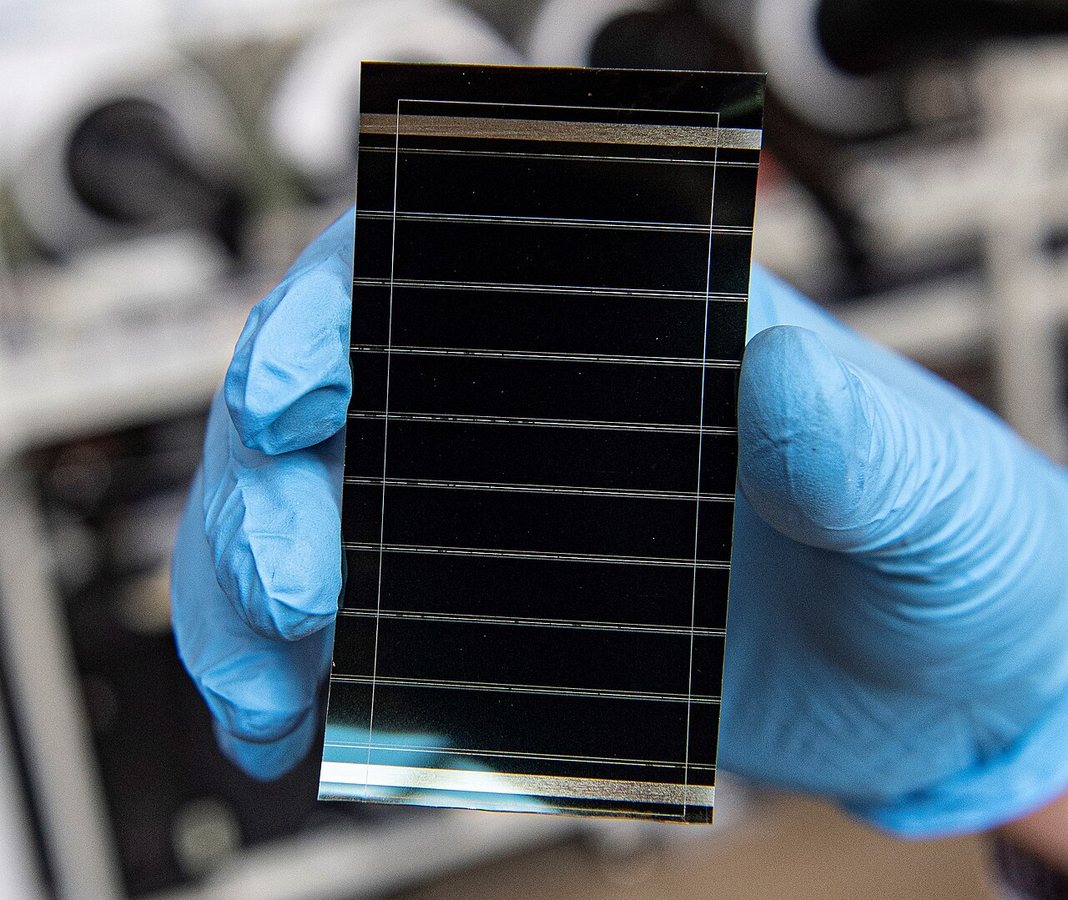
Researchers have developed a new approach to flexible perovskite solar cells that uses polymer nanospheres to build devices that are both stronger and better able to withstand heat. The work, reported in Physics World, points to a possible route for making the lightweight solar technology more practical.
Perovskite solar cells have attracted wide interest because they can be made from relatively inexpensive materials and can be printed on thin, bendable surfaces. That flexibility opens the door to uses that rigid panels cannot easily serve, but it also raises concerns about durability when devices are repeatedly bent or exposed to high temperatures.
The central element of the new method is the polymer nanospheres. According to the reporting, the approach is designed to keep the pathways that carry electrical charge unobstructed, which is essential for the cell to convert sunlight into electricity efficiently. The aim is to produce devices that hold up better under stress without sacrificing performance.
The available summary does not include specific test results, measurements, or the institutions involved in the research. It also leaves open how the cells would perform over long periods of use and whether the method is ready for commercial production. Further work will be needed to determine whether the approach can move from the laboratory into wider use.
Credit. Based on reporting by Isabelle Dumé for Physics World. Is this your work? Write to us.
40