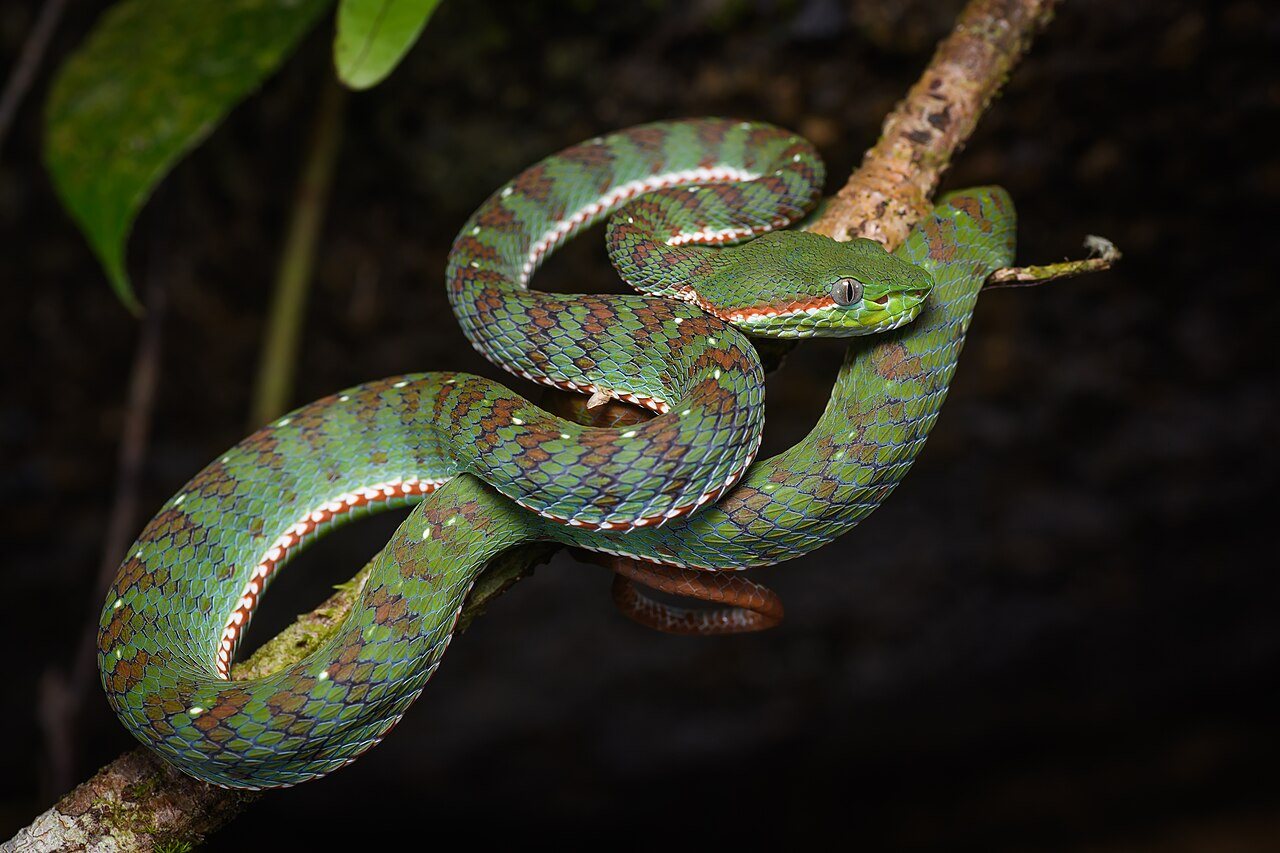
Snake embryos begin life curled into a distinctive right-handed spiral, and scientists may finally know why. Their bodies grow faster than their guts, creating a tether that forces the lengthening embryo to buckle and twist inside the egg. Researchers reached the conclusion after studying more than 900 embryos and using CT scans to reveal the hidden anatomy behind the coils.
The finding, published by a team of developmental biologists, addresses a long-standing question in embryology: why do snake embryos so consistently coil in one direction before hatching? The answer, according to the study, lies in a mechanical mismatch rather than a genetic instruction. As the embryo elongates, the body outpaces the digestive tract in growth. That differential creates tension, and the embryo resolves it by folding into a spiral.
CT imaging allowed the researchers to look inside the eggs without disturbing the delicate embryos. The scans showed that the spiral shape is not random but follows a predictable right-handed pattern across the species studied. The researchers compared embryos at different stages of development and found that the coiling emerges precisely when the growth rates of the body and gut diverge.
The study adds to a growing body of research on how physical forces shape embryonic development. While much of developmental biology focuses on genes and biochemical signals, this work highlights the role of mechanics: how growing tissues push against each other and against the confines of the egg. The spiral, in this view, is not a programmed trait but an inevitable consequence of growth under constraint.
Understanding this process could have broader implications for developmental biology. Similar growth mismatches occur in other animals, and the way embryos cope with them may influence everything from organ placement to body shape. The researchers note that snakes, with their extreme elongation, offer a particularly clear example of how mechanical forces can drive morphological outcomes.
The study also raises questions about the evolutionary history of snakes. Their elongated bodies and reduced limbs are hallmarks of the group, and the spiral coiling may be a byproduct of that body plan. Whether the pattern is shared by all snakes or varies among lineages remains an open question, but the current dataset, drawn from hundreds of embryos, suggests a consistent mechanism.
The researchers emphasize that the work is observational and mechanical, not a claim about function. The spiral may serve no purpose beyond accommodating growth, though it could also influence how the embryo fits inside the egg or how it positions itself for hatching. Those possibilities would require further study.
For now, the study provides a clear answer to a simple question: why do snake embryos twist? Because their bodies grow faster than their guts, and the egg leaves no room for anything but a spiral.
183