A new study led by the University of California, Berkeley has uncovered genetic traces of two previously unknown archaic hominin populations in modern human DNA. The discovery suggests that ancient humans interbred with at least two mysterious ghost lineages in addition to the better-known Neanderthals and Denisovans, expanding the known history of exchanges among early human populations.
The two lineages left their marks in different parts of the world and at very different times. One appears to have contributed to the ancestry of people in Africa more than 50,000 years ago. The other left a genetic signal in Eurasian populations more than 1.7 million years ago, long before modern humans are generally thought to have encountered Neanderthals and Denisovans.
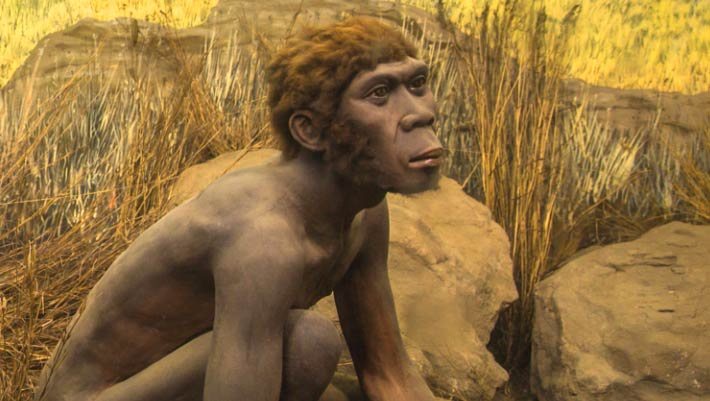
Researchers use the term archaic hominins to describe extinct members of the human lineage that lived before or alongside anatomically modern humans. Ghost lineages are a special category within that group. Their existence is inferred mainly from DNA evidence rather than from bones or archaeological sites. No fossil has yet been tied to either of the newly identified populations, but their genetic signatures remain visible in present-day genomes. This makes them especially difficult to study, because researchers must work backward from living DNA to reconstruct populations that left no obvious physical trace.
The new study adds to a long-running effort to map the full set of hominin groups that contributed to human ancestry. For years, the scientific picture of ancient interbreeding has centered on Neanderthals and Denisovans. Their DNA is widespread among modern populations, and ancient genome studies have shown that these groups mixed with Homo sapiens at several points in prehistory. The Berkeley-led findings indicate that the list is not complete and that human evolution also involved encounters with populations that have vanished from the archaeological record.
The African lineage stands out because much of the documented evidence for archaic admixture comes from outside Africa. Africa has an especially deep genetic history, and the new trace suggests that interbreeding with archaic hominins also shaped the ancestry of people who remained on the continent. The event took place more than 50,000 years ago, adding an older layer to the known mixing between modern and archaic populations within Africa.
The Eurasian lineage is even more striking because of its age. More than 1.7 million years ago, the hominin family tree contained many different branches, and the new results suggest that some of those groups met the ancestors of modern humans and exchanged genetic material. If the timing holds, the event would push the known history of interbreeding far deeper into the past, well before the appearance of Homo sapiens as understood today.
Because ghost lineages have no identified fossils or widely recognized artifacts, the evidence for them comes from statistical patterns in DNA. Researchers look for stretches of genetic material that do not match known ancient populations and therefore must have been inherited from an unidentified source. This approach has already helped reveal the Denisovans, whose genetic impact is now found across parts of Asia and Oceania. The new study points to two additional sources of such DNA, one deep in African prehistory and one at the very edge of the Eurasian record.
Together, the findings reinforce the idea that interbreeding among early human groups was not an isolated event, but a recurring feature of human history. The two ghost populations remain unnamed for now, but their traces are written into living genomes. Future research, including more complete sampling of ancient DNA, may eventually link these genetic signals to fossil remains that have already been collected but not yet recognized for what they are.