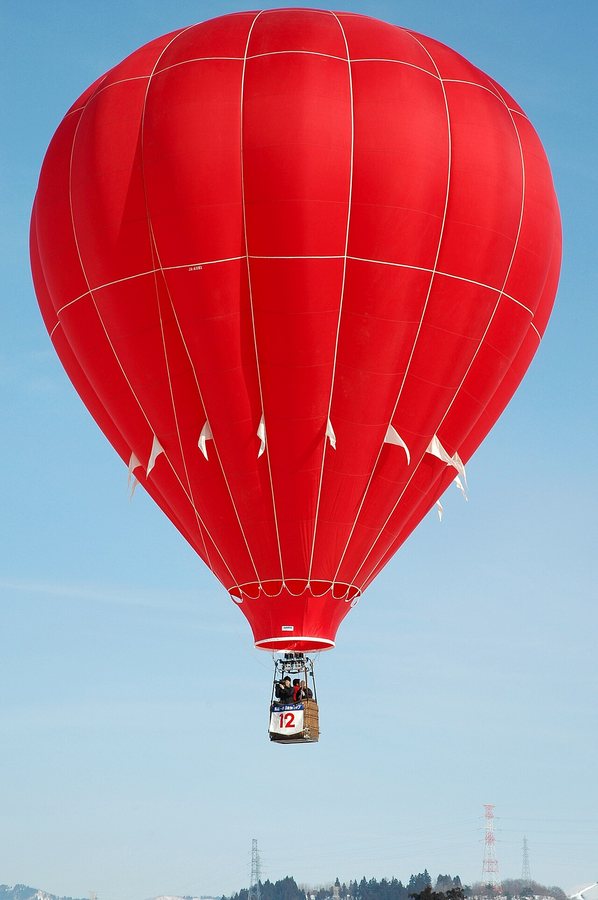
Scientists have taken a radiometer for a spin in a hot-air balloon, using the rotating device to measure radiant energy at altitude. The experiment, reported in Nature's archive, highlights how a centuries-old instrument continues to find new uses in modern research.
A radiometer is a device that measures the intensity of radiant energy, typically by detecting the rotation of vanes inside a partially evacuated glass bulb when light strikes them. The effect, first observed by William Crookes in the 1870s, has long been a staple of physics demonstrations. But the instrument's ability to respond to electromagnetic radiation has made it valuable in atmospheric and solar research.
In the balloon experiment, researchers carried the radiometer aloft to test its performance in the open atmosphere, away from laboratory conditions. The altitude provided a unique environment with different levels of solar radiation, temperature, and air pressure, allowing the team to observe how the device responded to changing conditions. The goal was to assess the radiometer's reliability and sensitivity outside the controlled settings of a lab.
The work fits into a broader tradition of using balloons as platforms for scientific instruments. Since the late 18th century, balloons have lifted thermometers, barometers, and other sensors into the sky, enabling measurements that ground-based observations cannot provide. Hot-air balloons, in particular, offer a stable and relatively low-cost way to carry lightweight equipment to moderate altitudes.
According to the Nature archive item, the experiment produced a satisfying congruence between genetics and cell-biology findings, though the connection to the radiometer test is not elaborated. The brief report notes that the balloon flight was part of a weekly peek at Nature's archive, suggesting the experiment may be a historical curiosity rather than a new study.
Radiometers have played a role in space exploration as well. Similar instruments have been used on satellites to measure the Earth's radiation budget and on planetary probes to study atmospheres. The balloon test could offer a simpler, more accessible way to calibrate such devices before they are launched into orbit.
While the details of the experiment remain sparse, the image of a radiometer spinning in a hot-air balloon captures the spirit of hands-on scientific inquiry. It also serves as a reminder that even well-known instruments can yield new insights when taken out of their usual context.
The researchers have not announced any follow-up flights, but the experiment adds a colorful chapter to the history of both ballooning and radiation measurement. For now, the radiometer's spin at altitude stands as a small but intriguing example of how scientists continue to test and refine the tools they use to understand the natural world.
13