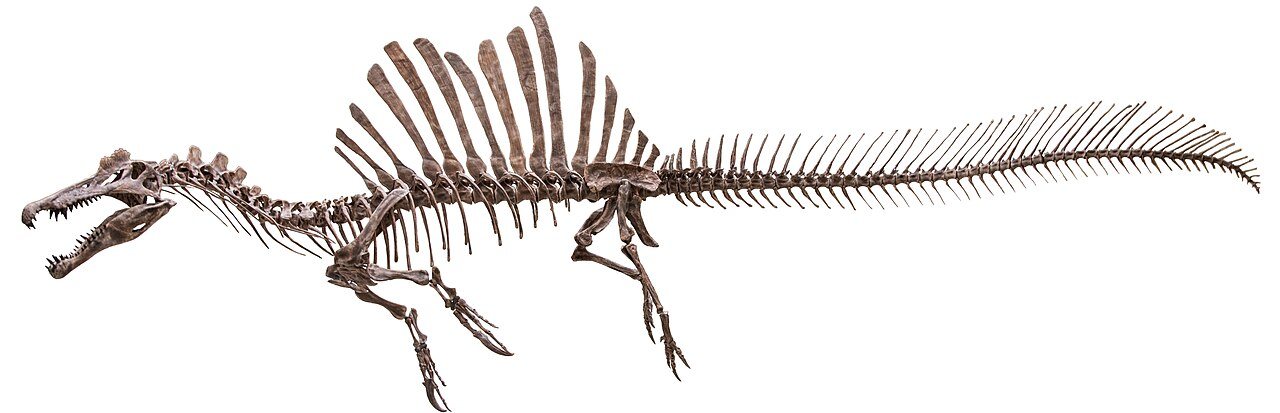
Spinosaurus, the large predatory dinosaur of the Cretaceous period, appears to have spent most of its life in the water rather than on land, according to new research from Yale University. Scientists there used machine learning and thousands of fossil measurements to examine which prehistoric creatures truly made the transition back to an aquatic existence.
The findings challenge long-held assumptions about several ancient animals. Some marine reptiles that had previously been classed as fully aquatic, the researchers report, in fact spent considerable time on land. Taken together, the results suggest that the lifestyles of these animals were more varied than earlier interpretations allowed.
The work is part of a broader question in evolutionary biology: why and how some animals, after their ancestors first conquered land millions of years ago, returned to the water. The study's authors describe such a move as an extraordinary evolutionary U-turn, one that left a range of distinct body plans and behaviors in the fossil record.
By applying machine learning to a large body of skeletal measurements, the Yale team was able to compare anatomical features across many specimens at once. This approach allowed them to move beyond individual fossil interpretations and assess patterns across groups of animals, offering a more systematic way to infer habitat and lifestyle from bone structure.
For Spinosaurus, the conclusion that it lived mostly underwater reshapes the picture of a dinosaur long known for its sail-backed profile and crocodile-like snout. For the marine reptiles that spent time ashore, the results suggest that aquatic specialization was not always as complete as scientists had assumed, and that some lineages occupied intermediate ecological niches between land and sea.
The research adds to a growing body of work using computational methods to read fossils. As paleontologists gather larger datasets, tools such as machine learning can help test long-standing hypotheses about how ancient animals moved, fed and survived, and can point to where further fieldwork and comparative analysis may be most productive.
13